Heat Sealing Aluminum Foil Facing for Insulation Manufacturers: Material Structures, Process Compatibility and Supplier Selection
Meta Description: Discover heat sealing aluminum foil facing for glass wool and rock wool manufacturing. Compare FSK, foil/PE and reinforced structures, understand heat lamination compatibility, and explore OEM supply solutions with OPERFECT.
Suggested URL: /heat-sealing-aluminum-foil-facing-insulation-manufacturers/
Primary Keyword: Heat Sealing Aluminum Foil Facing
Secondary Keywords: Heat Sealable Foil Facing, Heat Sealing FSK Facing, Glass Wool Insulation Facing, Rock Wool Aluminum Foil Facing, Foil Scrim Kraft Facing, Heat Activated PE Facing, Insulation Facing Supplier, OEM Aluminum Foil Facing
What Is Heat Sealing Aluminum Foil Facing?
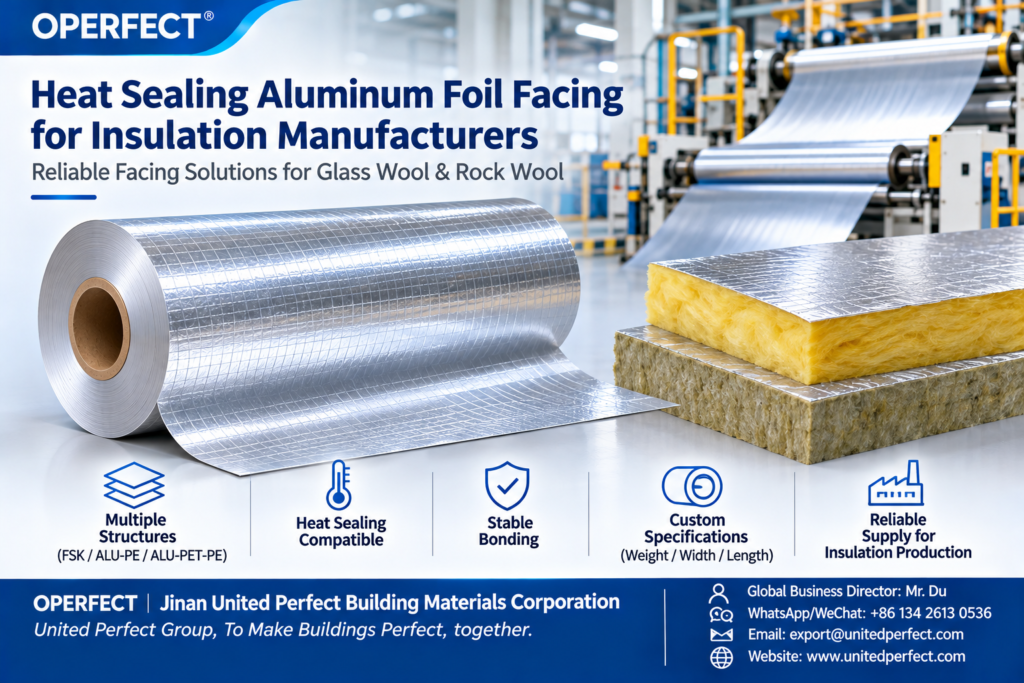
Heat sealing aluminum foil facing is a multilayer composite material designed for lamination onto compatible insulation substrates through a controlled heating and bonding process.
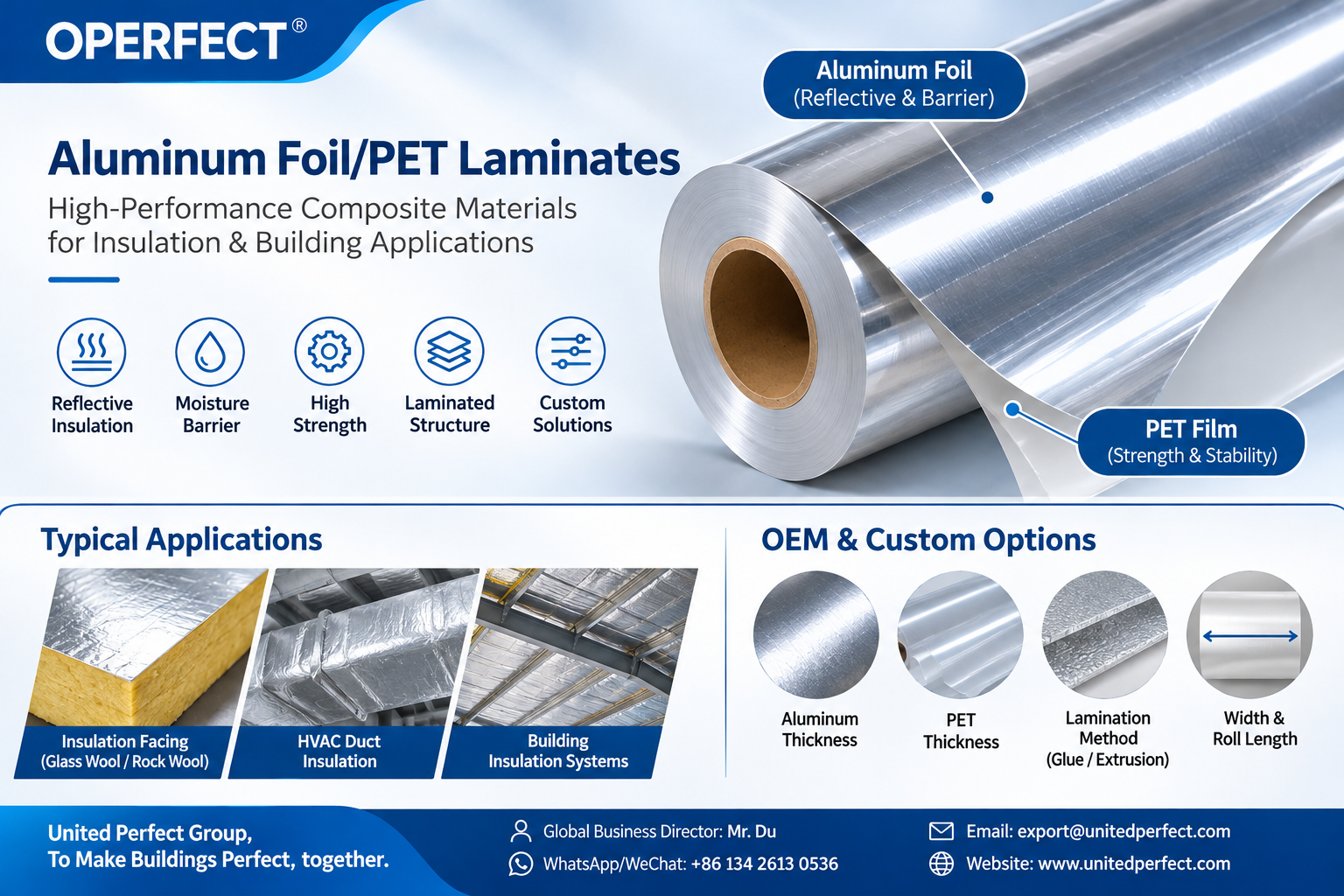
It commonly combines aluminum foil with a heat-activated polymer layer, often polyethylene (PE). Depending on the application, the structure may also include fiberglass scrim, kraft paper, PET film or fiberglass cloth.
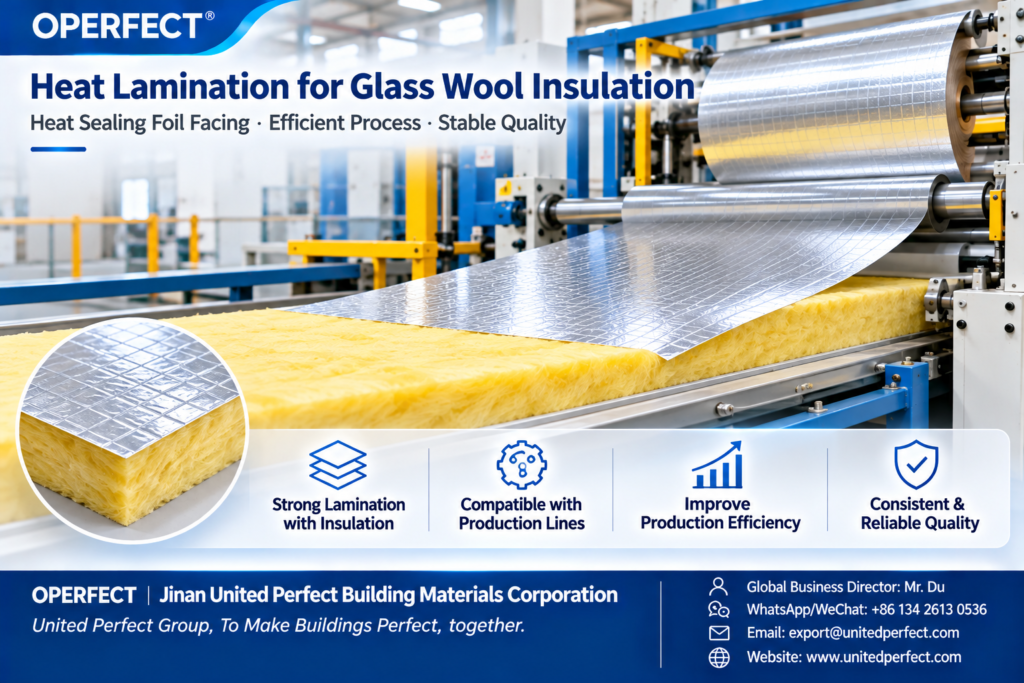
For glass wool and rock wool manufacturers, heat sealable foil facing can provide a practical alternative to conventional adhesive-applied facing systems.
Instead of applying a separate liquid adhesive during the insulation lamination process, a suitable heat-activated backing layer is heated and bonded to the insulation surface under controlled processing conditions.
However, not every heat sealing foil facing works with every insulation production line.
Successful lamination depends on material structure, bonding-layer characteristics, insulation surface conditions, heating method, production speed and equipment configuration.
OPERFECT supports insulation manufacturers and international distributors with customized heat sealing aluminum foil facing structures, technical specification coordination and reliable export supply.
1. Why Heat Sealing Compatibility Matters to Insulation Manufacturers
For insulation manufacturers, aluminum foil facing is more than a decorative surface.
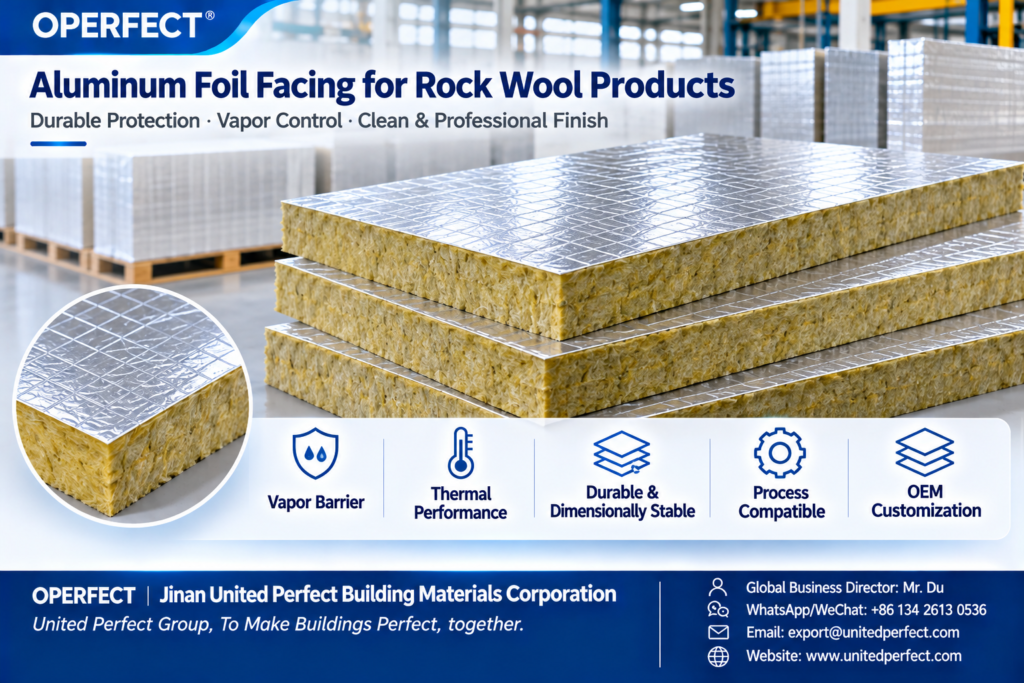
Depending on the product design, it may contribute to vapor control, surface protection, handling characteristics and the finished appearance of glass wool or rock wool insulation.
But even a well-constructed facing material can create production problems if its bonding layer does not match the customer’s lamination process.
Common challenges include:
- Insufficient bonding between the facing and insulation
- Partial delamination after cooling or handling
- Uneven bonding across the production width
- Wrinkling or distortion during lamination
- Facing damage caused by excessive heating
- Inconsistent unwind behavior
- Roll changes and production interruptions
- Differences in bonding performance between material batches
These issues can affect both manufacturing efficiency and finished-product consistency.
The correct facing should be selected according to the customer’s production process, not simply according to aluminum foil thickness or purchase price.
2. Common Heat Sealing Aluminum Foil Facing Structures
Different insulation applications require different combinations of barrier materials, reinforcement layers and heat-activated backings.
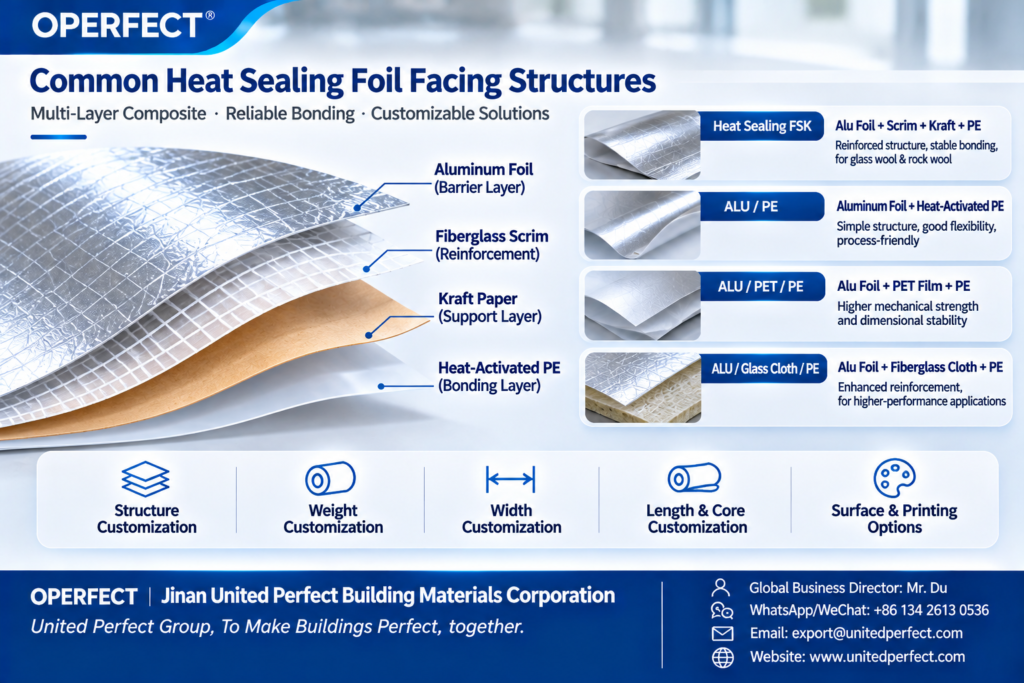
A. Heat Sealing FSK Facing — Foil + Scrim + Kraft + Heat-Activated Layer
Heat sealing FSK facing is a reinforced construction typically incorporating aluminum foil, fiberglass scrim, kraft paper and a heat-activated backing.
The aluminum foil contributes barrier properties, while the scrim provides reinforcement and the kraft paper forms part of the supporting structure.
The heat-activated layer is designed to bond with a compatible insulation surface during processing.
This construction is commonly considered for glass wool, rock wool and other suitable insulation facing applications.
Key customization considerations include foil thickness, scrim pattern, kraft paper weight, heat-sealing layer and roll dimensions.
B. Aluminum Foil + Heat-Activated PE
This construction combines aluminum foil with a heat-activated PE layer.
It offers a relatively simple material structure where additional kraft or scrim reinforcement is not required.
However, its suitability depends on foil thickness, bonding-layer characteristics and the customer’s production process.
The PE layer must be selected for the intended lamination conditions.
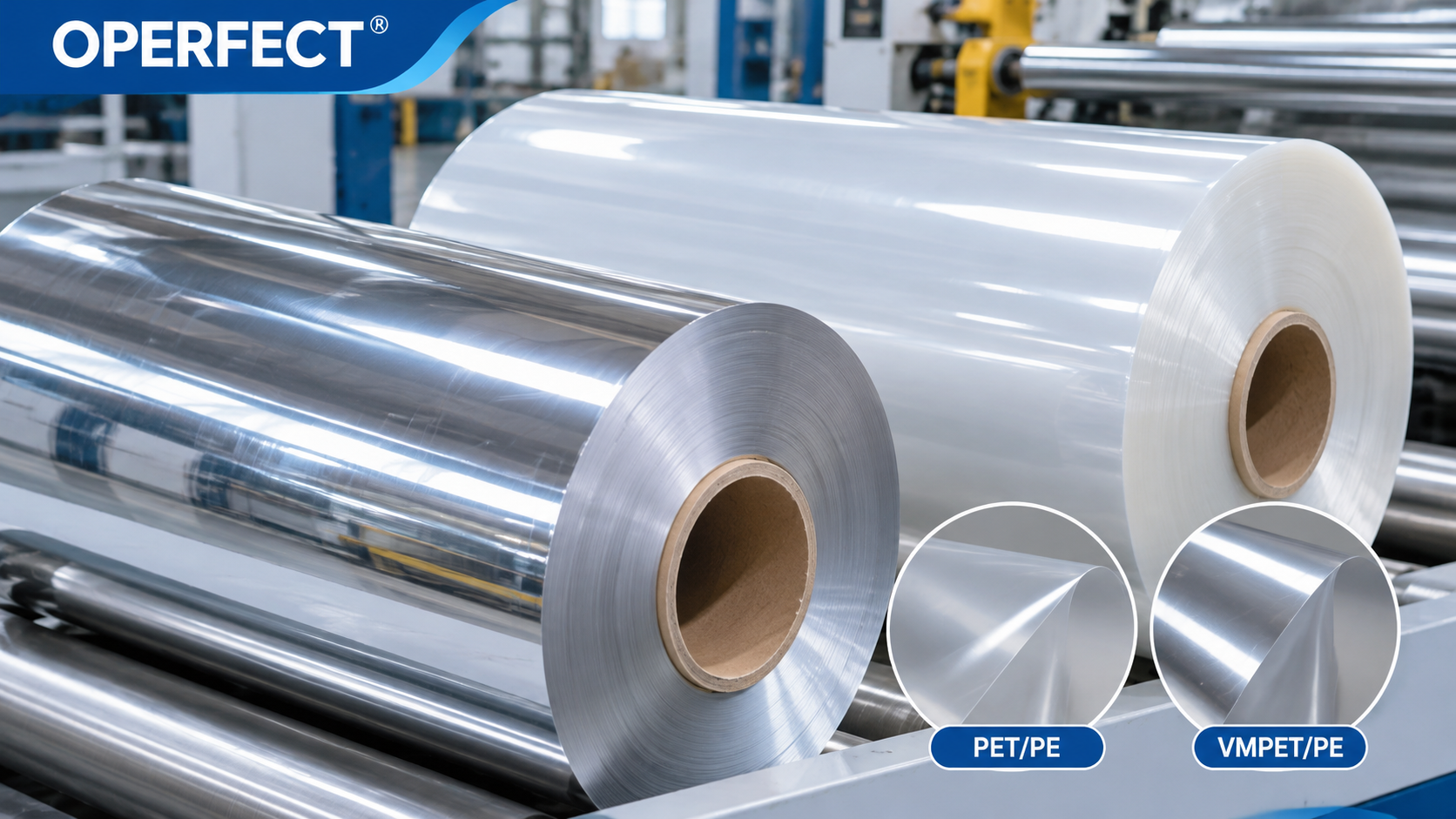
C. Aluminum Foil + PET + Heat-Activated PE
An aluminum foil/PET/PE construction incorporates polyester film into the laminate.
PET may provide additional mechanical support or dimensional stability, depending on the complete structure.
This type of facing may be considered where the customer requires a more specialized composite material.
It is important to verify the bonding-layer position, total thickness and process compatibility before commercial production.
D. Aluminum Foil + Fiberglass Cloth + Heat-Activated Layer
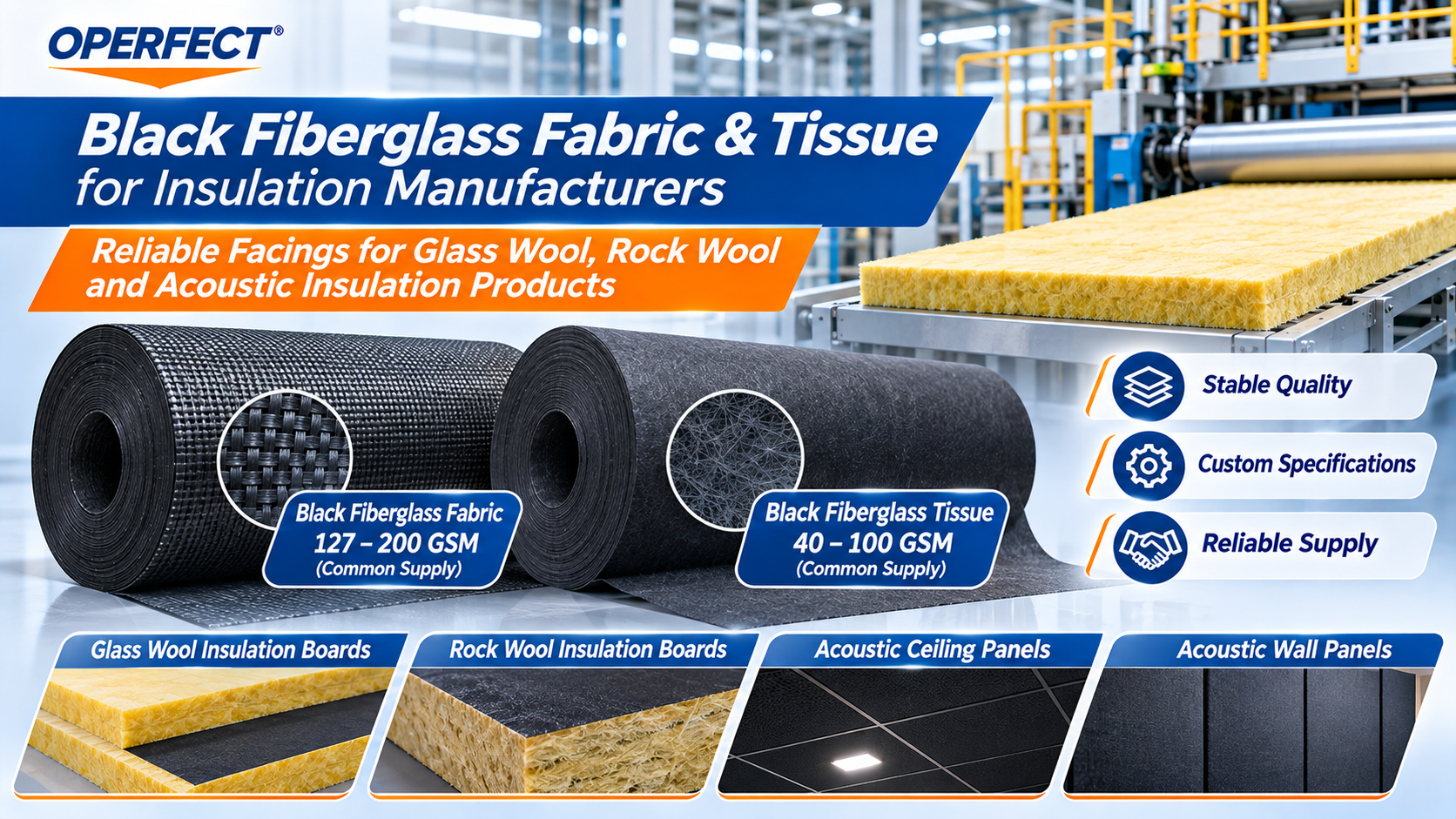
Fiberglass cloth reinforced foil facing is another possible construction for insulation applications requiring additional mechanical reinforcement.
The fabric specification, aluminum foil thickness, bonding system and finished roll configuration must be selected according to the application.
Reinforcement alone does not establish a particular fire classification or finished insulation system rating.
Structure Comparison
| Facing Structure | Main Characteristics | Key Selection Factors |
|---|---|---|
| Heat Sealing FSK | Foil, scrim, kraft and heat-activated backing | Reinforcement, paper weight, bonding compatibility |
| ALU/PE | Aluminum foil with PE backing | Foil integrity, PE characteristics, flexibility |
| ALU/PET/PE | Foil, polyester and PE | Mechanical support, thickness, sealing compatibility |
| ALU/Glass Cloth/PE | Foil, fiberglass cloth and bonding layer | Reinforcement, adhesion, process requirements |
The final structure should be selected according to the customer’s insulation product, manufacturing equipment and required performance.
3. Heat Sealing vs. Conventional Adhesive Lamination
Insulation manufacturers may use different processes to attach facing materials to glass wool or rock wool.
In a conventional adhesive lamination process, an adhesive is applied separately during production.
In a heat sealing process, the facing includes a pre-applied heat-activated bonding layer.
These approaches have different production requirements.
| Factor | Heat Sealing Lamination | Conventional Adhesive Lamination |
|---|---|---|
| Bonding method | Heat-activated backing | Separately applied adhesive |
| Additional adhesive application | May not be required | Generally required |
| Process control | Heating, contact, line speed | Adhesive application, curing or drying, line speed |
| Equipment requirements | Suitable heating and bonding configuration | Suitable adhesive application system |
| Key risk | Insufficient activation or overheating | Incorrect adhesive application or curing |
| Material selection | Depends on heat-sealing compatibility | Depends on adhesive and substrate compatibility |
Heat sealing may simplify the bonding process for a compatible production line, but it is not automatically the better option in every manufacturing situation.
Manufacturers should evaluate equipment compatibility, finished-product requirements and total production economics.
4. Five Critical Factors That Determine Heat Sealing Performance
4.1 Heat-Activated PE Layer
The bonding layer is one of the most important components of heat sealable foil facing.
Its polymer grade, coating weight or thickness and bonding characteristics influence how it responds to heating.
A thicker PE layer does not automatically guarantee better adhesion.
The appropriate construction depends on the insulation substrate and processing conditions.
4.2 Heating Temperature and Exposure Time
The heat-activated layer must receive sufficient thermal energy to develop the intended bond.
Insufficient heating may result in weak adhesion.
Excessive heating may damage the laminate, cause distortion or create other processing problems.
The appropriate conditions must be established through material-specific trials.
4.3 Production Line Speed
Line speed influences the time available for heating and bonding.
A facing that performs adequately on one line may behave differently on another line with a different heating configuration or production speed.
Manufacturers should evaluate samples under representative operating conditions.
4.4 Insulation Surface Characteristics
Glass wool and rock wool products differ in density, surface texture, binder characteristics and other manufacturing parameters.
These differences can affect bonding behavior.
A facing that performs well on one insulation product should not automatically be assumed suitable for another.
4.5 Roll Consistency and Winding Quality
Uniform winding, suitable roll tension and stable dimensions support consistent material feeding.
Problems such as telescoping, wrinkling, inconsistent roll edges or incorrect winding orientation may interrupt production.
For continuous insulation manufacturing, roll quality is an important part of overall material performance.
5. How to Evaluate Heat Sealing Foil Facing Before Bulk Purchasing
For industrial buyers, successful sourcing should begin with technical confirmation and sample evaluation.
Step 1 — Confirm the Insulation Substrate
Specify whether the facing will be applied to glass wool, rock wool or another compatible insulation material.
If possible, share the insulation type, surface characteristics and production configuration.、
Step 2 — Review the Existing Facing
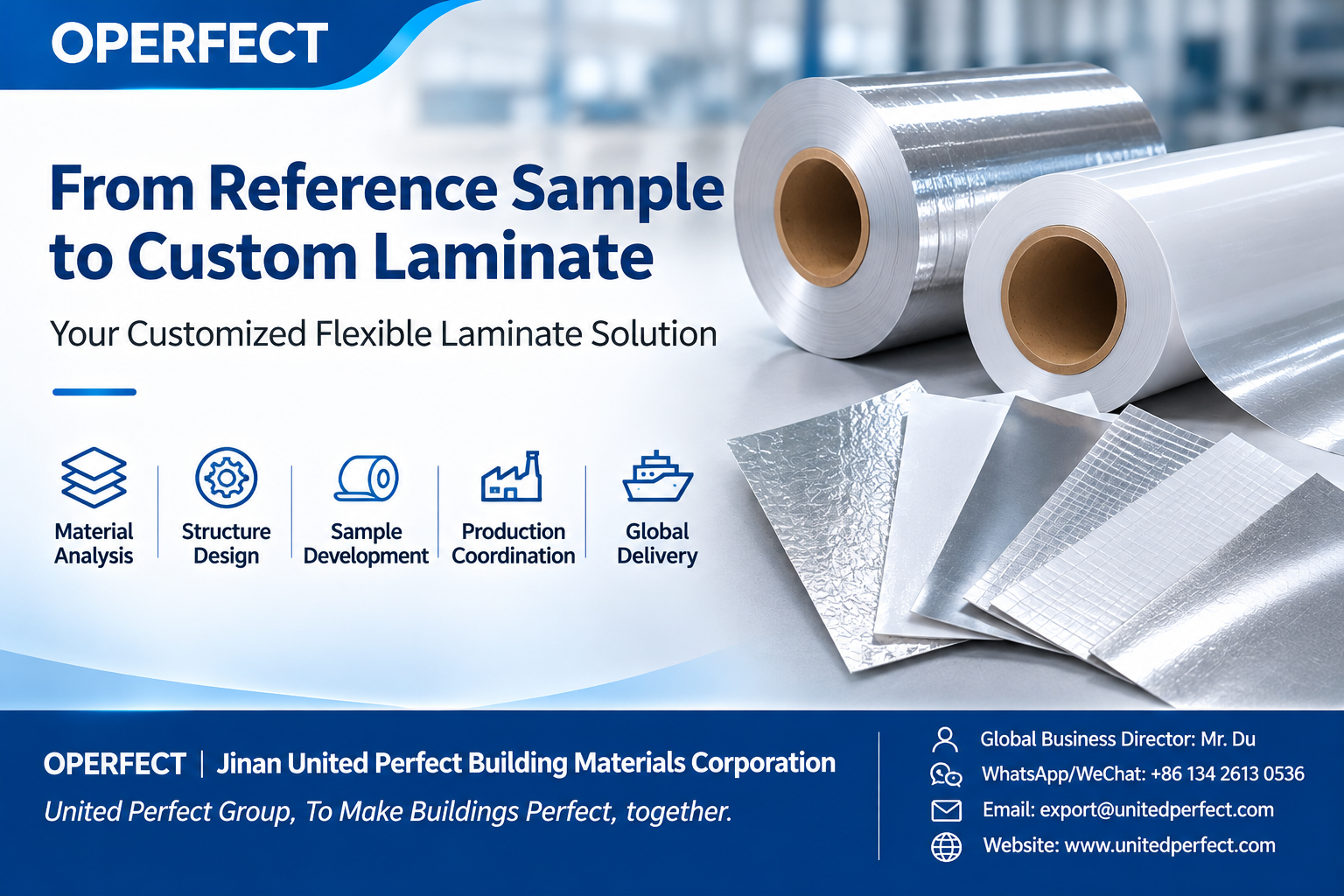
If the customer currently uses a heat sealable facing, a reference sample can provide valuable information.
OPERFECT can help review the likely material structure and identify specifications requiring further confirmation.
Step 3 — Discuss Production Conditions
Relevant information may include the heating method, production speed, bonding configuration and known process limitations.
Exact operating parameters should be handled as project-specific technical information.
Step 4 — Arrange Sample Evaluation
Where feasible, representative facing samples can be prepared for customer trials.
The customer should evaluate bonding behavior, surface appearance, handling and other agreed performance requirements.
Step 5 — Confirm the Final Specification
After sample approval, the material construction, roll dimensions, packaging and quality acceptance criteria should be documented before commercial production.
For heat sealing insulation facing, real production-line trials are more valuable than relying on appearance or generic product descriptions alone.
6. What Specifications Should Buyers Confirm?
A complete inquiry helps suppliers evaluate both technical feasibility and commercial requirements.
| Parameter | Information Required |
|---|---|
| Facing structure | FSK, ALU/PE, ALU/PET/PE or other construction |
| Aluminum foil | Thickness and surface requirements |
| Reinforcement | Scrim type, pattern or fiberglass cloth specification |
| Kraft paper | Paper weight, where applicable |
| Heat-activated backing | PE type and thickness or coating weight, where known |
| Total facing weight | Target GSM and tolerance |
| Roll width | Required production width |
| Roll length | Required length per roll |
| Core diameter | Customer equipment requirements |
| Winding direction | Heat-sealing side inward or outward |
| Production process | Insulation type, heating method and line conditions |
| Performance | Bonding, barrier, mechanical or other required criteria |
| Packaging | Roll protection, palletization and labeling |
| Commercial details | Quantity, destination and delivery terms |
Not every buyer will know all these parameters.
If technical information is incomplete, a reference sample and a description of the current production process can provide a useful starting point.
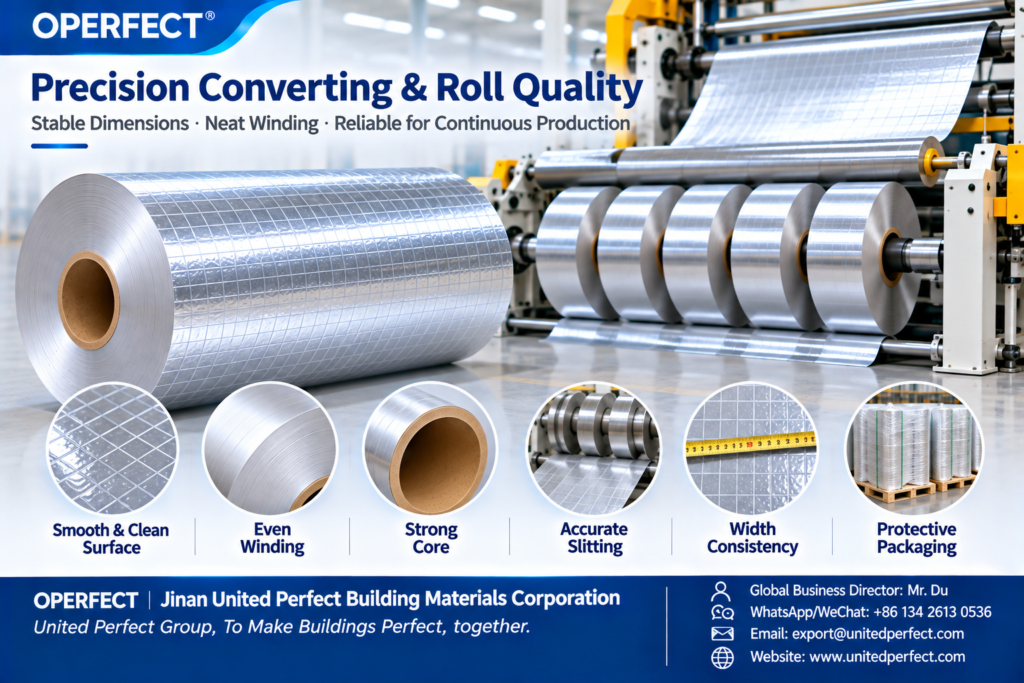
7. Why Roll Quality Matters for Continuous Insulation Production
For a manufacturer operating a continuous insulation production line, roll consistency can be as important as the laminate structure itself.
A facing material must unwind predictably and feed through the production equipment without unnecessary interruption.
Buyers should pay particular attention to:
Width consistency: The facing must match the required insulation product width and processing tolerances.
Winding tension: Excessively tight or loose winding may affect handling and unwinding.
Roll edges: Poor edge quality may contribute to feeding difficulties or material waste.
Core strength: The core must be suitable for the roll weight and handling conditions.
Surface orientation: The heat-activated layer must face the intended bonding surface.
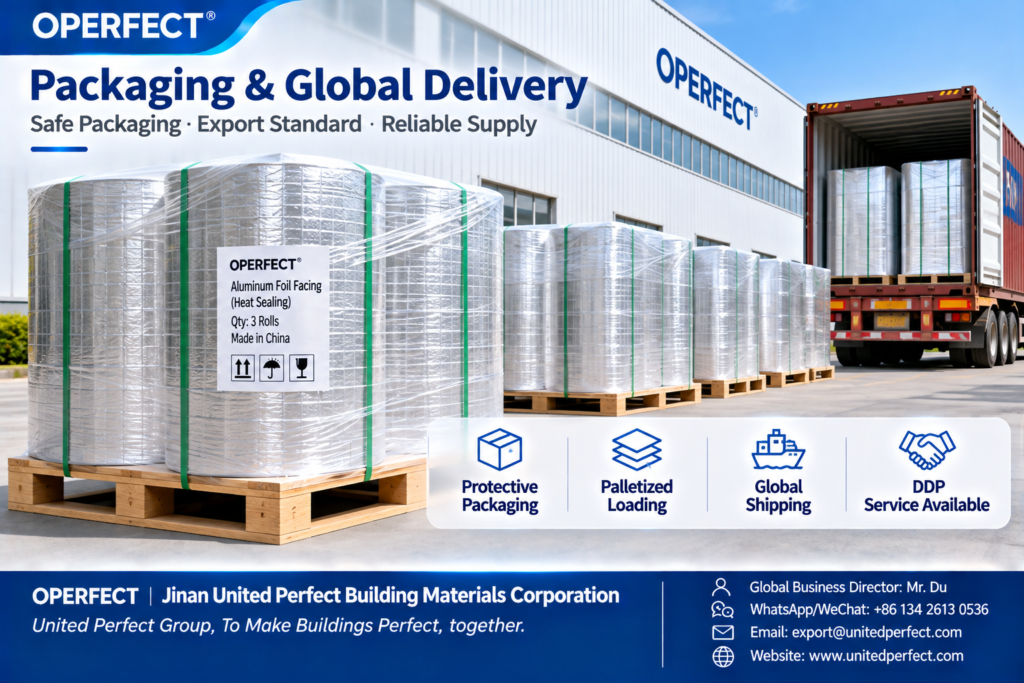
Packaging protection: Rolls should be protected from contamination, moisture exposure and physical damage during transport.
These factors are especially relevant for repeat orders and long-term supply programs.
8. Common Purchasing Mistakes Insulation Manufacturers Should Avoid
Mistake 1: Selecting Only by Price per Square Meter
A lower unit price does not necessarily result in lower manufacturing cost.
If a facing creates production interruptions, material waste or bonding problems, the overall cost may increase.
Mistake 2: Assuming All PE-Backed Foil Facings Are Heat Sealable
Not every PE-containing laminate is designed for heat sealing onto insulation.
The actual backing construction and processing requirements must be confirmed.
Mistake 3: Ignoring Insulation Substrate Differences
Glass wool and rock wool products may respond differently during lamination.
Compatibility should be verified for the intended product.
Mistake 4: Overlooking Roll Specifications
Incorrect roll width, winding direction or core dimensions can disrupt production even when the material structure is correct.
Mistake 5: Skipping Production-Line Trials
Sample evaluation helps identify potential issues before a larger commercial order.
Mistake 6: Assuming Fire Performance from Material Names
The presence of aluminum foil or fiberglass reinforcement does not automatically establish a fire rating.
Where fire performance is important, buyers should request appropriate test evidence for the relevant facing or finished insulation assembly.
9. OEM Customization for Heat Sealing Aluminum Foil Facing
Different insulation manufacturers may require different material structures and roll configurations.
OPERFECT supports the evaluation and coordination of customized facing requirements, including:
- Aluminum foil thickness
- PET film or other supporting layers
- Fiberglass scrim pattern and reinforcement
- Kraft paper weight
- Heat-activated PE backing construction
- Total material weight and thickness
- Roll width and length
- Core diameter and winding direction
- Printing and surface appearance, where feasible
- Protective packaging and pallet arrangements
Customization feasibility, minimum order quantities and lead times depend on the proposed material structure and manufacturing process.
For customers with an existing facing, sample-based development may be an effective starting point.
10. Why Choose OPERFECT as Your Heat Sealing Foil Facing Supply Partner?
For insulation manufacturers, stable facing supply requires more than access to a production facility.
It requires understanding the relationship between material structure, production compatibility, roll quality and international order execution.
OPERFECT builds on long-standing experience in aluminum foil composite materials and insulation facing supply.
Material Structure Knowledge
We understand the differences between foil-based composite structures and can help customers communicate their technical requirements.
Manufacturing Resource Coordination
We work with suitable manufacturing partners according to product construction, customization needs and production feasibility.
Sample-Based Technical Support
Customers can provide reference samples or specifications for review and development discussions.
Customized Roll Requirements
We coordinate requirements involving material weight, roll dimensions, winding direction and packaging.
International Supply Experience
We support production communication, order execution, export packaging and international shipment arrangements.
Long-Term Cooperation
For recurring insulation facing requirements, our focus is on specification consistency, communication efficiency and dependable supply coordination.
Our objective is to help insulation manufacturers obtain facing materials that work with their production requirements—not simply offer the lowest-priced aluminum foil laminate.
11. Frequently Asked Questions
1. What is heat sealing aluminum foil facing?
It is a foil-based composite facing with a heat-activated bonding layer designed for lamination onto compatible insulation materials.
2. Can heat sealing foil facing be used for glass wool and rock wool?
Yes, suitable constructions may be used for glass wool and rock wool insulation. Compatibility should be confirmed through customer trials.
3. What is the difference between heat sealing FSK and standard FSK?
Heat sealing FSK incorporates a heat-activated bonding layer for compatible lamination processes. Standard FSK does not necessarily include this functionality.
4. Does heat sealing foil facing require additional adhesive?
A suitable heat-activated facing may be laminated without separately applying adhesive during the customer’s insulation facing process. This depends on the equipment and material combination.
5. What temperature is required for heat sealing?
There is no single universal temperature. The appropriate conditions depend on the backing material, insulation substrate and production equipment.
6. Can the aluminum foil thickness be customized?
Yes, foil thickness can be evaluated according to the required construction and manufacturing feasibility.
7. Can the PE backing be customized?
PE layer characteristics and thickness or coating weight may be customized subject to technical feasibility.
8. Can OPERFECT develop facing from an existing sample?
Yes. Customers may submit a reference sample for initial material review and feasibility evaluation.
9. Can roll width, length and winding direction be customized?
Yes, according to available manufacturing capabilities and the agreed order specifications.
10. Does aluminum foil facing automatically provide fire resistance?
No. Fire performance depends on the complete material or assembly and must be supported by appropriate testing.
11. What information is needed for a quotation?
Please provide the facing structure or reference sample, insulation type, roll dimensions, required quantity, destination and any important production or performance requirements.
12. Does OPERFECT support international delivery?
Yes. OPERFECT coordinates export packaging and international shipping arrangements. Project-specific delivery options can be discussed.
12. Looking for a Reliable Heat Sealing Aluminum Foil Facing Supplier?
Are you a glass wool or rock wool manufacturer looking for a heat sealable aluminum foil facing that matches your production requirements?
Do you need an alternative source for an existing FSK facing, a customized PE-backed aluminum foil laminate or a specialized reinforced facing?
Send OPERFECT your reference sample or technical specifications.
Our team can help evaluate the material structure, discuss heat-sealing compatibility, coordinate sampling and develop a practical supply proposal.
For a faster technical review, please include:
- Insulation material and intended application
- Current facing sample or structure
- Required roll width and length
- Heat-sealing process information
- Estimated purchasing quantity
- Delivery destination
We look forward to supporting your insulation facing sourcing and customized material requirements.
OPERFECT | Jinan United Perfect Building Materials Corporation
United Perfect Group, To Make Buildings Perfect, together.
Global Business Director: Mr. Du
WhatsApp/WeChat: +86 134 2613 0536
电子邮件: export@unitedperfect.com