Learn about WMP facing material, including its White PP Film + Scrim + Kraft Paper structure, performance advantages and applications in insulation systems.
What Is WMP Facing Material?
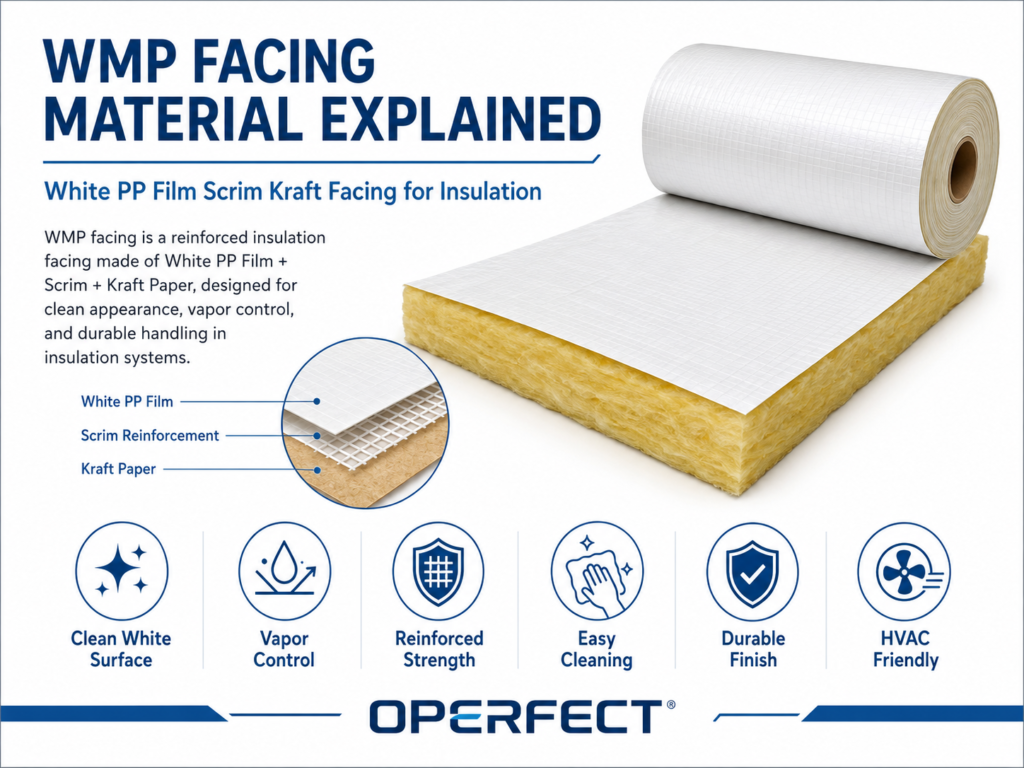
WMP facing material is a reinforced insulation facing composed of:
White PP Film + Reinforcing Scrim + Kraft Paper
WMP stands for White Metallized Polypropylene Facing and is widely used as a protective and functional facing layer for fiberglass insulation, rock wool insulation and other thermal insulation products.
Compared with traditional aluminum foil facings such as FSK, WMP provides a clean white surface appearance while maintaining good vapor-control performance, mechanical strength and installation durability.
It is commonly used in HVAC insulation, commercial buildings, industrial insulation and exposed insulation applications where appearance and surface protection are important.
Typical Structure of WMP Facing
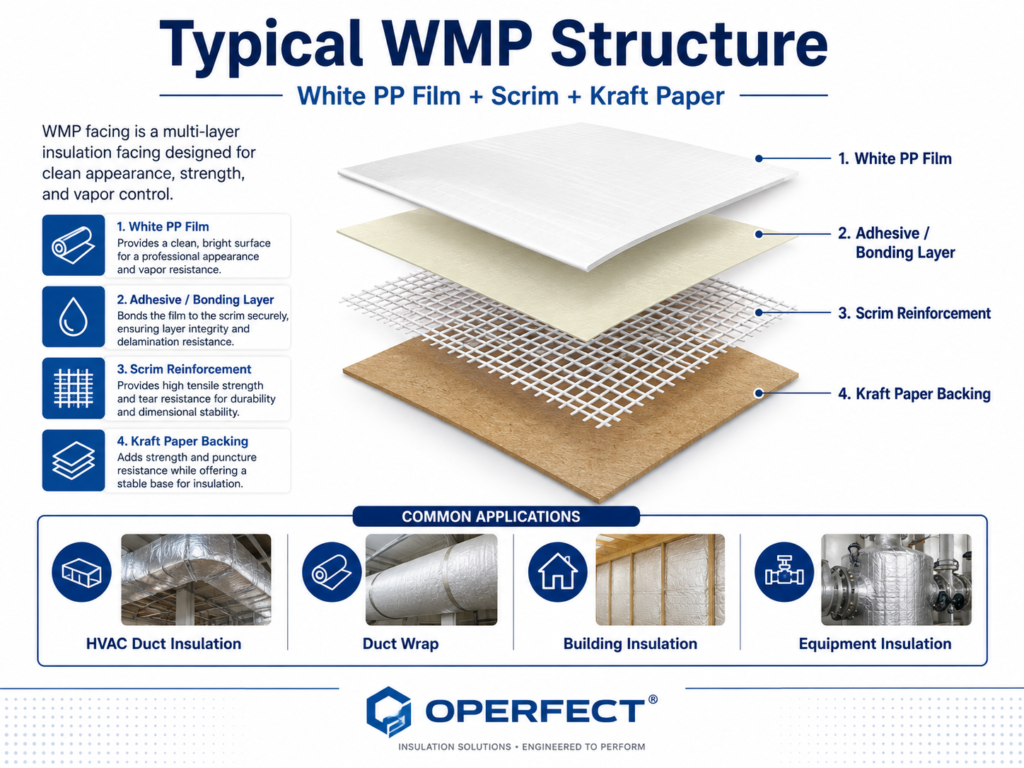
A standard WMP facing structure consists of three main layers:
1. White PP Film Surface Layer
The white polypropylene film forms the outer surface of the facing.
Its main functions include:
- Clean white appearance
- Surface protection
- Resistance to dirt and handling damage
- Improved durability during installation
- Professional finished appearance
Compared with kraft paper surfaces, the PP film provides a smoother and cleaner exterior.
2. Scrim Reinforcement Layer
The scrim is a reinforcing mesh laminated between the outer film and backing layer.
It improves the mechanical performance of the facing.
The reinforcement provides:
- Higher tensile strength
- Better tear resistance
- Improved dimensional stability
- Reduced risk of damage during handling
- Better performance for wide-width rolls
The scrim structure is an important factor affecting the overall strength of WMP facing.
3. Kraft Paper Backing Layer
The kraft paper provides structural support and improves processing performance.
Its functions include:
- Additional stiffness
- Better handling characteristics
- Improved lamination stability
- Support during insulation manufacturing
The kraft backing also provides compatibility with many insulation production processes.
Key Performance Advantages of WMP Facing
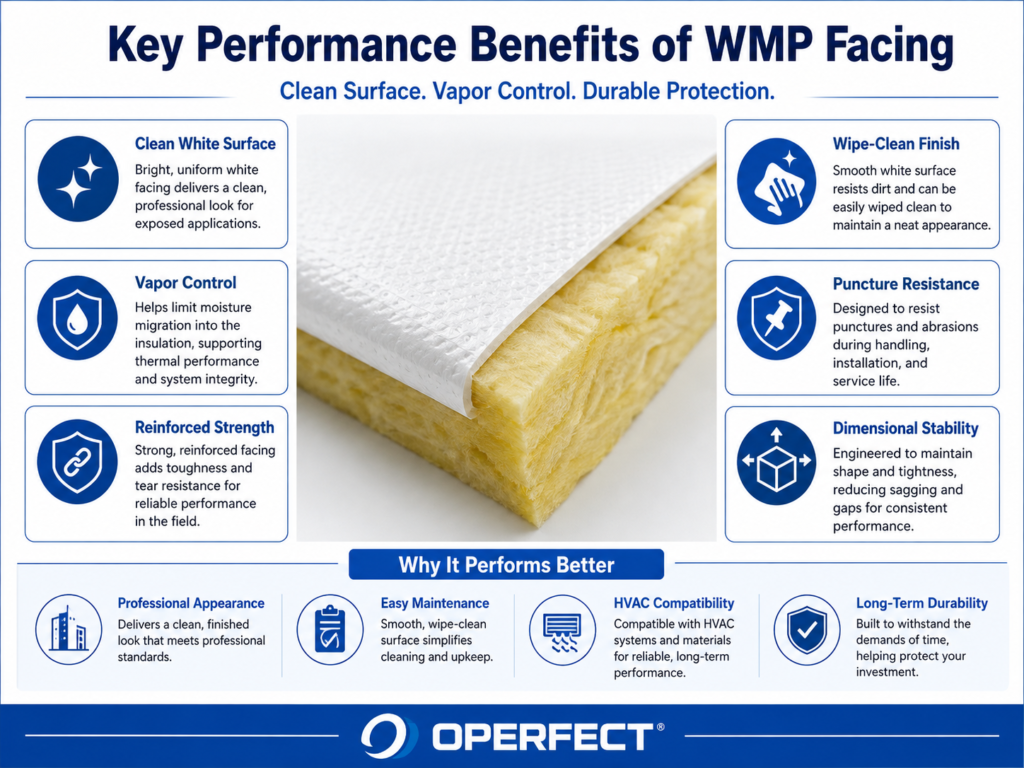
1. Clean White Appearance
One of the major advantages of WMP facing is its white surface finish.
Compared with metallic foil facings, WMP provides:
- Bright and clean appearance
- Better visual integration with building interiors
- Professional appearance for exposed insulation systems
This makes it suitable for applications where insulation surfaces remain visible.
Typical locations include:
- Mechanical rooms
- Commercial buildings
- Warehouses
- HVAC areas
- Industrial facilities
2. Vapor Control Performance
WMP facing helps control moisture vapor movement through insulation systems.
The composite structure creates a protective layer that helps:
- Reduce moisture migration
- Protect insulation performance
- Improve system durability
The actual vapor-control performance depends on:
- Film properties
- Lamination quality
- Pinholes
- Seam sealing
- Installation method
A continuous facing system is essential for effective vapor management.
3. Reinforced Mechanical Strength
Unlike unsupported films or paper facings, WMP includes a scrim reinforcement layer.
This improves resistance against:
- Tearing
- Pulling
- Puncture damage
- Handling stress
- Installation damage
The reinforced structure is especially valuable during:
- Manufacturing
- Transportation
- Cutting
- Installation
4. Improved Surface Protection
The PP film surface provides better protection compared with exposed kraft paper.
Advantages include:
- Better resistance to dust
- Easier cleaning
- Improved surface durability
- Reduced fiber exposure
This makes WMP suitable for insulation products installed in visible areas.
5. Cost-Effective Insulation Facing Solution
WMP provides a balance between performance and cost.
Compared with aluminum foil facings, WMP can offer:
- Competitive material cost
- Good appearance
- Reliable reinforcement
- Practical installation performance
It is often selected when a clean white finish is preferred without requiring a metallic foil surface.
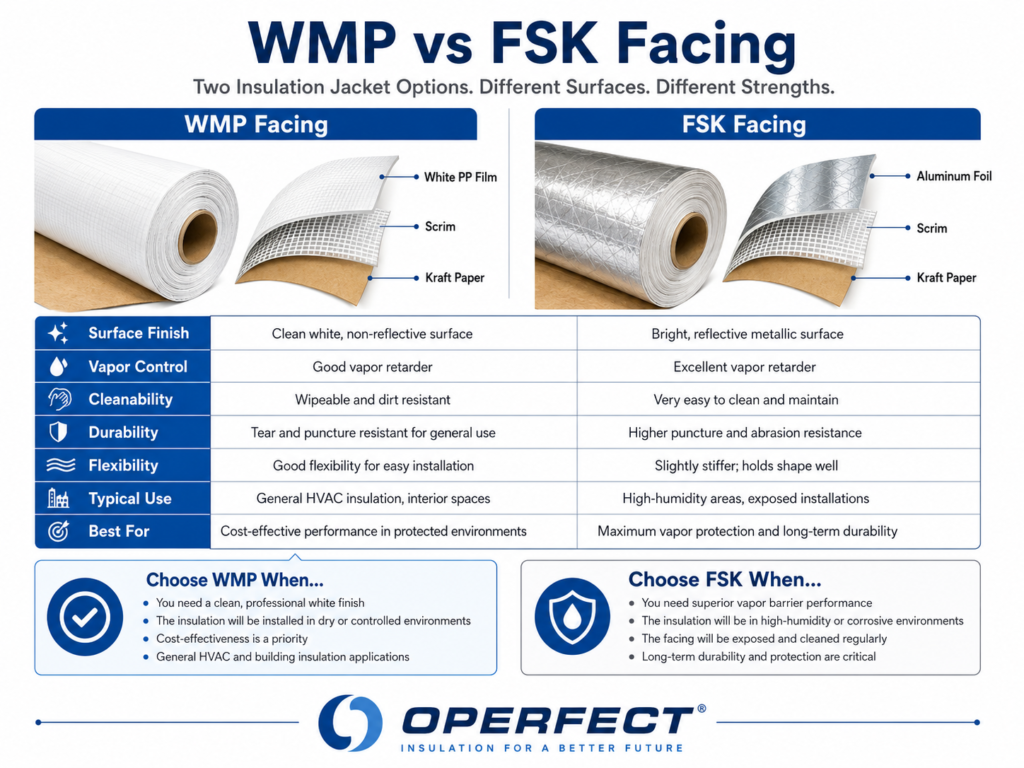
WMP Facing vs FSK Facing
WMP and FSK are both widely used insulation facings, but their structures and appearances are different.
| Feature | WMP Facing | FSK Facing |
|---|---|---|
| Surface Layer | White PP Film | Aluminum Foil |
| Reinforcement | Scrim | Scrim |
| Backing | Kraft Paper | Kraft Paper |
| Appearance | White clean surface | Metallic reflective surface |
| Surface Protection | Good | Good |
| Reflective Performance | Limited | Excellent |
| Vapor Control | Good | Excellent |
| Visible Installation Areas | Excellent | Moderate |
| Typical Application | HVAC, commercial insulation | Industrial insulation, duct systems |
The correct selection depends on the project requirements.
Common Applications of WMP Facing
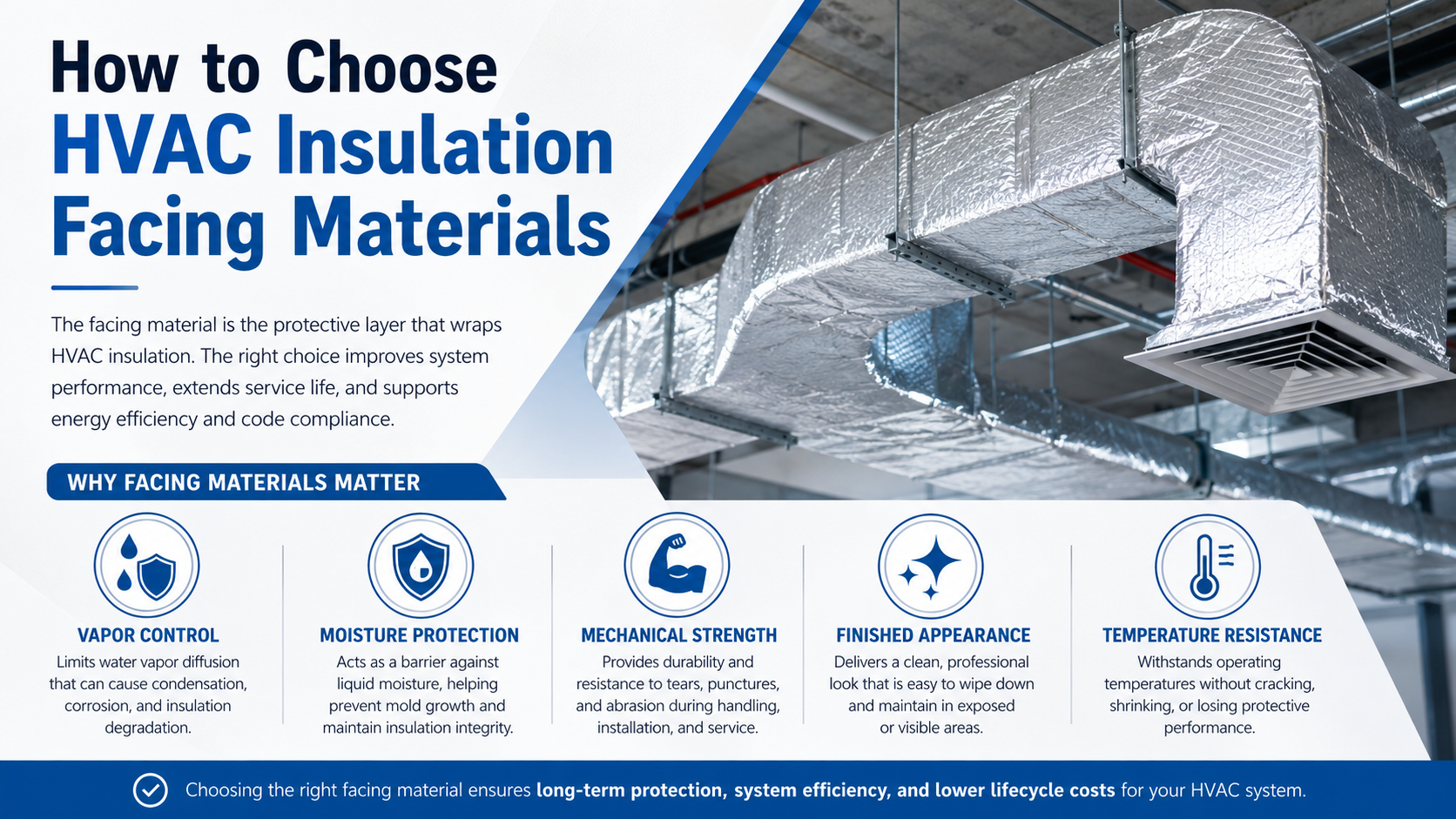
1. HVAC Duct Insulation
WMP is widely used as an outer facing for fiberglass duct insulation.
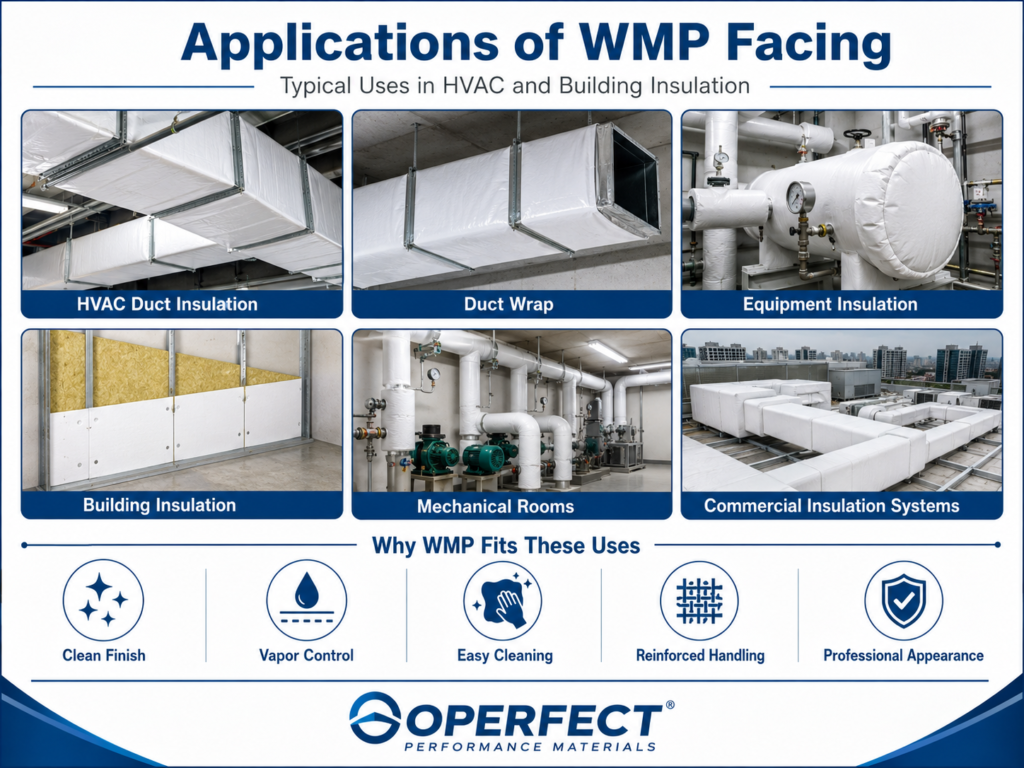
Benefits include:
- Clean appearance
- Moisture control
- Improved durability
- Easy installation
It is commonly found in:
- Commercial HVAC systems
- Office buildings
- Hospitals
- Shopping centers
- Industrial facilities
2. Fiberglass Insulation Products
WMP can be laminated onto:
- Fiberglass blanket
- Fiberglass board
- Glass wool insulation
It provides a finished surface while improving handling performance.
3. Rock Wool Insulation
WMP facing can also be used with rock wool products where a clean protective surface is required.
Applications include:
- Wall insulation
- Ceiling insulation
- Industrial insulation systems
4. Mechanical Rooms and Industrial Areas
Because of its clean appearance and durability, WMP is suitable for visible insulation installations.
Examples:
- Equipment rooms
- Pipe insulation
- Utility areas
- Industrial buildings
Important Selection Factors
When choosing WMP facing material, consider:
White PP Film Quality
Important factors include:
- Film thickness
- Surface smoothness
- Color consistency
- Surface treatment
Scrim Reinforcement
Consider:
- Scrim material
- Mesh size
- Yarn strength
- Tensile requirements
Kraft Paper Weight
The kraft layer affects:
- Stiffness
- Handling performance
- Overall strength
Lamination Quality
A high-quality WMP facing should have:
- Strong bonding between layers
- No delamination
- Uniform surface
- Stable roll quality
Roll Specifications
Common customized options include:
- Roll width
- Roll length
- Core size
- Packaging method
- Private-label printing
WMP Facing Manufacturing Quality Control
Important quality checks include:
- Thickness measurement
- Peel strength
- Tensile strength
- Tear resistance
- Surface appearance
- Lamination consistency
- Roll flatness
- Aging performance
Consistent raw materials and controlled lamination processes are essential for reliable performance.
Conclusion
WMP facing material combines a clean white PP film surface, reinforced scrim layer and kraft paper backing to create a durable insulation facing solution.
Its advantages include:
- Clean professional appearance
- Good vapor-control performance
- Reinforced strength
- Improved surface protection
- Cost-effective performance
WMP is widely used for fiberglass insulation, HVAC duct insulation, rock wool products and commercial building insulation systems.
OPERFECT® supplies customized WMP facing materials with different PP film specifications, scrim structures, kraft paper weights, roll dimensions and private-label solutions for global insulation manufacturers.