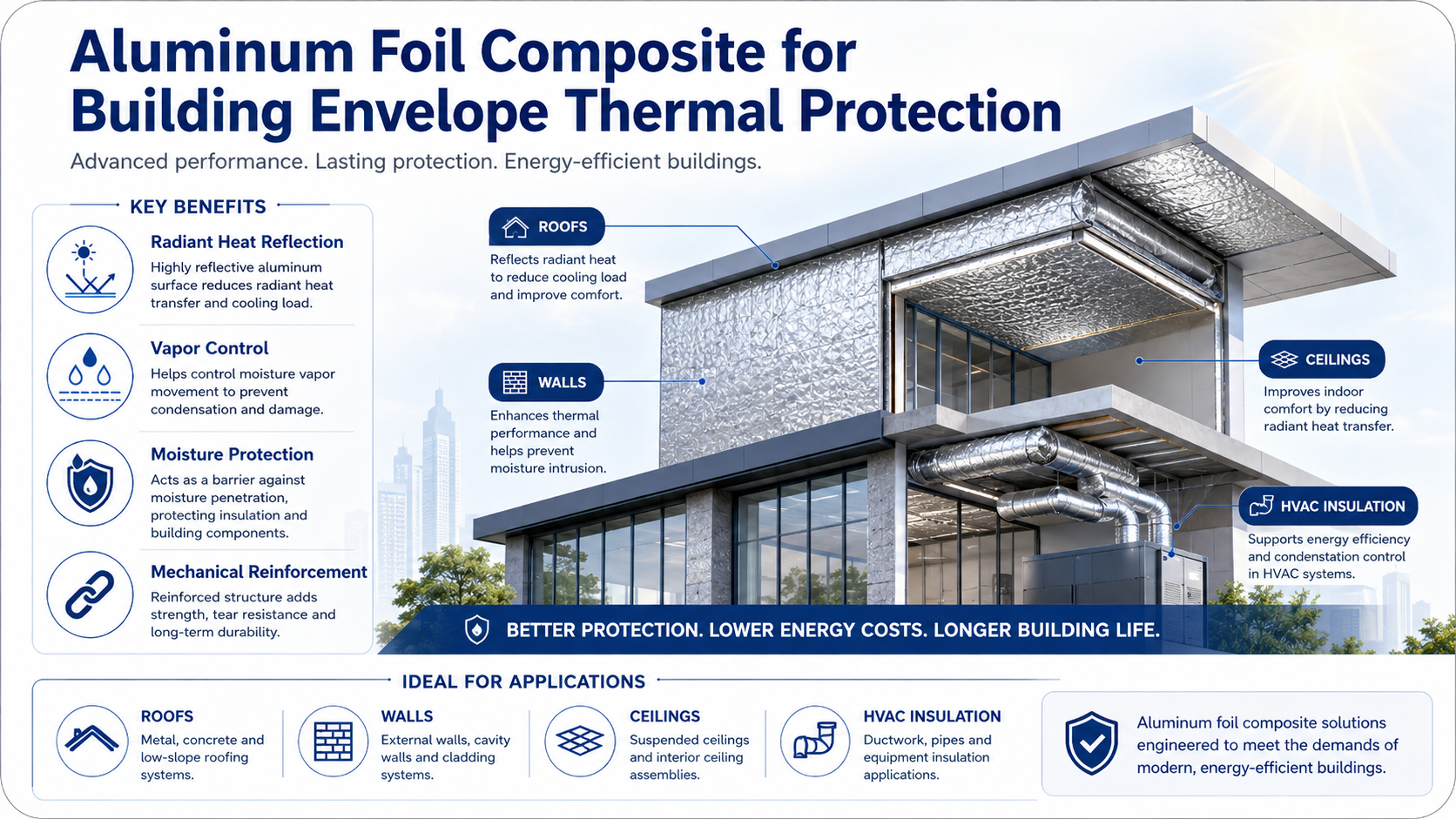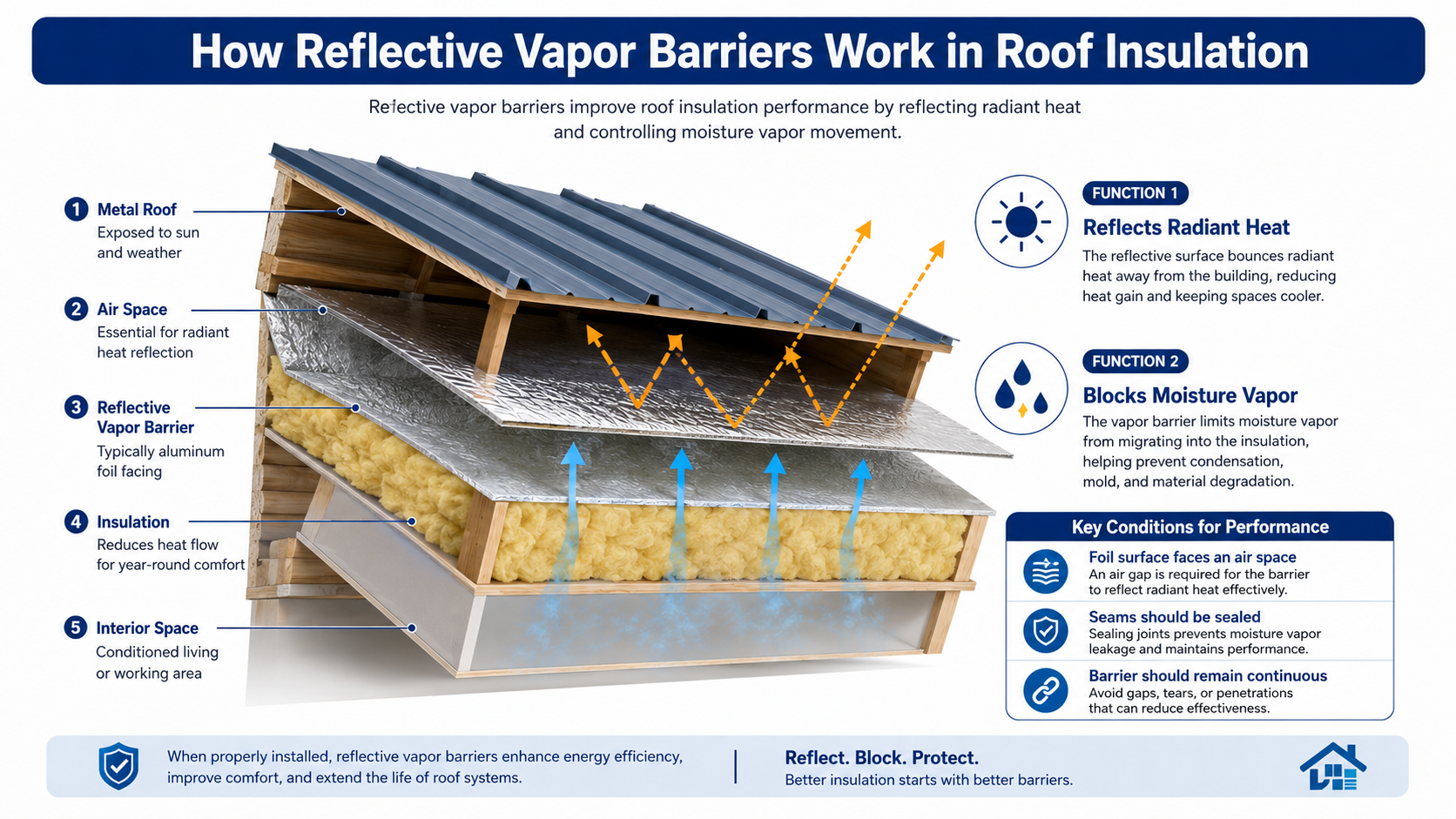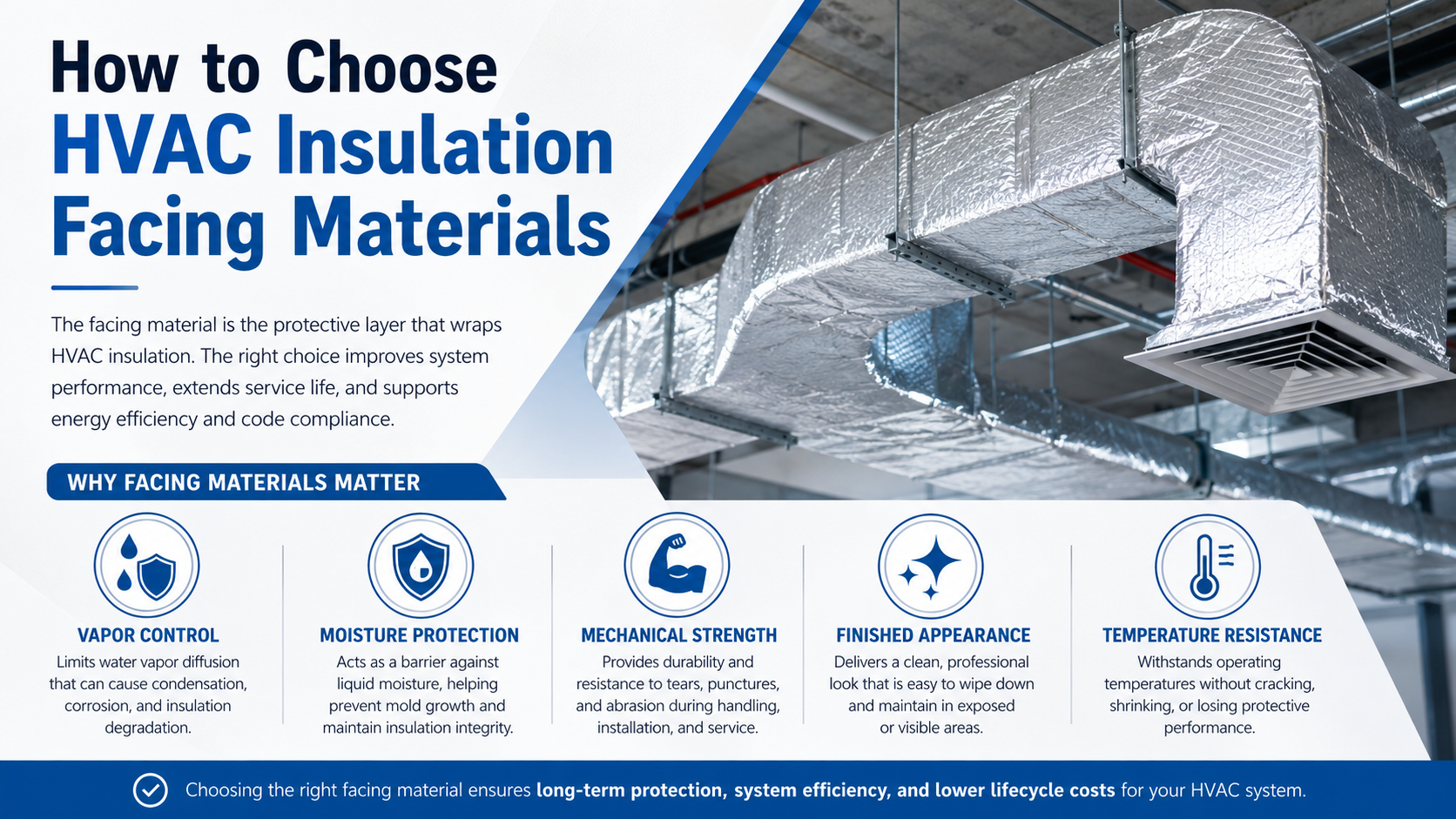
Compare FSK and DFC insulation facings, including structure, performance, applications and how to select the right aluminum foil facing for insulation projects.
Introduction
When selecting aluminum foil facing materials for insulation products, FSK and DFC are two commonly considered solutions.
Both materials are designed to provide:
- Aluminum foil vapor barrier protection
- Fiberglass scrim reinforcement
- Improved insulation durability
- Better handling performance
The key difference is that:
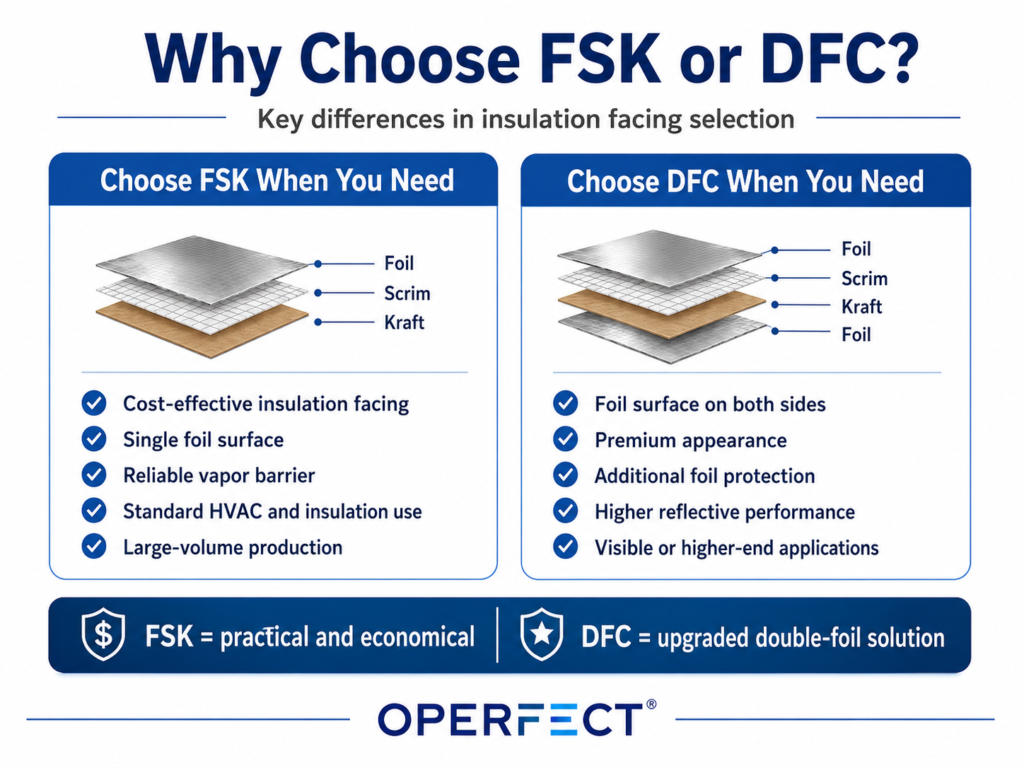
FSK is a single foil facing structure.
DFC is an upgraded double foil facing structure based on FSK.
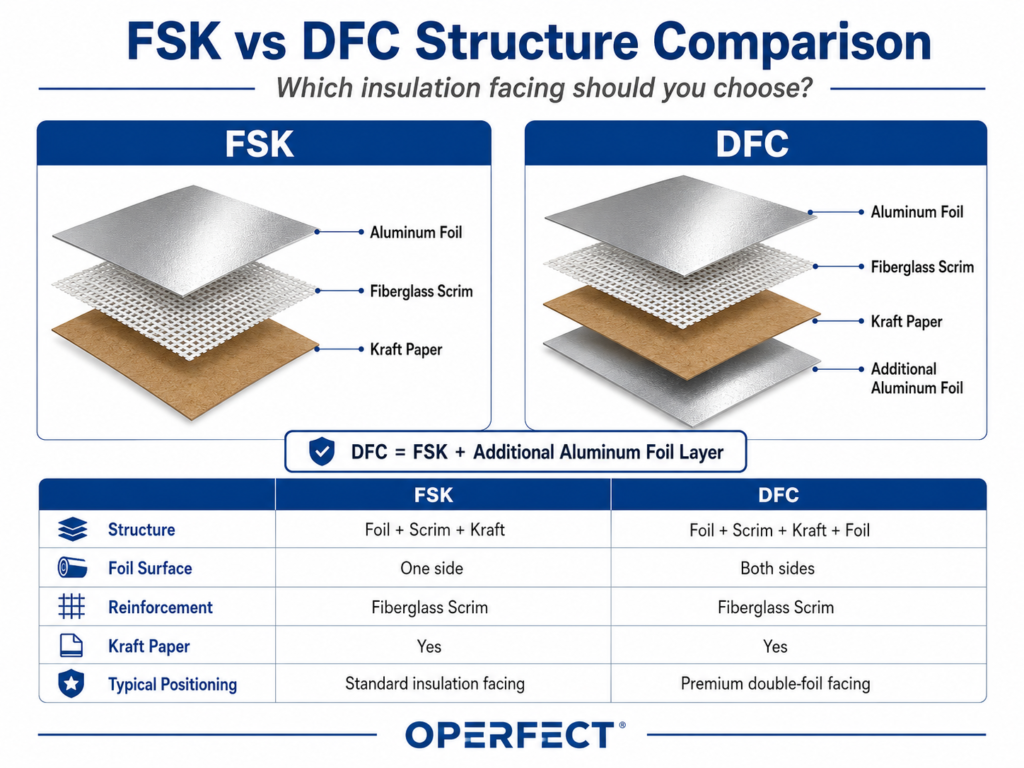
DFC adds an additional aluminum foil layer to the kraft paper side of FSK, creating aluminum foil surfaces on both sides.
The right choice depends on project requirements, appearance expectations, reflective performance and cost considerations.
What Is FSK Facing?
FSK stands for:
Foil Scrim Kraft
A typical FSK structure is:
Aluminum Foil
↓
Fiberglass Scrim
↓
Kraft Paper
Each layer provides a specific function.
Aluminum Foil Layer
The aluminum foil surface provides:
Vapor Barrier Protection
The foil layer helps reduce moisture vapor transmission and protects insulation materials from moisture-related performance loss.
Radiant Heat Reflection
When installed facing an appropriate air space, aluminum foil can reflect radiant heat.
Surface Protection
The foil provides a durable metallic surface suitable for insulation applications.
Fiberglass Scrim Layer
The fiberglass scrim is the reinforcement layer.
It improves:
- Tensile strength
- Tear resistance
- Dimensional stability
- Handling durability
The scrim helps prevent damage during:
- Manufacturing
- Transportation
- Installation
Kraft Paper Layer
The kraft paper backing provides:
- Structural support
- Better handling characteristics
- Compatibility with insulation manufacturing processes
It also provides a practical and economical backing solution.
What Is DFC Facing?
DFC stands for:
Double Foil Facing
DFC is an upgraded version of FSK.
The structure is:
Aluminum Foil
↓
Fiberglass Scrim
↓
Kraft Paper
↓
Additional Aluminum Foil Layer
In simple terms:
DFC = FSK + Additional Aluminum Foil
This creates a facing material with aluminum foil surfaces on both sides.
Why Choose DFC Over FSK?
Double Aluminum Foil Surface
The additional aluminum foil layer provides:
- Foil appearance on both sides
- Improved surface consistency
- Enhanced reflective capability
This makes DFC suitable for applications where the facing may be visible from both sides or where premium appearance is required.
Enhanced Reflective Performance
Compared with standard FSK, DFC provides an additional reflective aluminum surface.
Potential advantages include:
- Higher overall reflective capability
- Better appearance in reflective insulation systems
- Improved product presentation
Better Surface Protection
The additional foil layer protects the kraft paper backing.
Benefits include:
- Improved moisture resistance
- Better durability
- Reduced exposure of paper backing
FSK vs DFC Structure Comparison
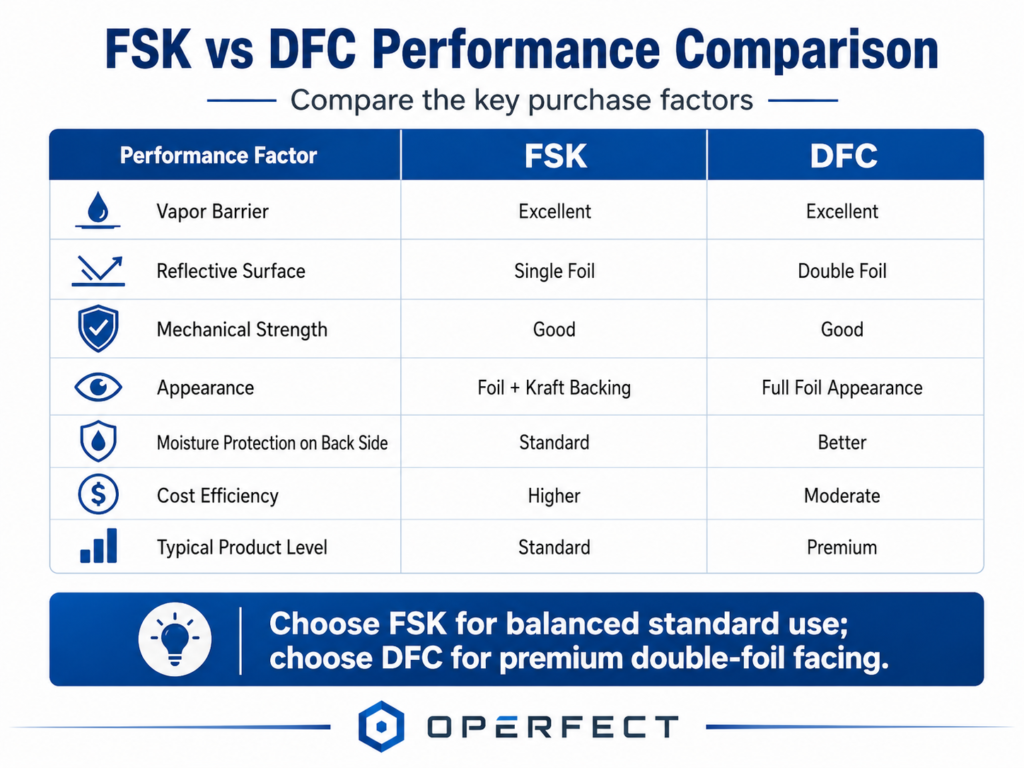
| Feature | FSK | DFC |
|---|---|---|
| Full Name | Foil Scrim Kraft | Double Foil Facing |
| Structure | Foil + Scrim + Kraft | Foil + Scrim + Kraft + Foil |
| Aluminum Foil Surface | One side | Both sides |
| Reinforcement | Fiberglass Scrim | Fiberglass Scrim |
| Kraft Paper | Yes | Yes |
| 隔汽层 | Excellent | Excellent |
| Reflective Surface | Single foil | Double foil |
| Appearance | Foil + Kraft backing | Full foil appearance |
| Cost Level | More economical | Higher |
| Typical Use | Standard insulation | Premium insulation facing |
Performance Comparison
Vapor Barrier Performance
FSK
Provides excellent vapor resistance through the aluminum foil layer.
Suitable for:
- HVAC insulation
- Fiberglass insulation
- Rock wool insulation
DFC
Provides the same basic foil barrier function with additional foil protection.
The final performance depends on:
- Foil thickness
- Lamination quality
- Seam sealing
- Installation method
Mechanical Strength
Both FSK and DFC use fiberglass scrim reinforcement.
Therefore, both provide:
- Good tensile strength
- Tear resistance
- Dimensional stability
DFC does not replace the reinforcement layer; it adds an additional foil layer to the FSK structure.
Appearance
FSK
Appearance:
- Aluminum foil surface
- Kraft paper backing
Suitable for standard insulation products.
DFC
Appearance:
- Aluminum foil on both sides
优势
- Cleaner appearance
- More premium finish
- Better for visible applications
Common Applications
FSK Applications
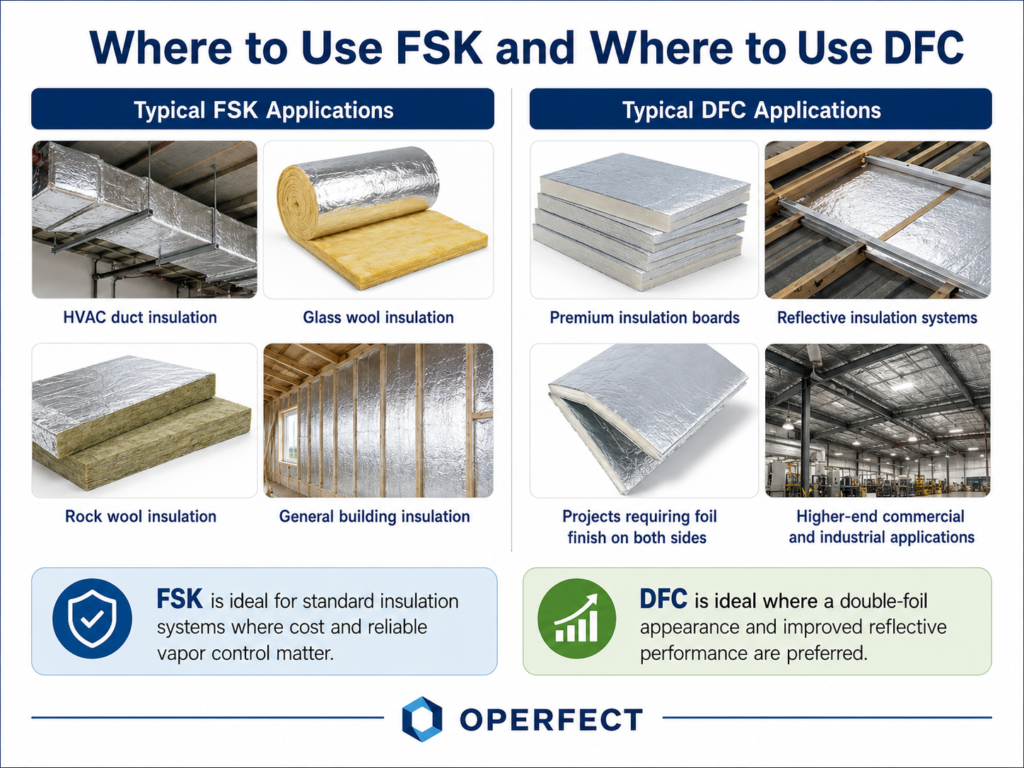
FSK is widely used for:
HVAC Duct Insulation
应用:
- Air duct insulation
- Flexible duct systems
- Mechanical insulation
优势
- Reliable vapor barrier
- Cost-effective solution
- Easy installation
Glass Wool Insulation
Used as facing for:
- Fiberglass blankets
- Fiberglass rolls
- Fiberglass boards
Rock Wool Insulation
Used for:
- Thermal insulation products
- Commercial building insulation
- Industrial insulation
DFC Applications
DFC is selected when a double foil surface is preferred.
Common applications include:
Premium Insulation Products
Examples:
- High-end insulation boards
- Premium thermal insulation systems
- Reflective insulation products
Visible Insulation Applications
Where appearance matters:
- Commercial buildings
- Mechanical rooms
- Industrial facilities
The double foil surface provides a cleaner finished appearance.
Reflective Insulation Systems
DFC can be used where reflective surfaces on both sides are desired.
How to Choose Between FSK and DFC?
Choose FSK When:
You need:
✓ Standard insulation facing
✓ Reliable vapor barrier performance
✓ Cost-effective solution
✓ Large-volume insulation production
Recommended applications:
- HVAC insulation
- 玻璃棉
- 岩棉
- General building insulation
Choose DFC When:
You need:
✓ Aluminum foil surface on both sides
✓ Premium appearance
✓ Additional foil protection
✓ Higher reflective requirements
Recommended applications:
- Premium insulation products
- Visible insulation systems
- Reflective insulation applications
Buyer Checklist
Before selecting FSK or DFC, consider:
1. Is one foil surface enough?
If yes:
→ Choose FSK
2. Is foil appearance required on both sides?
If yes:
→ Choose DFC
3. Is cost efficiency the priority?
If yes:
→ Choose FSK
4. Is the insulation product positioned as premium?
If yes:
→ Choose DFC
5. Does the project require customization?
Consider:
- Foil thickness
- Scrim specification
- Kraft paper weight
- Roll width
- Printing requirements
- Private label packaging
FAQ
Is DFC stronger than FSK?
Both products use fiberglass scrim reinforcement, so their basic mechanical strength can be similar.
DFC mainly improves the surface structure by adding an additional aluminum foil layer.
Does DFC replace FSK?
No.
DFC is an upgraded version of FSK designed for applications requiring double foil surfaces.
Is DFC more expensive than FSK?
Generally yes.
The additional aluminum foil layer increases material cost and provides enhanced appearance and reflective performance.
Conclusion
FSK and DFC are both reliable aluminum foil insulation facing solutions.
FSK provides a practical, economical and widely used solution for standard insulation applications.
DFC builds on the FSK structure by adding an additional aluminum foil layer, creating a double foil facing with improved appearance and reflective characteristics.
The best choice depends on application requirements, project expectations and budget considerations.
OPERFECT® supplies customized FSK and DFC insulation facings with different foil thicknesses, fiberglass scrim specifications, kraft paper weights, roll dimensions and OEM/private label solutions for global insulation manufacturers.