WRB vs. Vapor Barrier: What’s the Difference?
A Complete Buyer’s Guide for Builders, Contractors & Building Material Buyers
Category: Buyer’s Guide
Focus Keyword: WRB vs Vapor Barrier
URL Slug: /buyers-guide/wrb-vs-vapor-barrier
Meta Title
WRB vs. Vapor Barrier: What’s the Difference? | Complete Buyer’s Guide | OPERFECT
Meta Description
Learn the differences between Weather-Resistive Barriers (WRB) and Vapor Barriers, where each should be installed, and how they work together to improve moisture management and building performance.
WRB vs. Vapor Barrier: What’s the Difference?
Quick Answer
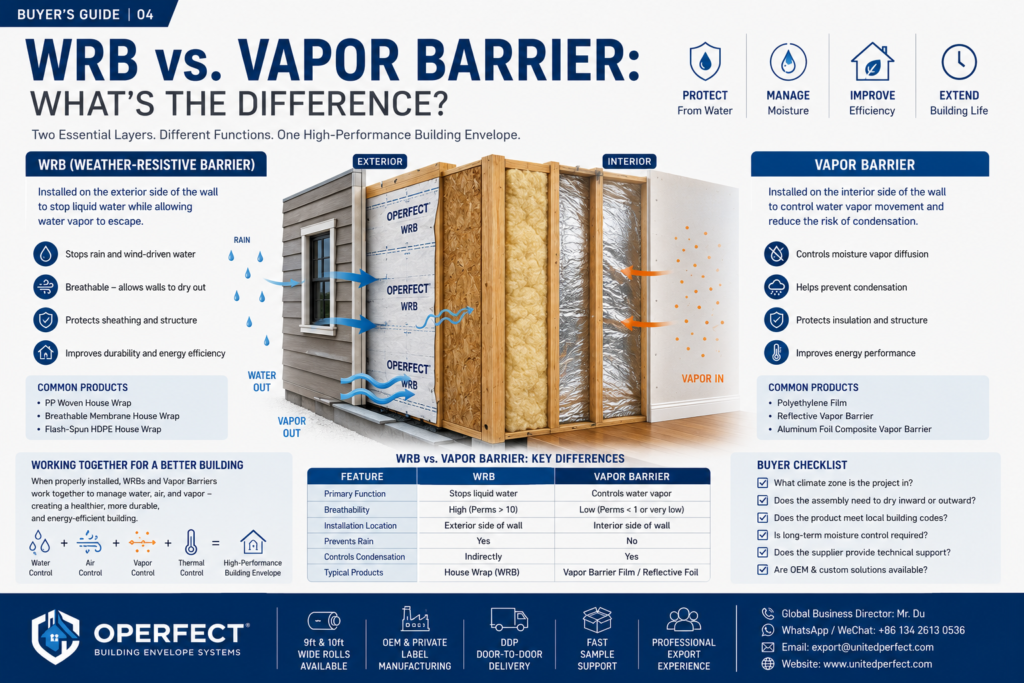
A Weather-Resistive Barrier (WRB) and a Vapor Barrier serve different purposes within a building envelope. A WRB is installed on the exterior side of the wall to stop liquid water while allowing water vapor to escape. A Vapor Barrier is typically installed on the interior side to control moisture vapor movement and reduce condensation. Both products are essential, but they should never be confused or used interchangeably.
Key Takeaways
- A WRB blocks rain but remains breathable.
- A Vapor Barrier controls water vapor movement inside the wall.
- The two products work together to manage moisture.
- Proper placement depends on climate zone and wall design.
- A complete building envelope requires both water control and vapor control.
What Is a Weather-Resistive Barrier (WRB)?
A Weather-Resistive Barrier is the exterior protective layer installed behind exterior cladding.
Its primary functions are:
- Prevent wind-driven rain from entering the wall assembly.
- Allow trapped moisture vapor inside the wall to escape.
- Improve wall durability.
- Enhance energy efficiency by reducing uncontrolled air leakage.
Common WRB products include:
- PP Woven House Wrap
- Breathable Membrane House Wrap
- Flash-Spun HDPE House Wrap
What Is a Vapor Barrier?
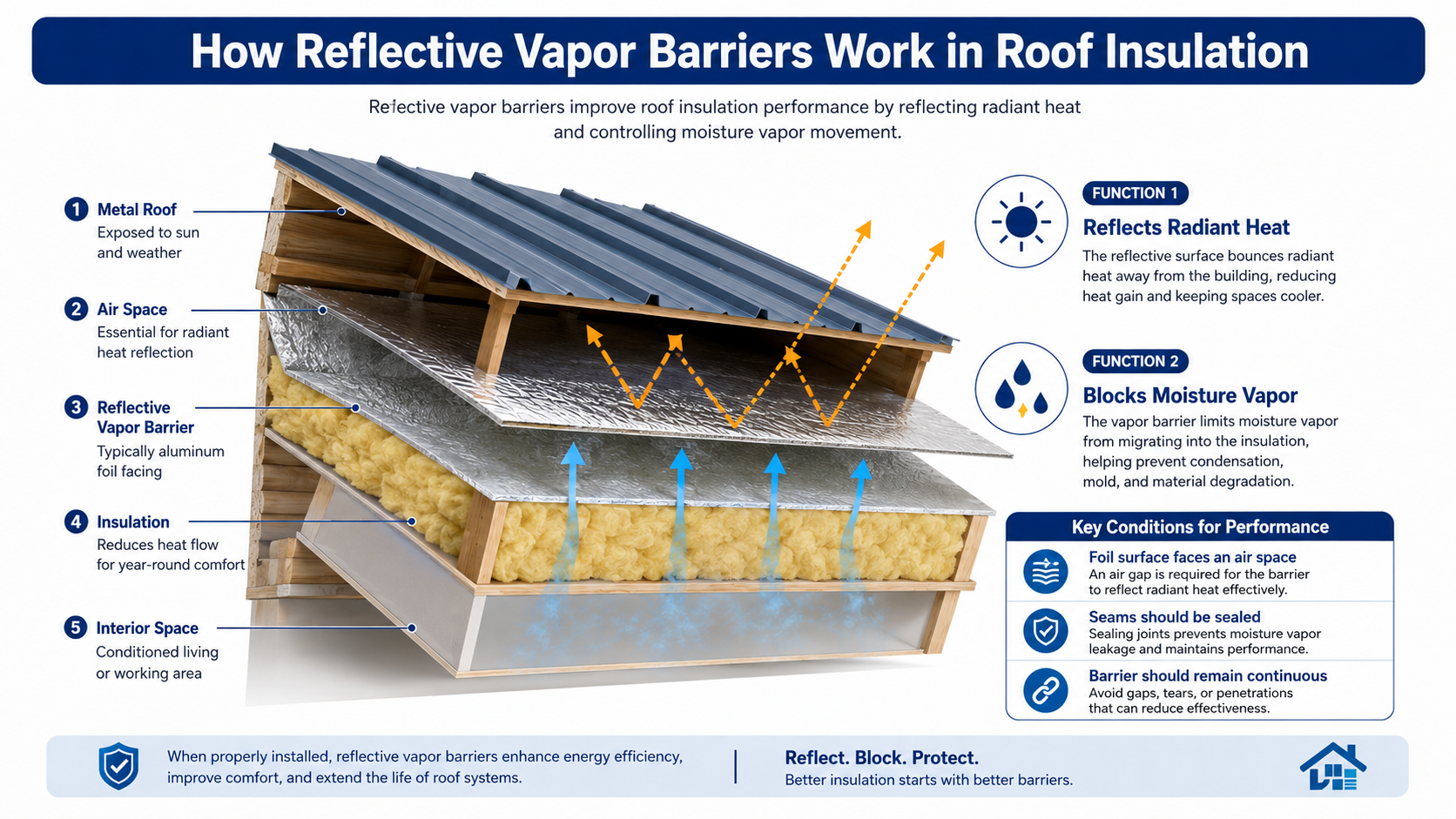
A Vapor Barrier is designed to control the movement of water vapor through a building assembly.
Unlike a WRB, its primary goal is not to stop rainwater, but to reduce moisture diffusion that may cause condensation inside walls or roofs.
Common Vapor Barrier materials include:
- Polyethylene Film
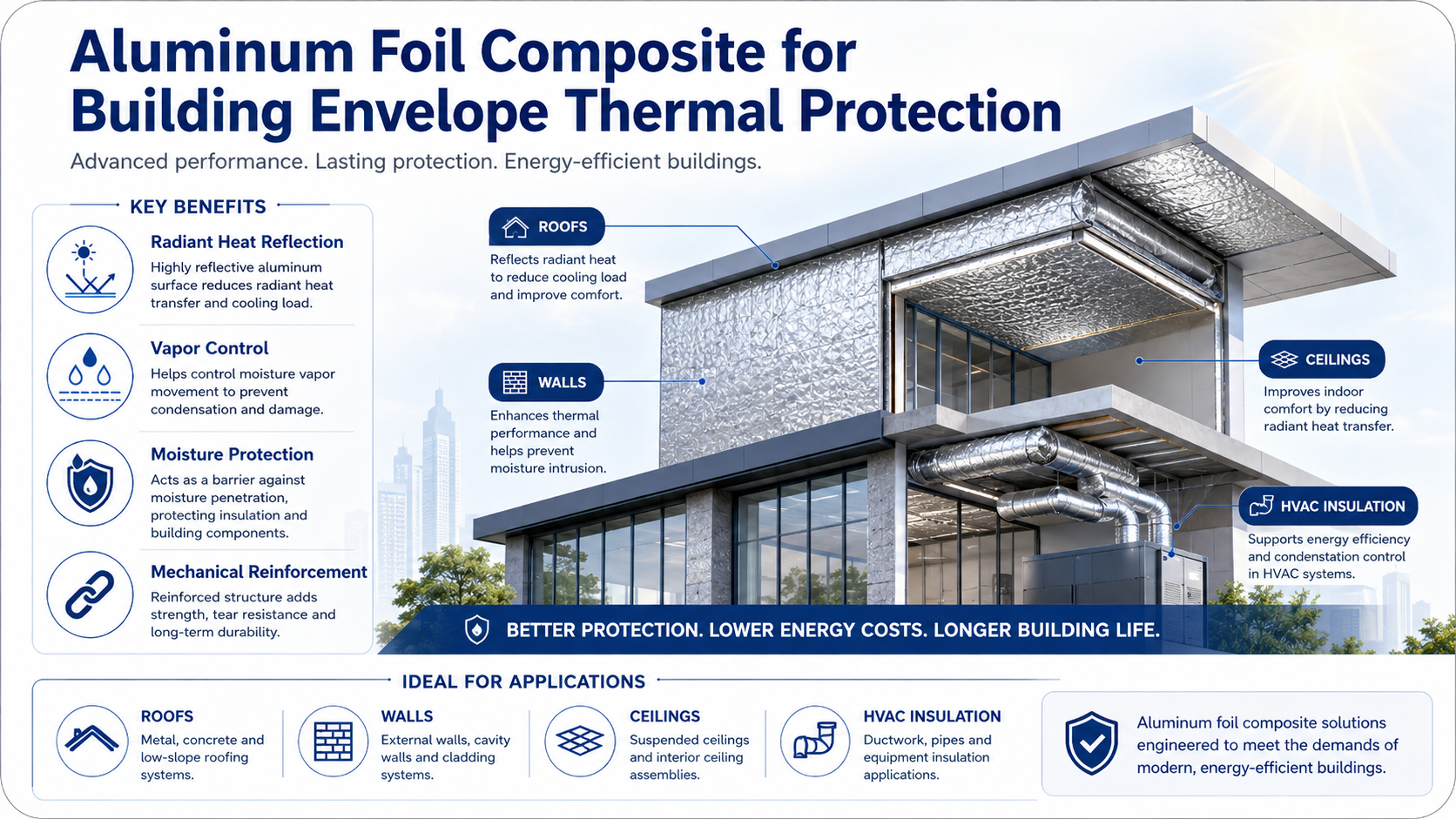
- Reflective Vapor Barrier
- Aluminum Foil Composite Vapor Barrier
The correct type depends on climate, insulation system, and building design.
WRB vs. Vapor Barrier: Key Differences
| Feature | WRB | Vapor Barrier |
|---|---|---|
| Primary Function | Stops liquid water | Controls water vapor |
| Breathability | High | Low or Controlled |
| Installation Location | Exterior side of wall | Interior side of insulation |
| Prevents Rain | Yes | No |
| Controls Condensation | Indirectly | Yes |
| Typical Products | House Wrap | Reflective Vapor Barrier |
Although both manage moisture, they solve different problems.
Can You Use One Instead of the Other?
No.
A common mistake is assuming that a Vapor Barrier can replace a WRB, or vice versa.
If only a Vapor Barrier is installed:
- Rainwater may penetrate the wall assembly.
- Moisture can become trapped.
- Structural damage may occur over time.
If only a WRB is installed where vapor control is required:
- Indoor moisture may condense inside insulated wall cavities.
- Mold growth and insulation performance issues may develop.
The best solution is selecting the appropriate combination based on local building codes and climate conditions.
How They Work Together
A high-performance wall assembly typically includes:
- Exterior Cladding
- Ventilation Cavity
- Weather-Resistive Barrier (WRB)
- Structural Sheathing
- Wall Framing
- Thermal Insulation
- Vapor Barrier (where required)
- Interior Finish
Each layer performs a unique role in managing water, air, heat, and moisture.
Choosing the Right Solution for Different Climates
Cold Climates
Priority:
- Prevent condensation
- Reduce heat loss
- Control indoor vapor
Recommended:
- Breathable WRB
- Proper Vapor Barrier
- High-performance insulation
Hot & Humid Climates
Priority:
- Allow walls to dry.
- Reduce trapped moisture.
- Improve ventilation.
Recommended:
- High-permeability WRB
- Carefully designed vapor control strategy
Mixed Climate Zones
The correct wall assembly depends on seasonal temperature changes and local building regulations.
Professional system design is recommended.
Buyer Checklist
Before selecting a WRB or Vapor Barrier, ask:
✔ What climate zone is the project located in?
✔ Is the wall designed to dry outward or inward?
✔ Does the product comply with local building codes?
✔ Is long-term moisture control required?
✔ Does the supplier provide technical support?
✔ Are OEM and custom solutions available?
Why Choose OPERFECT?
OPERFECT supplies integrated Building Envelope Protection Systems designed for distributors, contractors, and private-label brands worldwide.
Our solutions include:
- PP Woven House Wrap
- Breathable Membrane House Wrap
- Flash-Spun HDPE House Wrap
- Reflective Vapor Barrier
- Synthetic Roofing Underlayment
- Ice & Water Shield
Why global buyers choose OPERFECT:
- 9 ft & 10 ft wide rolls available
- OEM & Private Label Manufacturing
- Factory Direct Supply
- DDP Door-to-Door Delivery
- Fast Sample Support
- Professional Export Experience
Frequently Asked Questions
Is a WRB waterproof?
Yes. A WRB is designed to resist liquid water while remaining breathable to allow moisture vapor to escape.
Is a Vapor Barrier breathable?
Most Vapor Barriers have very low vapor permeability because their purpose is to control moisture vapor movement.
Can House Wrap replace a Vapor Barrier?
No. House Wrap functions as a Weather-Resistive Barrier and should not replace a properly designed Vapor Barrier where one is required.
Do all buildings need a Vapor Barrier?
Not necessarily. Requirements depend on climate, wall assembly, insulation type, and local building codes.
Where should a WRB be installed?
A WRB is typically installed between the exterior sheathing and the cladding system.
Why is understanding the difference important?
Using the correct combination of WRB and Vapor Barrier helps prevent moisture damage, improves energy efficiency, and extends building lifespan.
Related Articles
- What Is a Building Envelope?
- Why Moisture Management Matters
- Air Barrier vs. Vapor Barrier: Which One Do You Need?
- How to Choose the Right House Wrap for Your Project
Contact OPERFECT
United Perfect Group,To Make Buildings Perfect, together.
Global Business Director: Mr. Du
WhatsApp / WeChat: +86 134 2613 0536
Email: export@unitedperfect.com
Website: www.unitedperfect.com