Fire-Resistant and UV-Resistant Breathable Membranes: What Buyers Should Verify Before Ordering
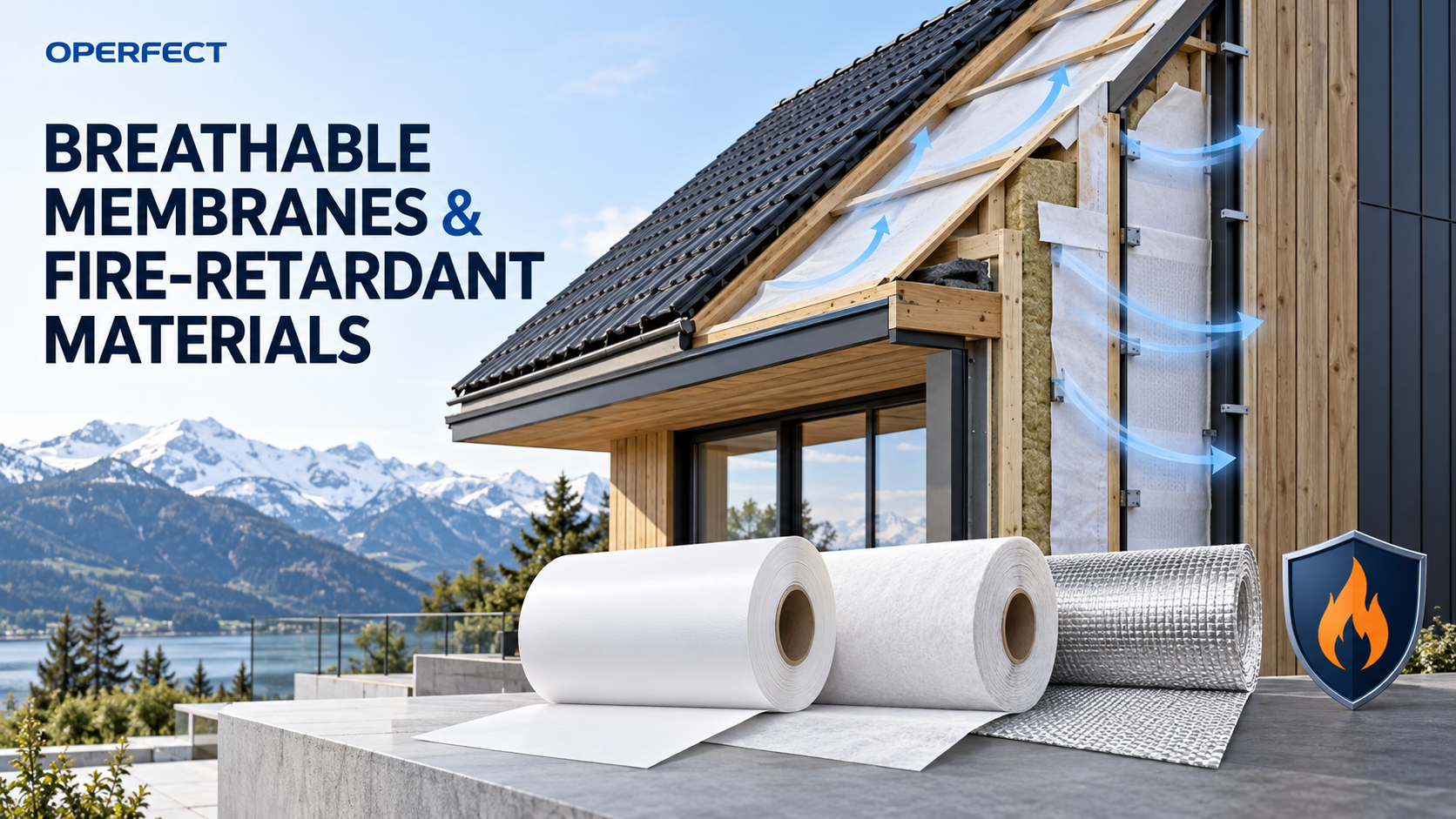
Fire-resistant and UV-resistant performance are becoming increasingly important when buyers select breathable membranes for European roofing and external wall systems.
These two terms often appear together in product specifications. However, they address different risks and should not be treated as interchangeable performance claims.
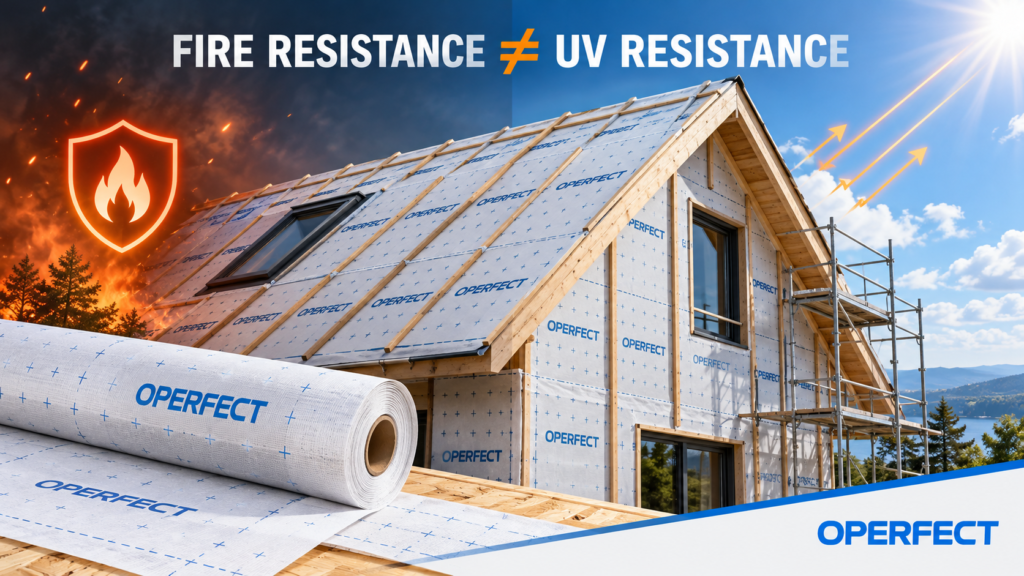
Fire performance concerns how a membrane reacts when exposed to fire. UV resistance concerns whether the membrane can maintain its physical properties during exposure to sunlight.
A membrane may provide enhanced fire performance but have limited UV exposure capability. Another product may offer good UV durability without meeting the required fire classification.
The correct product should therefore be selected according to the complete building system, application environment and project requirements.
1. Fire Resistance and UV Resistance Are Different
A breathable membrane performs several functions within a building envelope. It allows water vapour to escape, helps resist external water and protects insulation and structural components.
Fire-resistant and UV-resistant properties add two different dimensions to this performance.
Fire Performance
Fire performance describes how a material behaves when exposed to a flame or fire source.
Depending on the product and test method, the evaluation may consider:
- Ignition behaviour;
- Flame spread;
- Burning droplets;
- Smoke production;
- Self-extinguishing behaviour;
- Overall reaction-to-fire classification.
The required performance depends on the country, building type, roof or façade construction and project specification.
The word “fire-resistant” alone does not confirm that a product is suitable for every fire-related application. Buyers should identify the required standard or classification before requesting a quotation.
UV Resistance
UV resistance relates to the membrane’s ability to withstand ultraviolet radiation from sunlight.
Excessive UV exposure may influence:
- Tensile strength;
- Tear resistance;
- Surface stability;
- Flexibility;
- Layer bonding;
- Long-term durability.
The required UV performance depends mainly on how long the membrane will remain exposed and whether the completed system will fully cover it.
Fire performance and UV resistance should therefore be confirmed separately.
2. Confirm the Actual Application
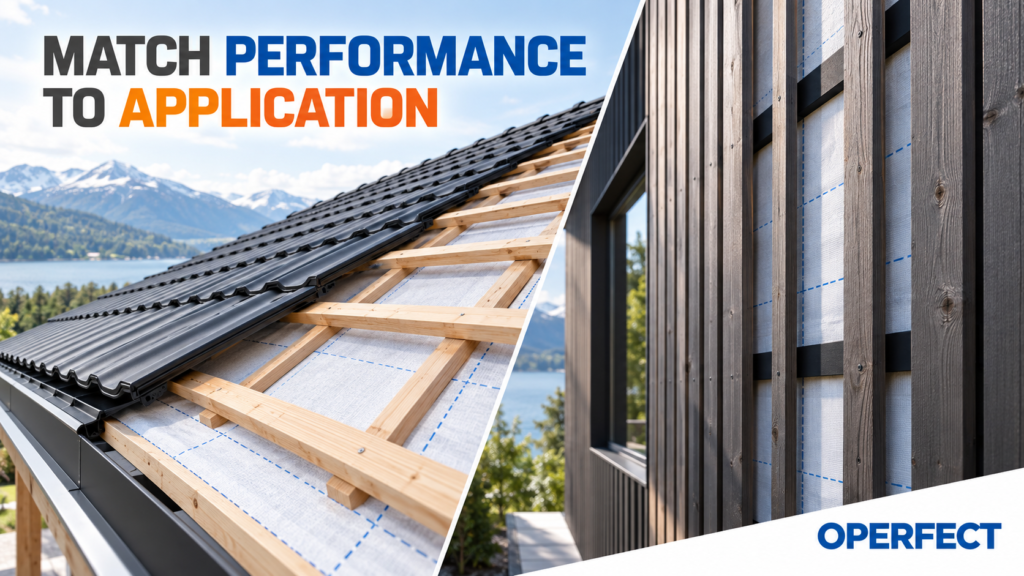
Before choosing a fire-resistant or UV-resistant membrane, buyers should establish where and how the product will be installed.
Important factors include:
- Pitched roof or external wall;
- Fully covered or open-joint façade;
- Ventilated or non-ventilated construction;
- Insulation material and system structure;
- Expected construction schedule;
- Maximum exposure before final covering;
- Local climate and sunlight intensity;
- Applicable regulations and project specifications.
A membrane installed beneath a fully covered roof has different exposure conditions from one used behind open-joint cladding.
Similarly, a product suitable for a residential roof may not automatically satisfy the requirements of a large commercial façade.
The membrane should be considered part of the complete roof or wall system rather than as an isolated layer.
3. Verify the Fire Test Requirement
Fire regulations and classification systems vary between markets.
Before ordering, the buyer should confirm:
- Which test standard applies;
- Which fire classification is required;
- Whether the requirement applies to the membrane alone or the complete system;
- Whether the tested construction matches the product being ordered;
- Whether printing and other functional layers are included in the tested sample.
This last point is particularly important for private-label products.
Printing inks, surface treatments, reinforcement layers and changes in material composition may affect the behaviour of the completed membrane.
If the commercial product differs significantly from the tested sample, the original test result may no longer represent the final construction accurately.
4. Determine the Required UV Exposure Period
UV-resistant performance should be selected according to the expected exposure conditions—not simply because a product carries a UV-related description.
The buyer should consider:
- How long the membrane may remain uncovered;
- Whether construction delays are possible;
- Seasonal sunlight intensity;
- Storage conditions before installation;
- Whether the façade has open joints;
- The width and spacing of façade openings;
- Whether the membrane will remain partly exposed after completion.
For conventional roofing and fully covered wall systems, UV exposure is generally temporary.
Open-joint façade systems create different conditions because sunlight may continue to reach parts of the membrane after the exterior cladding has been installed. Such applications normally require a specifically designed and verified membrane solution.
5. Review the Complete Membrane Structure
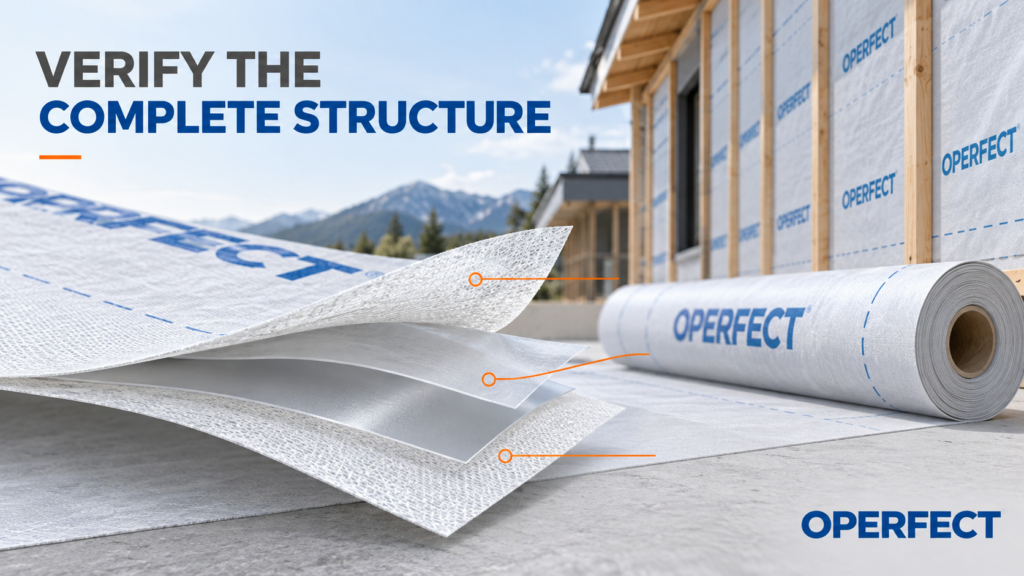
The performance of a breathable membrane is determined by its complete construction.
Depending on the product type, this may include:
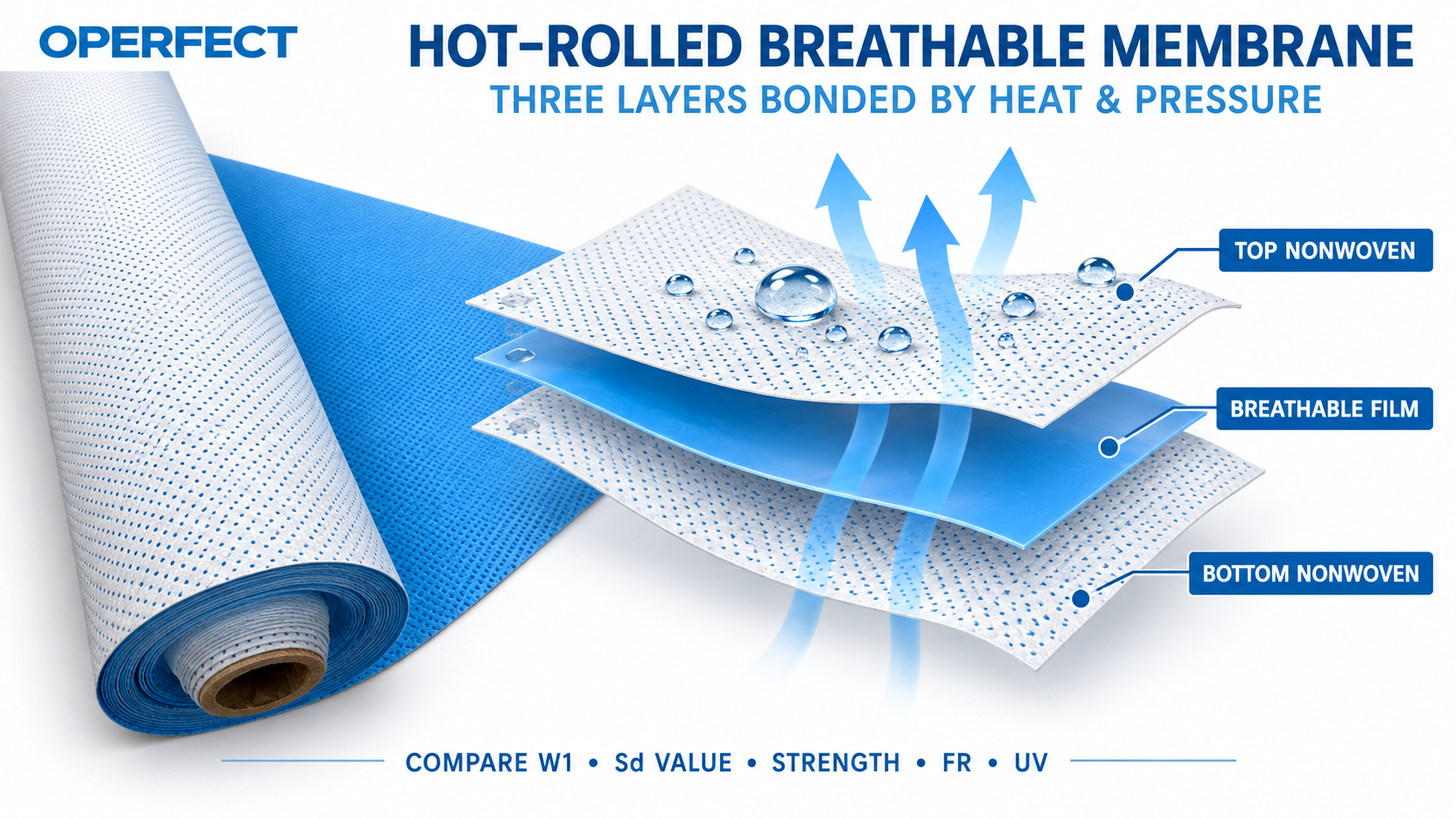
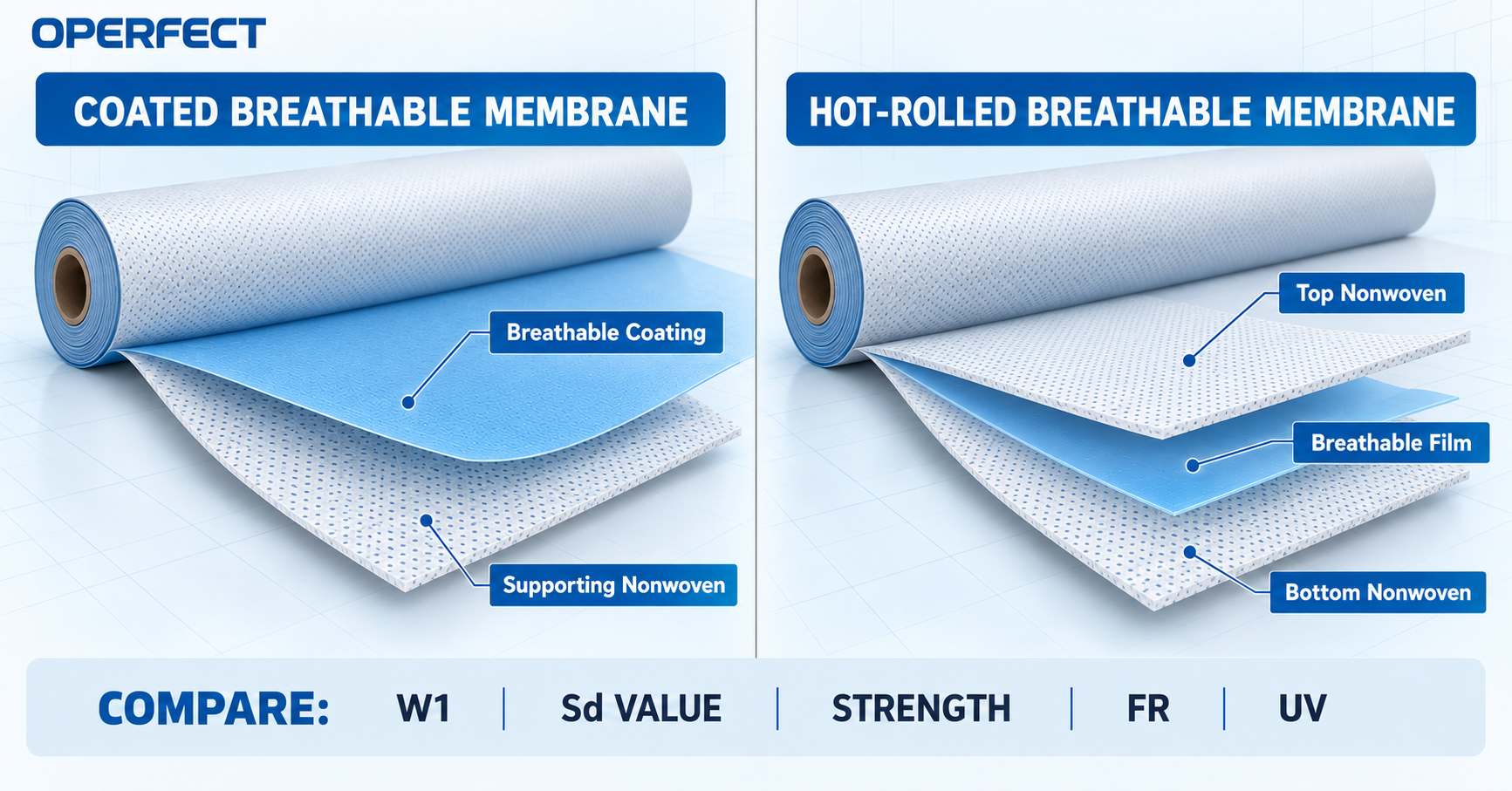
- Supporting nonwoven layers;
- Functional breathable film;
- Reinforcing material;
- Thermally bonded layers;
- Fire-retardant additives;
- UV-stabilizing materials;
- Surface treatment;
- Printing ink.
A fire-retardant additive in one layer does not automatically confirm the performance of the complete product.
Likewise, a UV-stabilized raw material does not by itself establish how the finished membrane will perform after lamination, printing and prolonged exposure.
Buyers should therefore evaluate the finished membrane rather than rely only on the description of an individual raw material.
6. Consider the Influence of Printing
Customized printing is important for distributors and private-label building material brands.
Logos, installation lines, product information and warning statements can all be printed on the membrane. However, printing should be considered during product development, especially when fire performance is required.
Buyers should confirm:
- Ink type and colour;
- Printing coverage;
- Logo repeat length;
- Printing position;
- Whether the tested sample included printing;
- Whether mass production will use the same ink system.
For projects with specific fire requirements, changes to the ink or printing coverage should be reviewed before production.
The finished printed membrane—not only the unprinted base material—should match the confirmed product specification.
7. Production Consistency Matters
A test report describes the performance of the tested sample. Long-term supply also depends on whether mass-produced goods remain consistent with that sample.
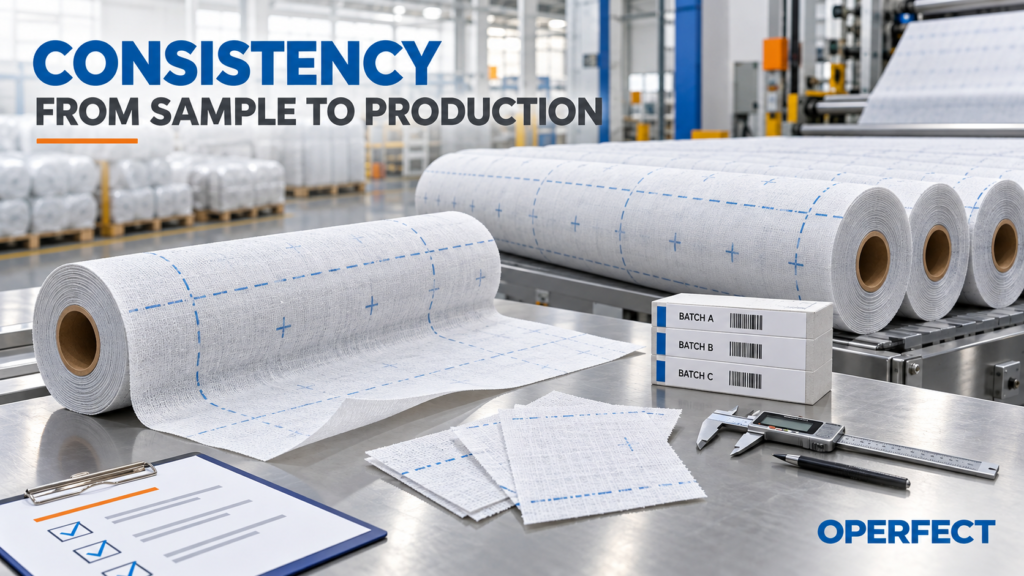
Important elements include:
- Raw-material specifications;
- Material suppliers;
- Membrane weight and layer composition;
- Bonding or lamination process;
- Fire-retardant and UV-stabilizing materials;
- Printing system;
- Production parameters;
- Quality inspection records.
Uncontrolled changes may affect fire behaviour, UV durability, breathability, water resistance or mechanical strength.
For repeat orders and private-label programs, buyers should work with suppliers that can maintain stable specifications and communicate necessary changes before production.
8. Do Not Evaluate One Property in Isolation
Fire and UV performance are important, but a breathable membrane must still perform its basic functions within the building envelope.
The complete evaluation should also include:
- Water resistance;
- Vapour permeability and Sd value;
- Tensile strength;
- Tear resistance;
- Nail-shank resistance, where applicable;
- Dimensional stability;
- Layer adhesion;
- Roll size and installation conditions.
Increasing one performance characteristic should not create an unacceptable reduction in another.
For example, the selected product should still provide the required vapour openness after its fire-resistant or UV-resistant construction has been established.
The goal is balanced performance—not simply the greatest possible number of product labels.
OPERFECT Membrane Solutions
OPERFECT provides several breathable membrane structures for roofing and wall protection systems:
Laminated Breathable Membranes
Supporting nonwoven layers are combined with a functional breathable film. The construction can be customized according to weight, strength, colour, printing and functional requirements.
Thermally Bonded Breathable Membranes
The material layers are integrated through controlled heat and pressure. Different constructions can be developed according to the required application and performance.
Flash-Spun HDPE Membranes
Flash-spun HDPE membranes combine vapour permeability, water resistance and mechanical durability in a lightweight structure.
OPERFECT supplies B1060 standard and B2066 fire-resistant options. Supporting test data for relevant products include W1 water resistance and an Sd value below 0.2 m.
Depending on the project, we can also support:
- Standard and fire-resistant options;
- UV-resistant solutions;
- Roofing and wall applications;
- Standard and wide-width rolls;
- Customized weight, colour and roll size;
- Logo and private-label printing;
- Customized packaging;
- Technical documentation and product-selection support.
A Practical Checklist Before Ordering
Before confirming a fire-resistant or UV-resistant breathable membrane, buyers should answer the following questions:
- Where will the membrane be installed?
- Which fire test or classification is required?
- How long will the membrane remain exposed?
- Is the façade fully covered or open-jointed?
- Does the tested construction match the ordered product?
- Is printing included in the confirmed structure?
- Will mass production use the same materials and process?
- Are water resistance, vapour permeability and mechanical properties also suitable?
Clear answers to these questions help prevent incorrect product selection and reduce risks during testing, installation and repeat ordering.
Match Verified Performance to the Actual Project
Fire resistance and UV resistance are not interchangeable, and neither should be evaluated separately from the rest of the building envelope.
The right membrane is not necessarily the product with the most performance labels. It is the product whose structure, verified data and production consistency match the actual roofing or wall system.
OPERFECT works with distributors, importers and private-label building material brands to develop practical membrane solutions for different markets and applications.
United Perfect Group ,To Make Buildings Perfect, together.
Цзинаньская корпорация строительных материалов United Perfect
Global Business Director: Mr. Du
Электронная почта: export@unitedperfect.com
WhatsApp / WeChat: +86 134 2613 0536
Веб-сайт: www.unitedperfect.com