Learn how foil-scrim-kraft facing is structured, what performance it provides, and why it is widely used on glass wool, rock wool and HVAC insulation.
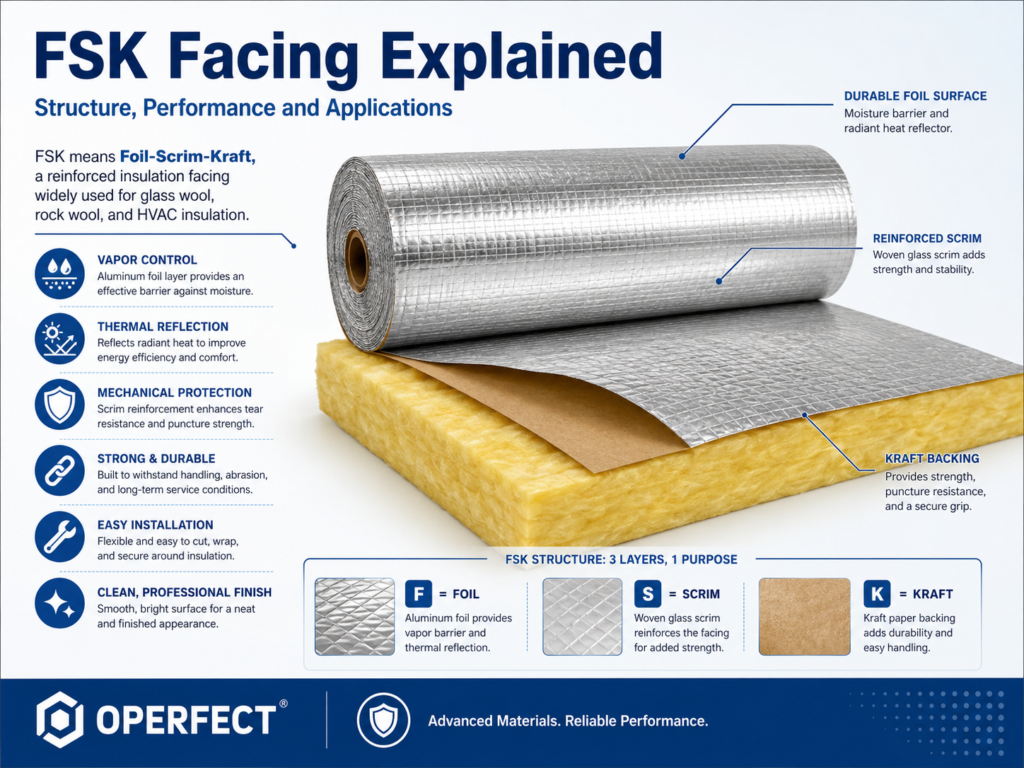
FSK facing is one of the most widely used insulation-facing materials.
The abbreviation FSK generally refers to:
- F — Aluminum Foil
- S — Reinforcing Scrim
- K — Kraft Paper
These three components are laminated together to create a reinforced reflective facing for thermal and acoustic insulation products.
FSK facing is commonly applied to glass wool, rock wool, duct wrap, insulation boards and metal-building insulation.
Basic Structure of FSK Facing
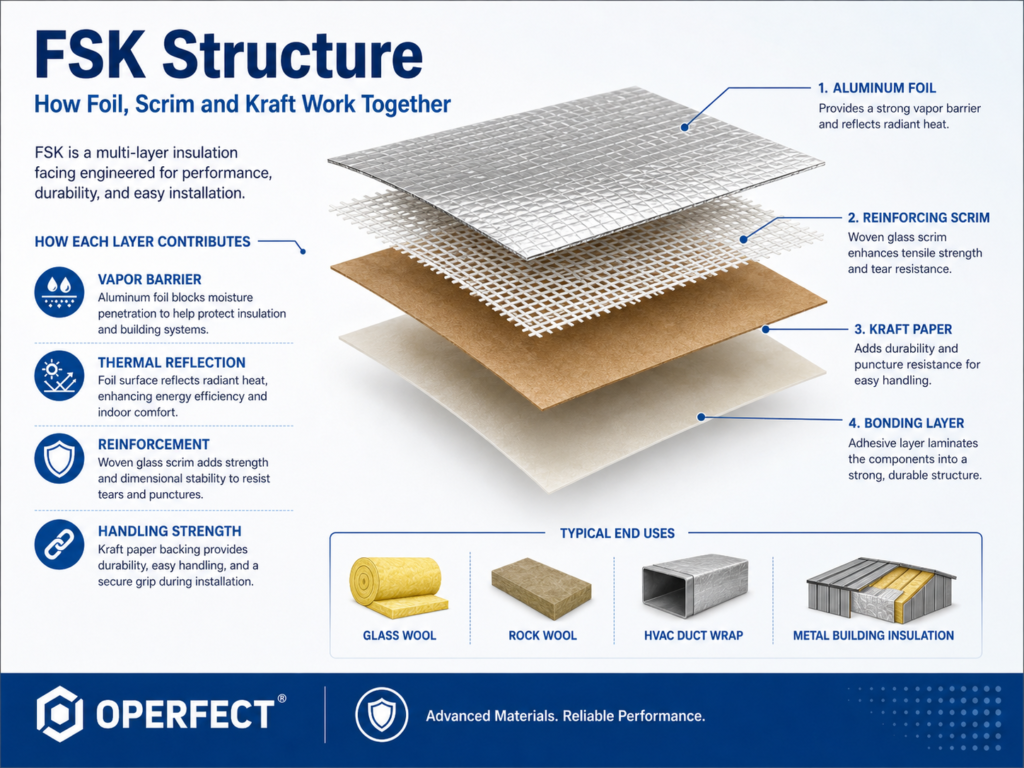
A typical FSK structure contains:
- Aluminum foil
- Adhesive or polyethylene bonding layer
- Reinforcing scrim
- Kraft paper
Each component performs a separate function.
Aluminum Foil
The aluminum foil forms the exposed surface.
Its primary functions include:
- Radiant heat reflection
- Vapor resistance
- Surface protection
- Clean metallic appearance
- Compatibility with foil tape
- Support for printing or embossing
Reinforcing Scrim
Scrim is an open-grid reinforcement made from fiberglass, polyester or another yarn.
Its functions include:
- Increasing tensile strength
- Improving tear resistance
- Limiting tear propagation
- Supporting wide rolls
- Improving dimensional stability
Kraft Paper
Kraft paper forms the backing layer.
It provides:
- Stiffness
- Economical reinforcement
- Handling support
- A suitable bonding surface
- Improved converting performance
Adhesive or PE Bonding Layer
The bonding layer keeps the foil, scrim and kraft paper together.
Its quality affects:
- Bond strength
- Flexibility
- Aging resistance
- Moisture resistance
- Delamination resistance
- Production stability
Why FSK Facing Is Widely Used
FSK offers a practical balance between performance and cost.
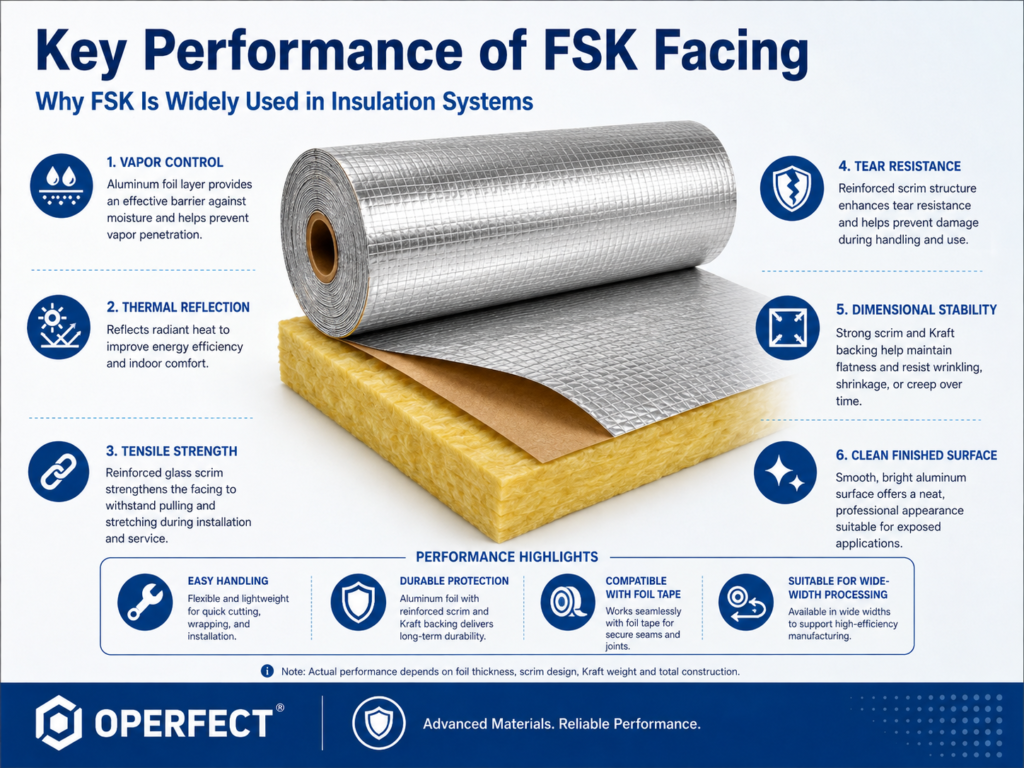
It combines the reflective and vapor-control properties of aluminum foil with the strength of scrim and the stiffness of kraft paper.
Key advantages include:
- Good vapor resistance
- Reflective surface
- Improved tensile strength
- Better tear resistance than unsupported foil
- Easy handling
- Stable roll processing
- Suitability for printing
- Compatibility with insulation-lamination lines
- Cost-effective structure
This makes FSK suitable for both insulation manufacturers and building-material distributors.
Thermal Reflection
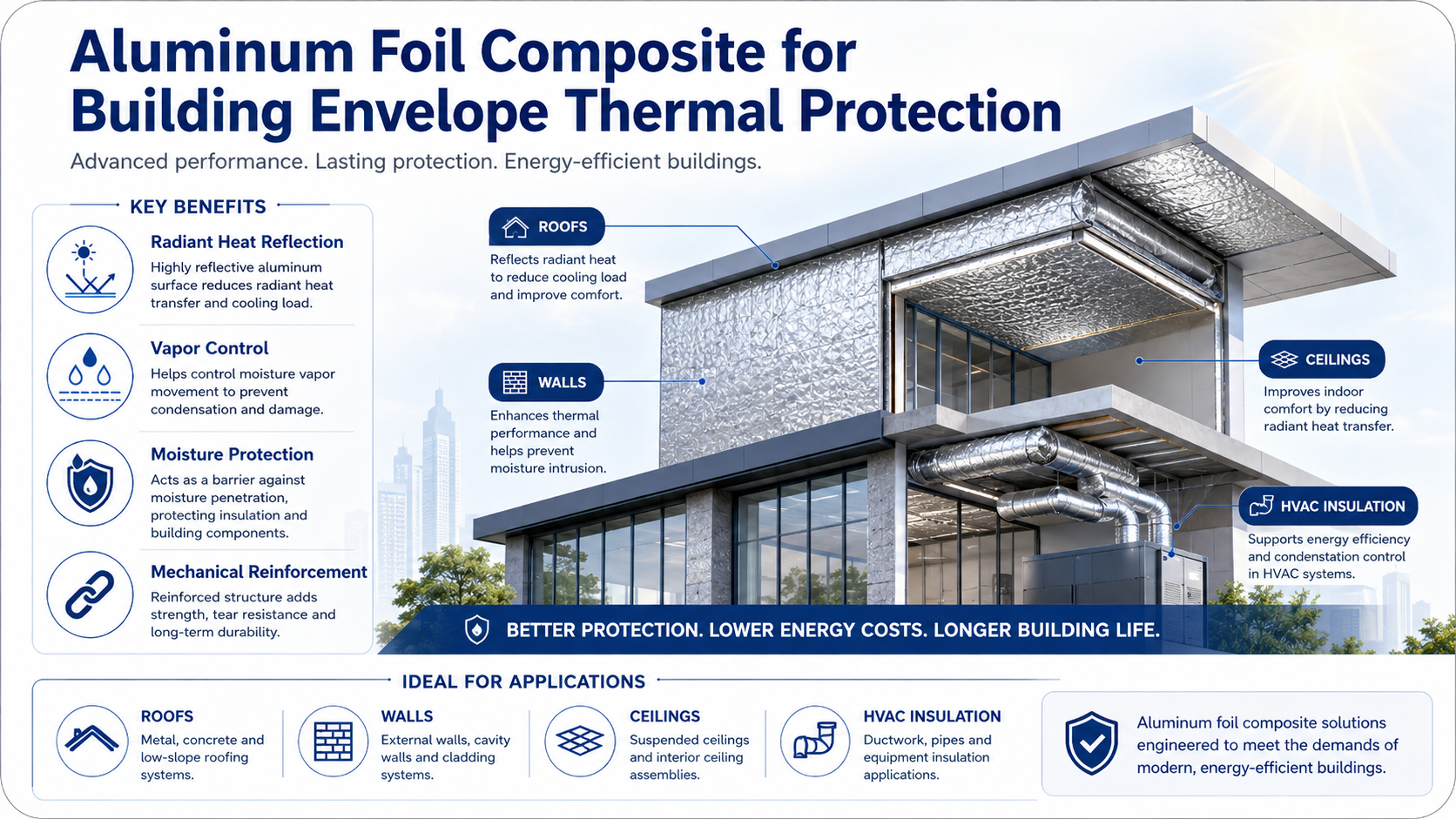
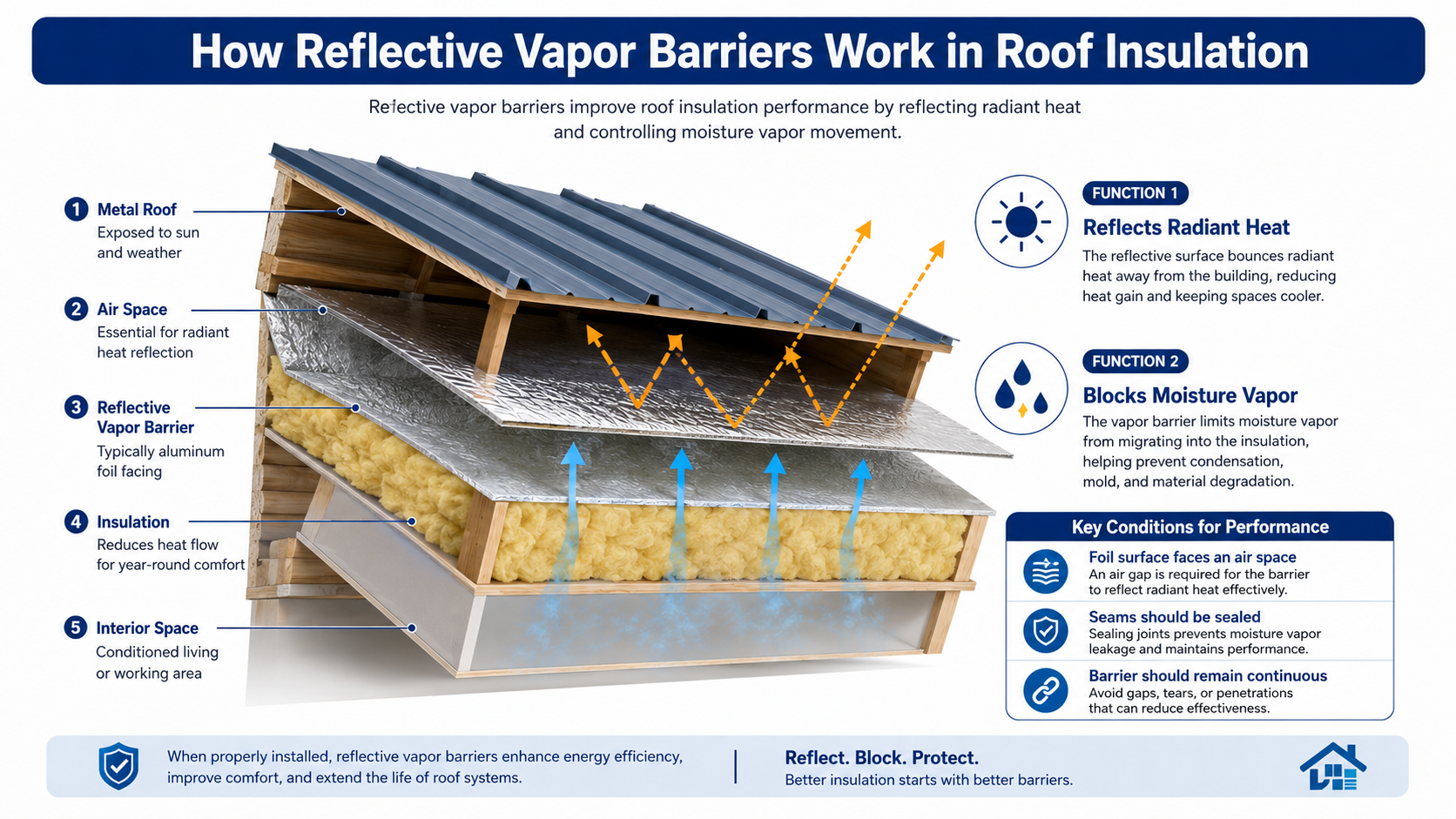
The aluminum surface can help reduce radiant heat transfer when installed facing an air space.
This is useful in:
- Roof systems
- Metal buildings
- HVAC ducts
- Ceiling insulation
- Industrial thermal insulation
The reflective surface does not replace the thermal resistance of glass wool or rock wool. Instead, it complements the bulk insulation.
Vapor-Control Performance
Aluminum foil provides low water-vapor permeability.
When FSK facing is continuously bonded and properly sealed, it can help reduce moisture-vapor movement into insulation.
Effective vapor control also depends on:
- Foil thickness
- Pinholes
- Bond quality
- Sealed seams
- Compatible tape
- Installation quality
- Damage during handling
Project-specific vapor-barrier classification should be confirmed through testing.
Mechanical Performance
Scrim and kraft paper make FSK much stronger than unsupported aluminum foil.
The reinforcement helps the material resist:
- Pulling
- Tearing
- Folding
- Wrinkling
- Slitting stress
- Installation damage
- Roll tension
Mechanical performance depends on:
- Scrim material
- Grid size
- Yarn thickness
- Kraft-paper weight
- Foil thickness
- Adhesive strength
- Total basis weight
Two FSK materials with similar appearance may have significantly different strength.
Common Types of FSK Facing
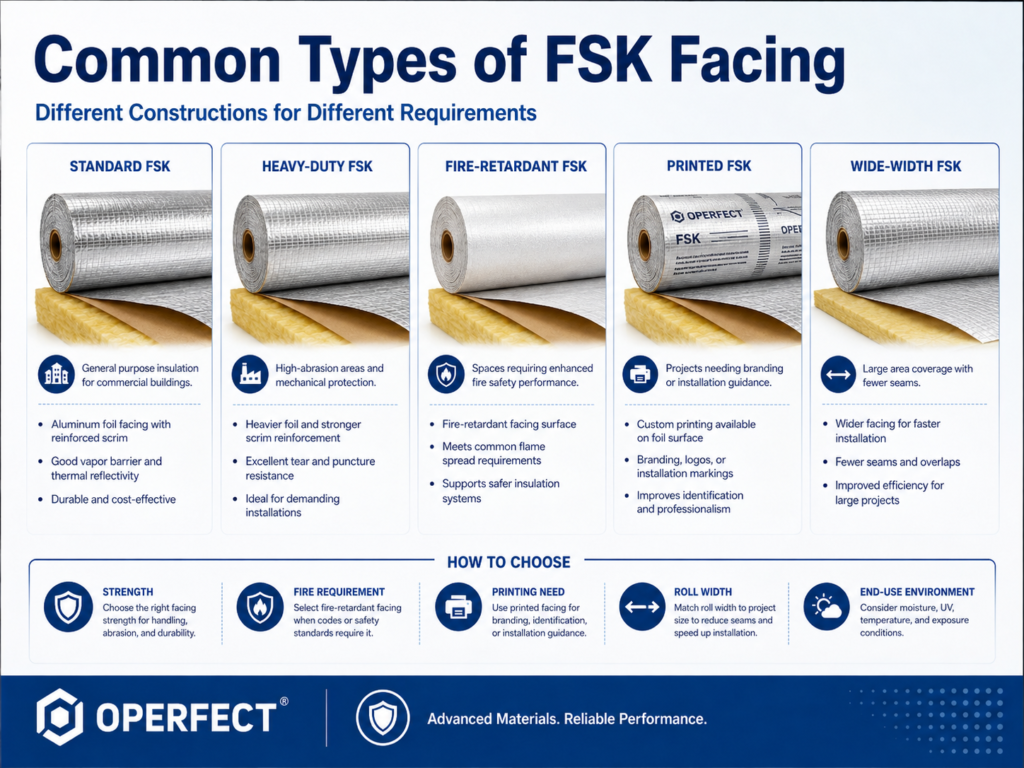
FSK can be customized in several ways.
Standard FSK
A conventional structure designed for general insulation-facing applications.
Heavy-Duty FSK
Uses heavier foil, stronger scrim, heavier kraft paper or a higher total basis weight.
It is selected when greater tensile or tear resistance is required.
Fire-Performance FSK
Uses selected adhesives, paper, scrim or coatings to support a specified fire-performance target.
The full composite must be tested. The aluminum surface alone does not determine the fire rating.
Printed FSK
The foil surface can be printed with:
- Brand logos
- Product information
- Installation instructions
- Certification marks
- Direction lines
- Custom patterns
Reinforced or Multi-Directional FSK
The scrim design may be adjusted to strengthen the machine direction, cross direction or both.
Main Applications
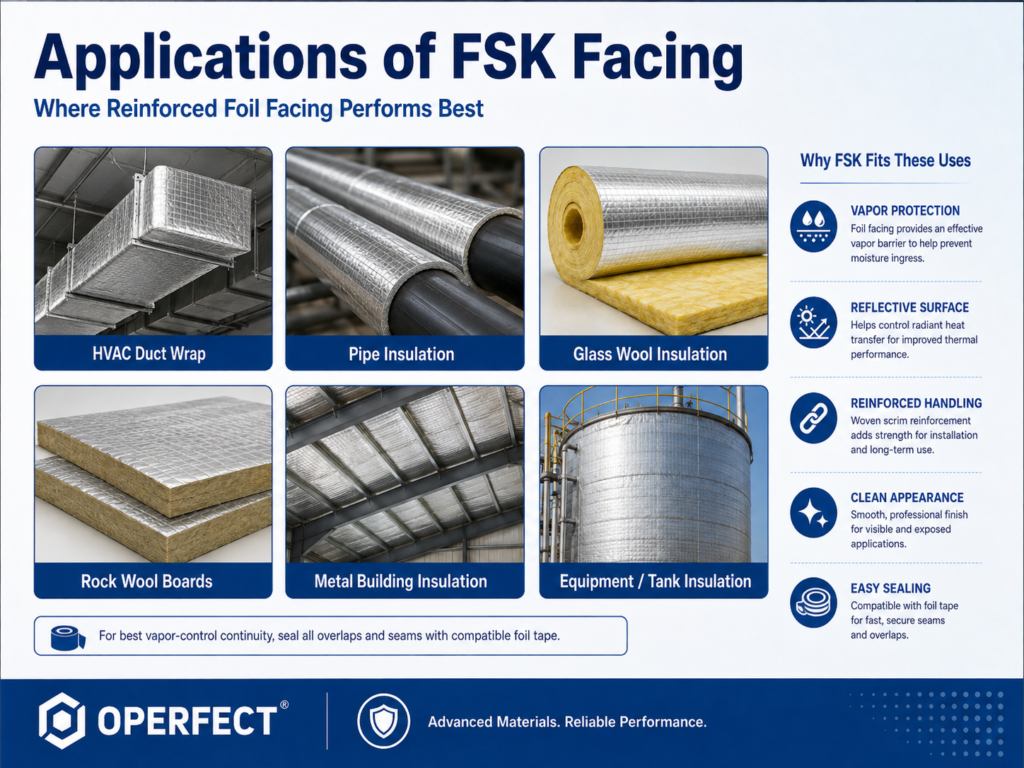
Glass Wool Insulation
FSK is commonly laminated to glass wool blankets, rolls and boards.
It provides a finished surface and helps improve handling and vapor control.
Rock Wool Insulation
FSK may be used on rock wool boards and blankets where reflective appearance and reinforced handling are required.
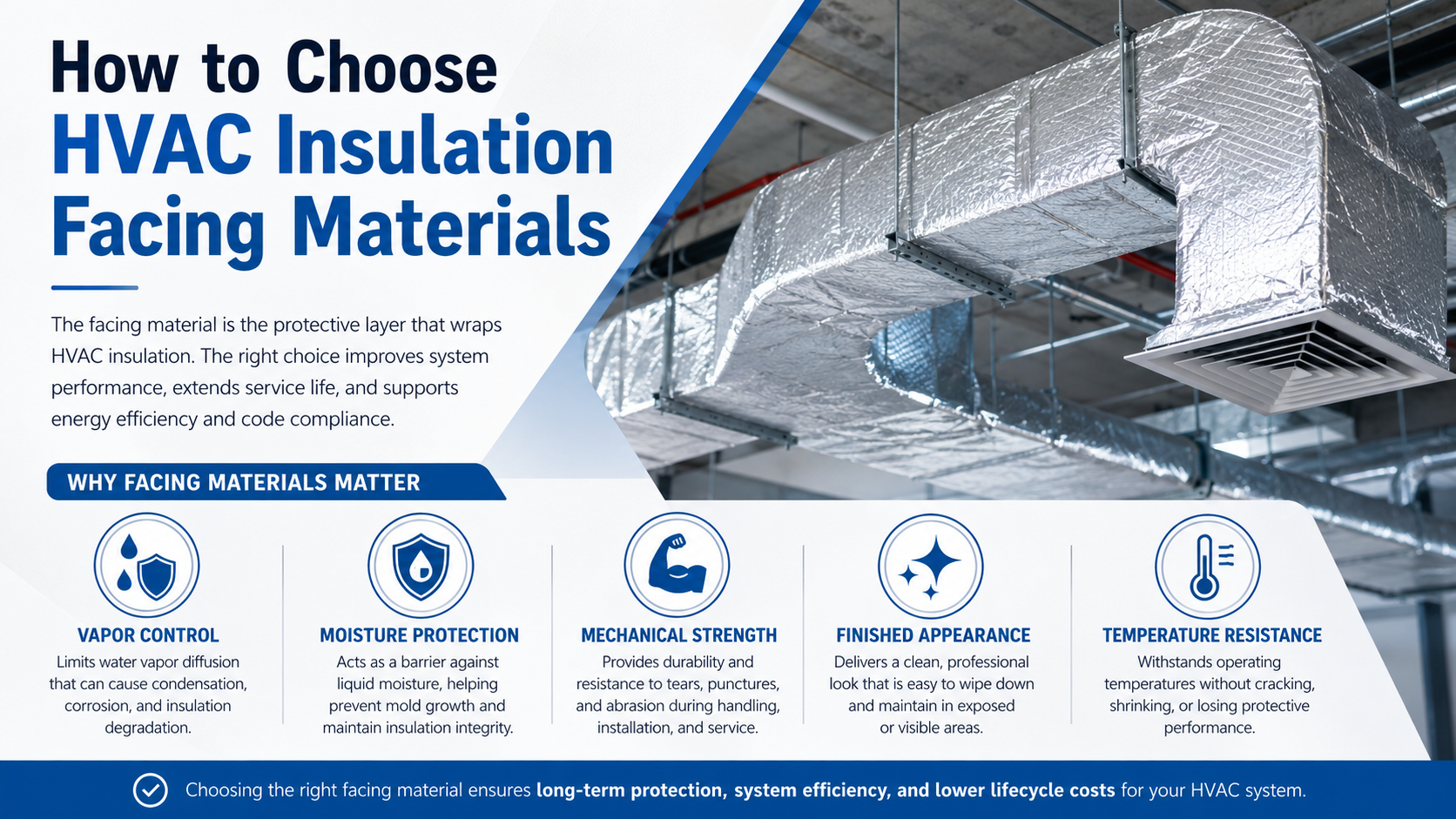
HVAC Duct Wrap
FSK-facing is widely used as the outer jacket of fiberglass duct wrap.
It helps control moisture vapor and provides a suitable surface for sealing joints with foil tape.
Metal-Building Insulation
Wide-width FSK-faced insulation is used in warehouses, workshops and other metal buildings.
The scrim helps maintain stability across wider rolls.
Pipe and Equipment Insulation
FSK can be used as a protective facing on insulation installed around pipes, tanks and mechanical equipment.
FSK Facing Limitations
FSK is not suitable for every environment.
Because it contains kraft paper, it may be less suitable for:
- Direct water exposure
- Long-term outdoor exposure
- Extremely humid conditions
- Applications requiring washable polymer surfaces
- Conditions where paper absorption is unacceptable
A foil-scrim-PE or foil-fiberglass-cloth structure may be more appropriate in such environments.
FSK and Fire Performance
The presence of aluminum foil and fiberglass scrim does not automatically make an FSK laminate noncombustible.
Kraft paper, adhesive, polymer layers and coatings all affect fire behavior.
When fire performance is required, confirm:
- Relevant test standard
- Flame-spread requirement
- Smoke-development requirement
- Complete product construction
- Validity of the test report
- Whether the tested structure matches the supplied material
How to Specify FSK Facing
A clear FSK specification should include:
- Foil thickness
- Foil surface finish
- Scrim material
- Scrim grid pattern
- Kraft-paper weight
- Total basis weight
- Tensile strength
- Tear strength
- Water-vapor transmission
- Bond strength
- Fire-performance requirement
- Roll width
- Roll length
- Printing requirement
- Intended application
Performance-based specifications help avoid selecting material based only on appearance or price.
Conclusion
FSK facing combines aluminum foil, scrim reinforcement and kraft paper to provide reflection, vapor control, mechanical strength and practical processing performance.
It remains a widely used facing for glass wool, rock wool, HVAC and metal-building insulation because it offers a reliable balance of functionality and cost.
OPERFECT® supplies standard and customized FSK facings with different foil thicknesses, scrim patterns, paper weights, roll dimensions and printing options.