Complete Thermal Protection System Buying Guide
How to Select the Right Materials, Structures, and Supplier for Thermal Insulation Projects
Introduction
Thermal insulation systems are rarely based on a single material.
A complete insulation solution may require:
- Insulation material
- Aluminum foil facing
- Reinforcement
- Vapor control
- Heat-sealing layers
- Surface protection
- Adhesive or bonding systems
- Packaging and installation solutions
Choosing each component separately can create unnecessary complexity and supply chain risks.
A better approach is to evaluate the complete thermal protection system from the beginning.
The right system should balance:
Thermal Performance + Moisture Control + Mechanical Protection + Manufacturing Compatibility + Cost + Supply Reliability
This guide explains the key factors buyers should consider when selecting thermal protection materials and suppliers.
1. What Is a Thermal Protection System?
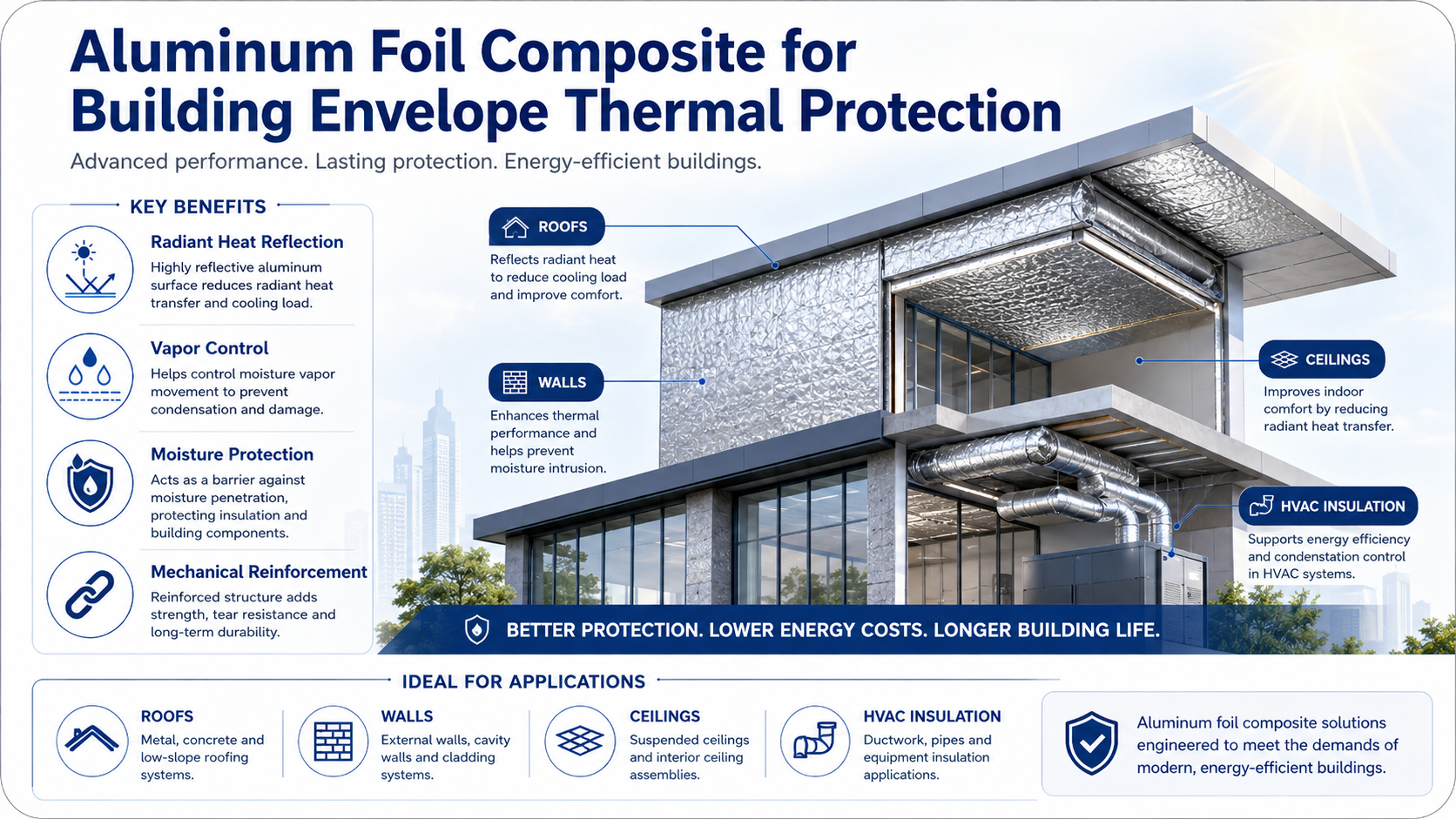
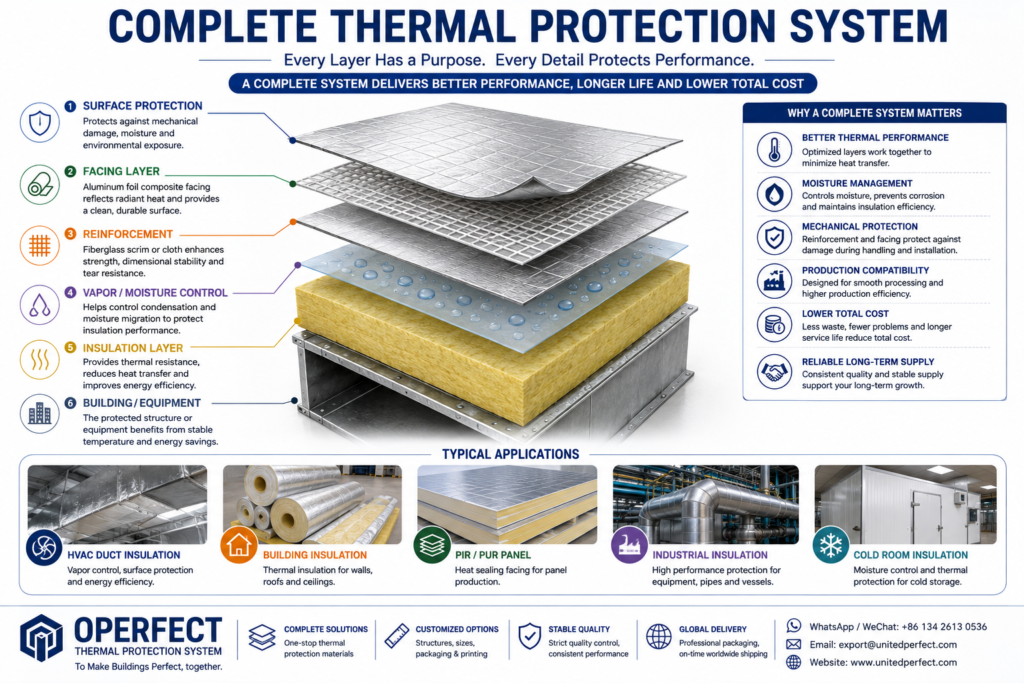
A thermal protection system is a combination of materials designed to protect a building, insulation assembly, equipment, or industrial system from unwanted heat transfer and environmental exposure.
Depending on the application, a thermal protection system may include:
Insulation Layer
Provides the primary thermal resistance.
Examples:
- Laine de verre
- Laine de roche
- PIR/PUR
- Other insulation materials
Facing Layer
Protects and enhances the insulation assembly.
Examples:
- FSK facing
- FSV facing
- Aluminum foil composite
- Fiberglass reinforced facing
- Feuille de thermoscellage
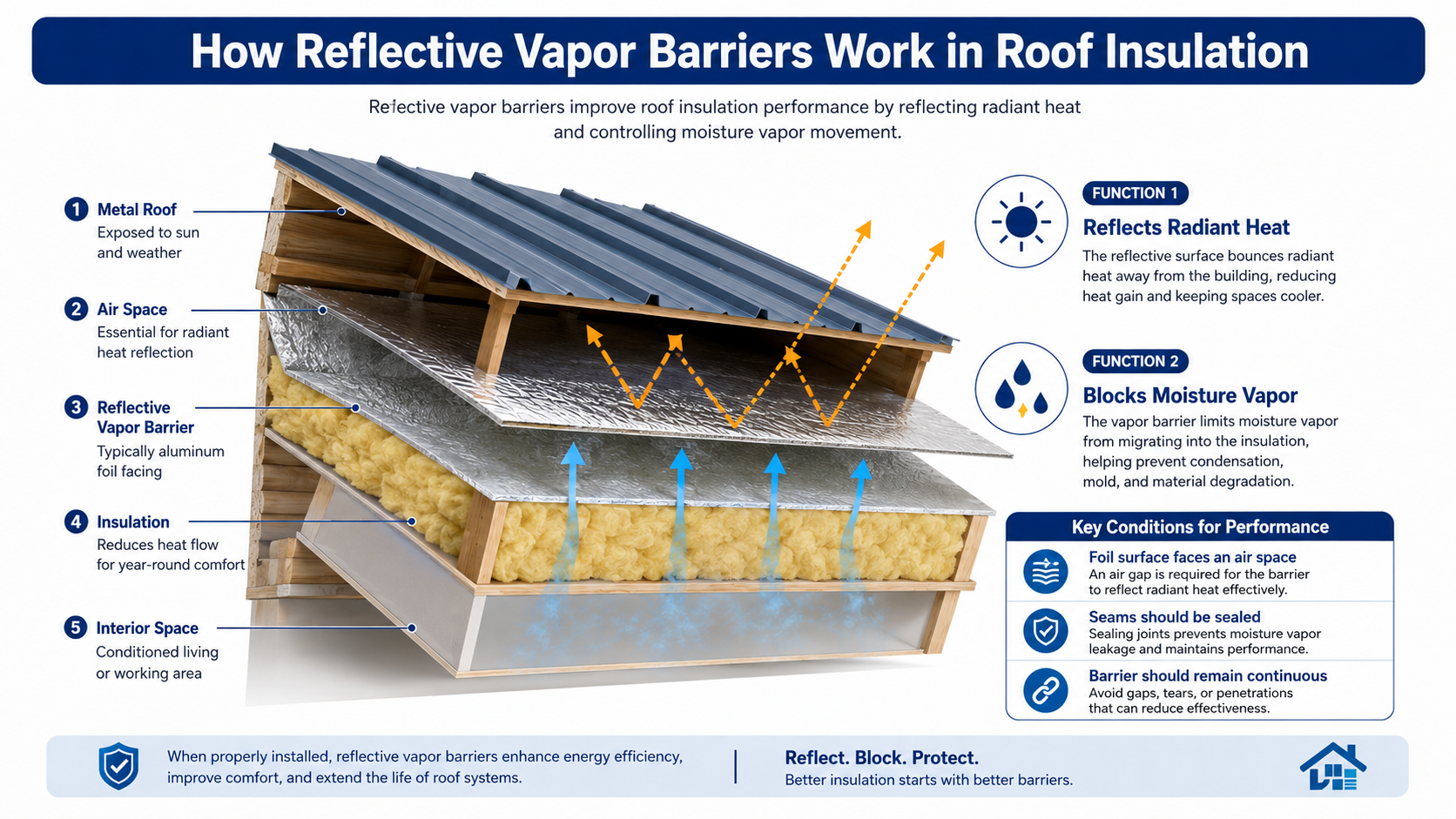
Vapor / Moisture Control
Helps manage moisture movement through the insulation assembly.
Surface Protection
Provides resistance against handling, installation, and environmental exposure.
The final performance therefore depends on how these components work together.
2. Start With the Application
The first step is not choosing a product.
It is defining the application.
Ask:
- Where will the insulation be used?
- What insulation material is being used?
- What environment will it face?
- What manufacturing process is involved?
- What performance is required?
Different applications require different solutions.
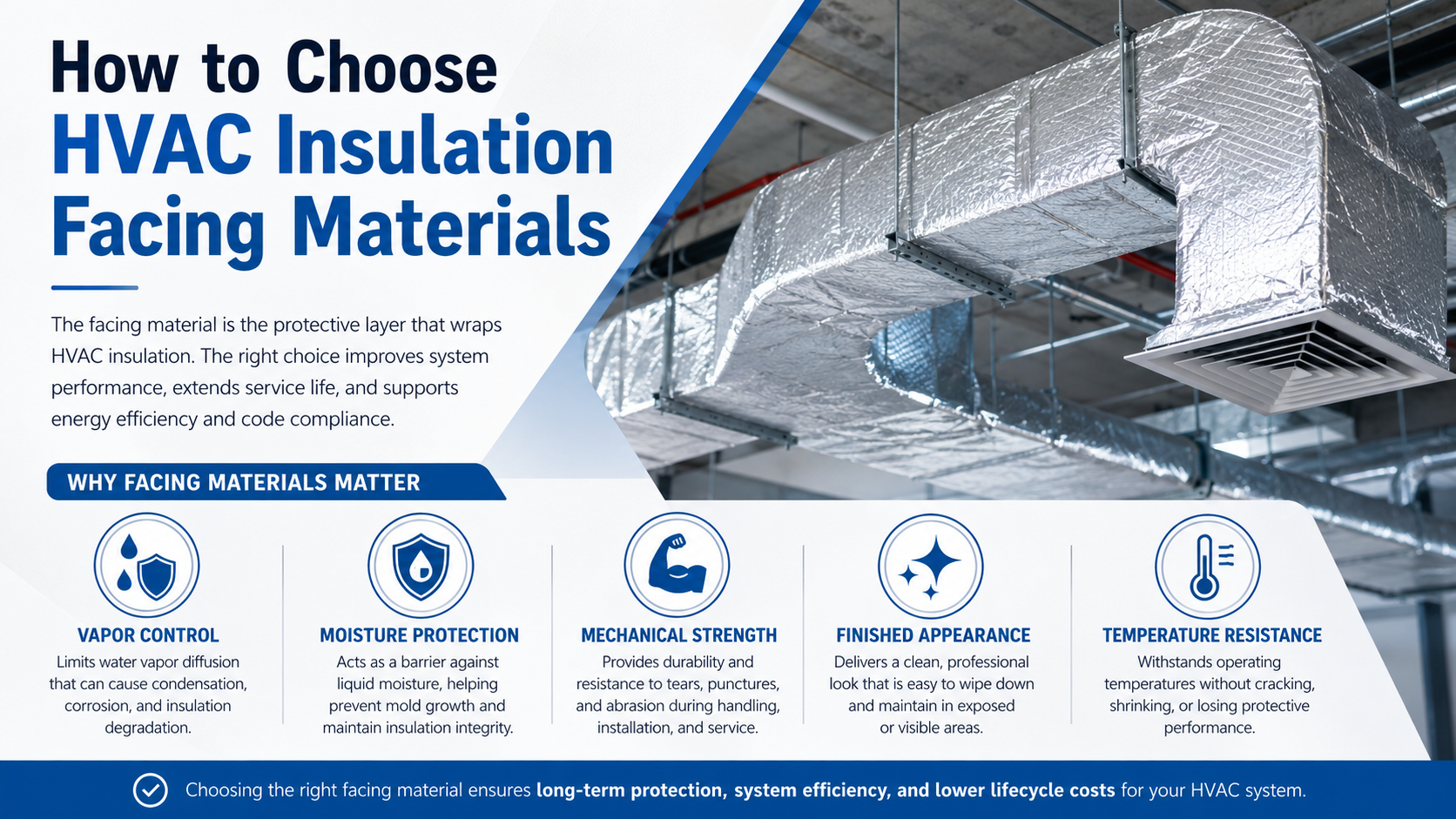
3. HVAC Insulation Systems
HVAC applications often require facing materials that provide:
- Vapor control
- Surface protection
- Easy handling
- Good appearance
- Stable lamination
Common facing solutions include:
FSK Facing
Aluminum foil + fiberglass scrim + kraft paper
FSV Facing
Aluminum foil + fiberglass scrim + protective film
These materials can be used with insulation products such as glass wool and other HVAC insulation systems.
The correct selection depends on the specific application and required performance.
4. Glass Wool and Rock Wool Systems
For glass wool and rock wool manufacturers, the facing material must work efficiently with the production process.
Important considerations include:
- Lamination stability
- Reinforcement
- Dimensional consistency
- Surface quality
- Production compatibility
A facing material that performs well in a laboratory may still be unsuitable if it creates problems on a production line.
Therefore, buyers should evaluate both:
Product Performance + Manufacturing Performance
5. PIR/PUR Panel Systems
PIR and PUR panels may require facing materials with specialized bonding or heat-sealing characteristics.
One example is:
Heat Sealing Foil
A typical structure may include:
Aluminum Foil + Reinforcement + Heat-Sealing Layer
Potential benefits include:
- Compatibility with panel production
- Efficient bonding
- Stable surface
- Production efficiency
The exact structure should be selected according to the customer’s manufacturing process and panel requirements.
6. Industrial Thermal Protection
Industrial insulation systems may face more demanding mechanical and environmental conditions.
Applications may include:
- Industrial equipment
- Pipes
- Ducts
- High-temperature insulation assemblies
- Mechanical insulation systems
Important factors can include:
- Mechanical strength
- Surface durability
- Reinforcement
- Moisture protection
- Long-term stability
For these applications, reinforced aluminum foil facing or fiberglass cloth composites may be appropriate depending on the system requirements.
7. Understand the Function of Each Layer
A good thermal protection system is not simply a collection of materials.
Each layer should have a specific function.
| Layer | Main Function |
|---|---|
| Insulation | Thermal resistance |
| Aluminum Foil | Reflective / protective surface |
| Fiberglass Scrim | Reinforcement |
| Fiberglass Cloth | Higher mechanical protection |
| Kraft Paper | Structural facing component |
| PE Film | Protective / moisture-control layer |
| Heat-Sealing Layer | Production bonding |
| Adhesive System | Layer bonding |
The key principle is:
Every layer should have a purpose.
Adding unnecessary layers can increase cost without providing meaningful additional performance.
8. Choose the Right Facing Structure
Different facing structures provide different functions.
FSK
Aluminum Foil + Fiberglass Scrim + Kraft Paper
Typical applications:
- HVAC insulation
- Laine de verre
- Building insulation
FSV
Aluminum Foil + Fiberglass Scrim + Protective Film
Typical applications:
- HVAC
- Mechanical insulation
- Moisture-sensitive environments
Aluminum Foil Fiberglass Scrim
Suitable when reinforcement and surface protection are important.
Aluminum Foil Fiberglass Cloth
Provides a stronger reinforcement structure for demanding applications.
Heat Sealing Foil
Designed for applications requiring a heat-sealing layer.
Commonly considered for:
- PIR/PUR panels
- Cold room panels
- Insulated panel production
9. Balance Performance and Cost
A thermal protection system should not be designed around maximum specifications.
It should be designed around required performance.
For example:
Too little material may result in:
- Insufficient protection
- Production problems
- Reduced durability
Too much material may result in:
- Higher cost
- Increased weight
- Unnecessary material consumption
The goal is:
Required Performance + Optimized Structure
This is one of the most important principles in professional insulation procurement.
10. Consider Manufacturing Compatibility
For insulation manufacturers, facing material selection must include the production process.
Ask:
- Can the material run smoothly on our equipment?
- Is the width compatible?
- Is the roll length suitable?
- Is the bonding system compatible?
- Is the surface stable?
- Can the supplier maintain consistent quality?
A material that is inexpensive but difficult to process may increase the real production cost.
11. Optimize Roll Specifications
Roll specifications can have a significant impact on total cost.
Consider:
- Width
- Roll length
- Core size
- Finished weight
- Packaging
- Pallet configuration
For high-volume customers, customized roll specifications may reduce:
- Material waste
- Production downtime
- Packaging cost
- Handling cost
The ideal roll specification should be developed around the customer’s actual production requirements.
12. Evaluate the Supplier, Not Just the Product
A complete thermal protection solution requires a capable supplier.
Evaluate:
Manufacturing
- Production capability
- Equipment
- Capacity
Quality
- Raw material control
- Process inspection
- Finished product inspection
Technical Support
- Structure recommendation
- Application support
- Sample development
Customization
- OEM
- Private label
- Customized specifications
Logistics
- Export packaging
- Container loading
- International shipment
13. Use a Complete Procurement Process
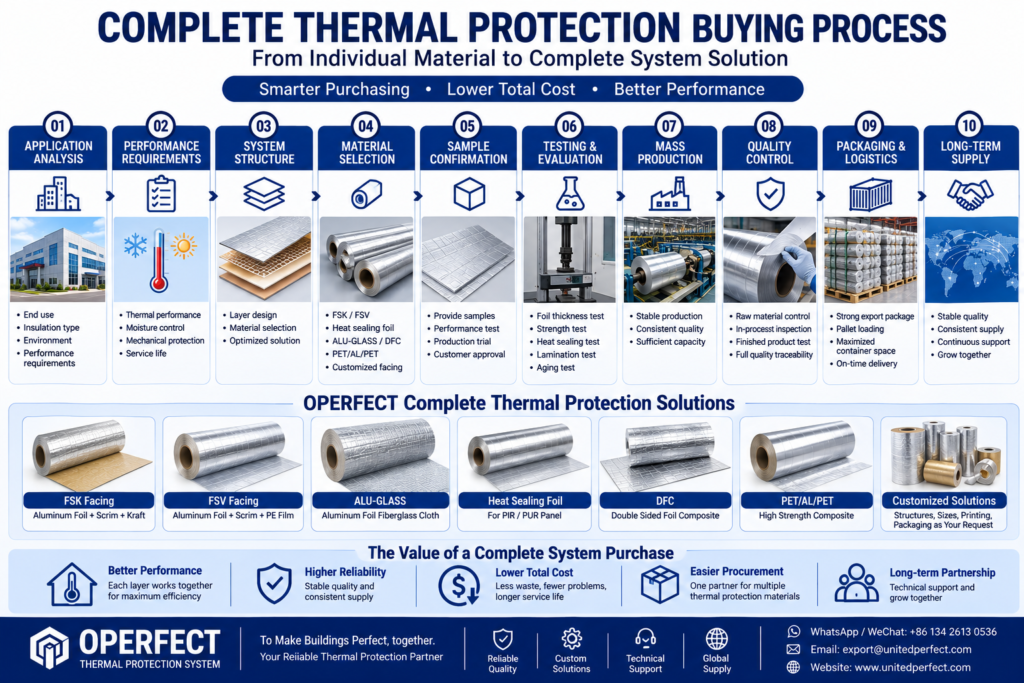
A professional purchasing process should follow:
Application Analysis
↓
Performance Requirements
↓
System Structure
↓
Material Selection
↓
Supplier Evaluation
↓
Sample Testing
↓
Specification Optimization
↓
Mass Production
↓
Quality Inspection
↓
Packaging & Logistics
↓
Long-Term Supply
This process reduces purchasing risk and helps buyers optimize total cost.
14. Complete Thermal Protection Procurement Checklist
Before placing an order, confirm:
Application
☐ End-use application confirmed
☐ Insulation material confirmed
☐ Environmental conditions understood
Produit
☐ Facing structure confirmed
☐ Aluminum foil specification confirmed
☐ Reinforcement confirmed
☐ Layer structure confirmed
Performance
☐ Required performance defined
☐ Sample tested
☐ Production compatibility confirmed
Commercial
☐ Price compared using the same specification
☐ MOQ confirmed
☐ Lead time confirmed
☐ Payment terms confirmed
Logistics
☐ Packaging confirmed
☐ Roll dimensions confirmed
☐ Container loading plan confirmed
☐ Shipping documents confirmed
Supplier
☐ Manufacturing capability verified
☐ Quality control verified
☐ Technical support available
☐ Long-term supply capability confirmed
15. Why Work With a Complete Thermal Protection Partner?
Working with multiple suppliers for different facing materials can create additional complexity.
For example:
Supplier A → FSK
Supplier B → Heat Sealing Foil
Supplier C → Fiberglass Cloth Facing
Supplier D → Private Label Packaging
This may increase:
- Communication
- Quality management
- Logistics coordination
- Product development time
A supplier with a broader thermal protection portfolio can simplify procurement.
Instead of managing individual materials, buyers can work with one technical partner across multiple applications.
16. Why Choose OPERFECT?
OPERFECT provides a broad portfolio of aluminum foil composite and thermal protection materials.
Standard Facing
- FSK
- FSV
Reinforced Facing
- Aluminum Foil Fiberglass Scrim
- Aluminum Foil Fiberglass Cloth
Premium Composite
- Heat Sealing Foil
- DFC
- PET/AL/PET
Customized Solutions
OPERFECT supports:
- Customized structures
- Customized foil thickness
- Customized widths
- Customized roll lengths
- OEM manufacturing
- Private label production
- Customized packaging
17. From Material Supplier to System Partner
OPERFECT’s approach is not simply:
Product → Price → Shipment
Instead:
Customer Application
↓
Technical Requirement
↓
Material Structure
↓
Sample Development
↓
Performance Verification
↓
Cost Optimization
↓
Mass Production
↓
Quality Control
↓
Global Delivery
This system-based approach helps customers achieve a better balance between:
Performance + Cost + Quality + Supply Reliability
Conclusion
A successful thermal insulation project requires more than selecting an individual facing material.
The best purchasing decisions consider the complete system:
Application
Insulation
Facing
Moisture Control
Mechanical Protection
Manufacturing Compatibility
Cost
Logistics
Long-Term Supply
The goal is not simply to buy the cheapest material.
The goal is to build a reliable thermal protection system with optimized total cost and consistent performance.
OPERFECT works with insulation manufacturers, HVAC companies, distributors, importers, and building material companies to develop customized aluminum foil composite and thermal protection solutions for global markets.
Don’t just buy a facing material. Build the right thermal protection system.
Contact OPERFECT
United Perfect Group, To Make Buildings Perfect, together.
Global Business Director: Mr. Du
WhatsApp / WeChat: +86 134 2613 0536
Courriel : export@unitedperfect.com
Site web : www.unitedperfect.com