Learn about aluminum foil nonwoven composite materials, including structure, performance advantages and applications in insulation, vapor barriers and building systems.
What Is Aluminum Foil Nonwoven Composite Material?
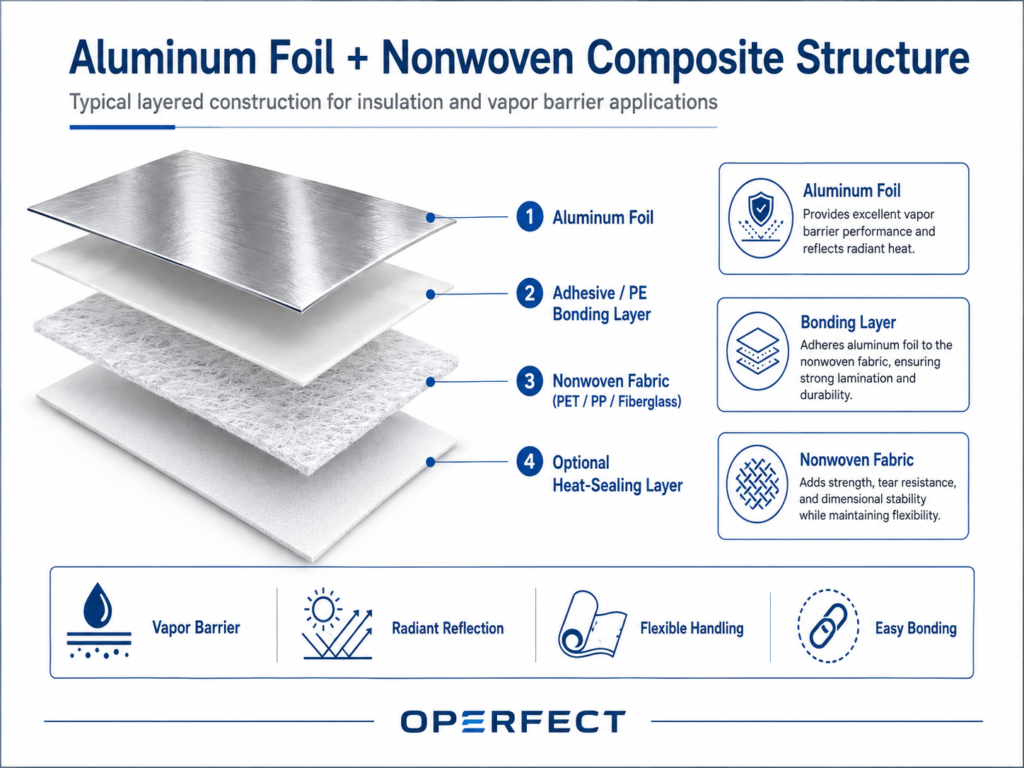
Aluminum foil nonwoven composite material is a multi-layer functional laminate combining:
Aluminum Foil + Nonwoven Fabric
The composite structure combines the excellent barrier properties of aluminum foil with the flexibility, softness and bonding advantages of nonwoven materials.
Compared with traditional foil-paper laminates, aluminum foil nonwoven composites provide improved flexibility, better surface adaptability and excellent compatibility with various insulation and building materials.
They are widely used in:
- Insulation facing materials
- Vapor barrier systems
- HVAC insulation
- Acoustic panels
- Building envelope applications
- Industrial protection materials
Typical Structure of Aluminum Foil Nonwoven Composite
A standard aluminum foil nonwoven composite usually consists of:
Aluminum Foil
↓
Adhesive / PE Bonding Layer
↓
Nonwoven Fabric
Depending on the application, additional layers can be added:
- PE film
- PET film
- Fiberglass scrim
- Heat-sealing layer
- Protective coating
The final structure is designed according to required strength, vapor resistance, flexibility and installation conditions.
Function of Each Layer
1. Aluminum Foil Layer
The aluminum foil provides the main functional performance.
Vapor Barrier Performance
Aluminum foil has excellent resistance to moisture vapor transmission.
It helps protect insulation systems from:
- Moisture migration
- Condensation risks
- Performance degradation caused by humidity
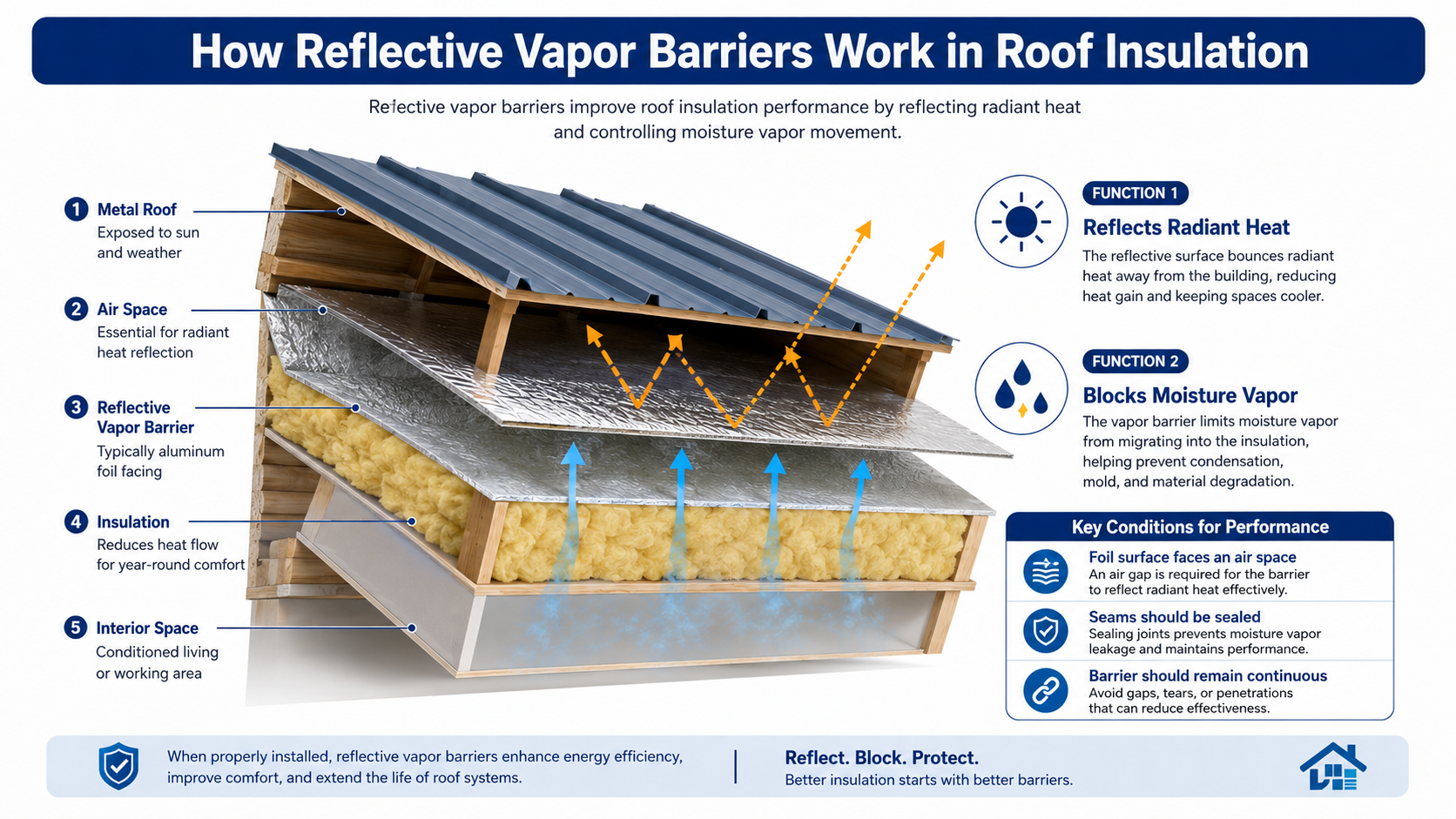
When properly installed and sealed, foil-based composites can act as an effective vapor-control layer.
Radiant Heat Reflection
The aluminum surface reflects radiant heat when installed facing an appropriate air space.
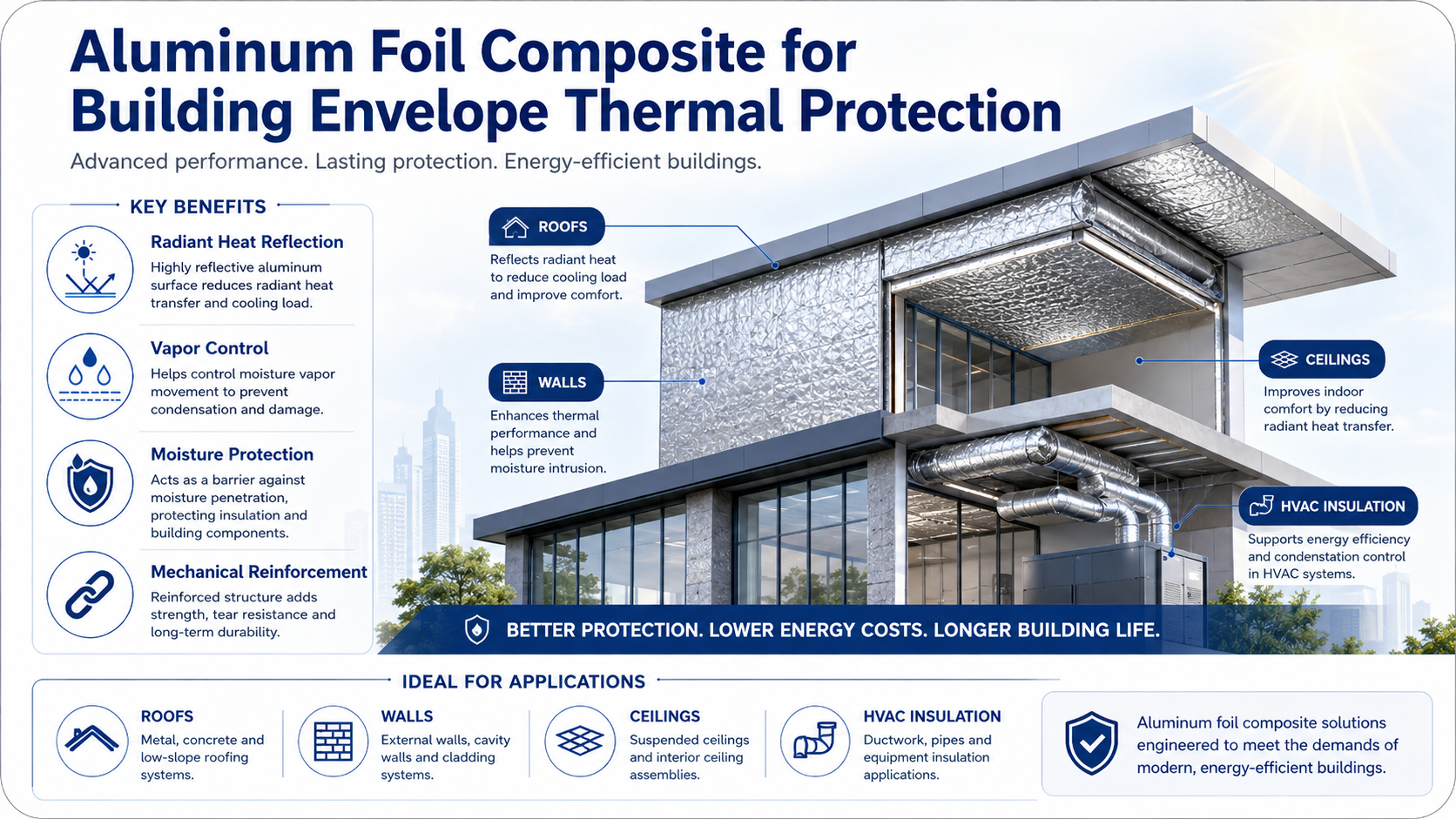
This makes aluminum foil composites suitable for:
- Roof insulation systems
- Wall insulation
- HVAC applications
- Thermal protection systems
Surface Protection
The foil layer provides:
- Clean metallic appearance
- Resistance to contamination
- Compatibility with foil tape sealing
- Protection against environmental exposure
2. Nonwoven Fabric Layer
Nonwoven fabric is a textile material made from fibers bonded together without traditional weaving.
It provides different advantages compared with woven fabric or kraft paper.
Flexibility
The soft structure allows the composite to:
- Bend easily
- Follow irregular surfaces
- Adapt to different installation conditions
This is especially useful for:
- Flexible insulation
- Pipe wrapping
- Irregular surfaces
Improved Bonding Performance
The fiber surface of nonwoven materials provides good contact with:
- Adhesives
- Insulation materials
- Coatings
- Composite panels
This makes nonwoven composites suitable for lamination applications.
Surface Protection
The nonwoven layer helps protect the aluminum foil from:
- Scratching
- Folding damage
- Minor impact
- Handling stress
It improves the durability of the composite compared with unsupported foil.
Lightweight Performance
Nonwoven materials provide useful reinforcement without significantly increasing weight.
This helps maintain:
- Easy handling
- Lower transportation cost
- Flexible processing
Common Types of Aluminum Foil Nonwoven Composite
Aluminum Foil + PET Nonwoven
PET nonwoven provides:
- Good dimensional stability
- Higher temperature resistance
- Better mechanical strength
- Smooth surface performance
Typical applications:
- Vapor barriers
- Technical insulation facings
- Building envelope materials
Aluminum Foil + PP Nonwoven
PP nonwoven provides:
- Lightweight structure
- Good flexibility
- Cost efficiency
- Moisture resistance
Typical applications:
- General insulation facing
- Protective layers
- Building materials
Aluminum Foil + Fiberglass Nonwoven
Fiberglass nonwoven provides:
- Excellent temperature resistance
- High dimensional stability
- Better fire-performance potential
- Strong reinforcement
Typical applications:
- HVAC insulation
- Industrial insulation
- High-temperature applications
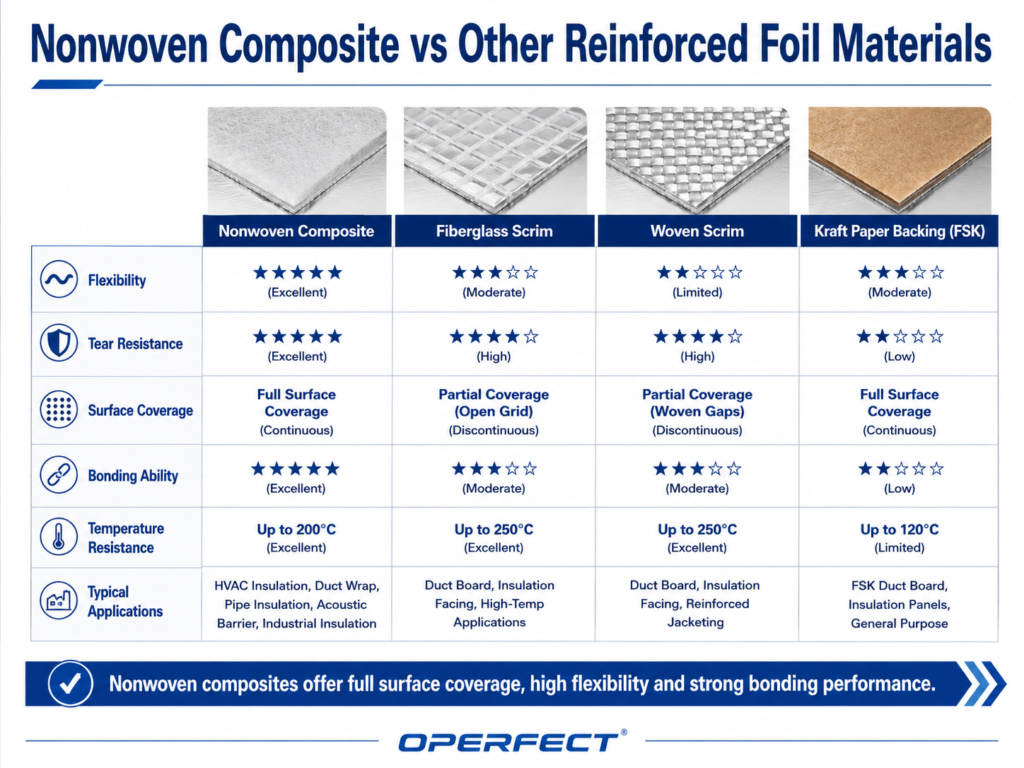
Aluminum Foil Nonwoven vs Other Reinforced Foil Materials
Aluminum Foil Nonwoven vs Fiberglass Scrim
| Feature | Nonwoven Composite | Fiberglass Scrim |
|---|---|---|
| Structure | Fiber layer | Open grid reinforcement |
| Flexibility | Excellent | Good |
| Surface Coverage | Full coverage | Open mesh |
| Bonding Ability | Excellent | Moderate |
| Temperature Resistance | Depends on fiber type | Excellent |
| Typical Use | Flexible facings, barriers | FSK, HVAC facings |
Nonwoven materials provide a softer continuous backing, while fiberglass scrim provides open reinforcement with excellent stability.
Aluminum Foil Nonwoven vs Woven Scrim
| Feature | Nonwoven | Woven Scrim |
| Structure | Random fiber web | Woven yarn structure |
| Flexibility | Higher | Moderate |
| Strength | Moderate | Higher |
| Surface Softness | Better | Lower |
| Tear Resistance | Good | Excellent |
| Typical Use | Insulation facing | Roofing and heavy-duty applications |
Woven scrim is usually selected where maximum mechanical strength is required.
Nonwoven composites are preferred when flexibility and bonding performance are important.
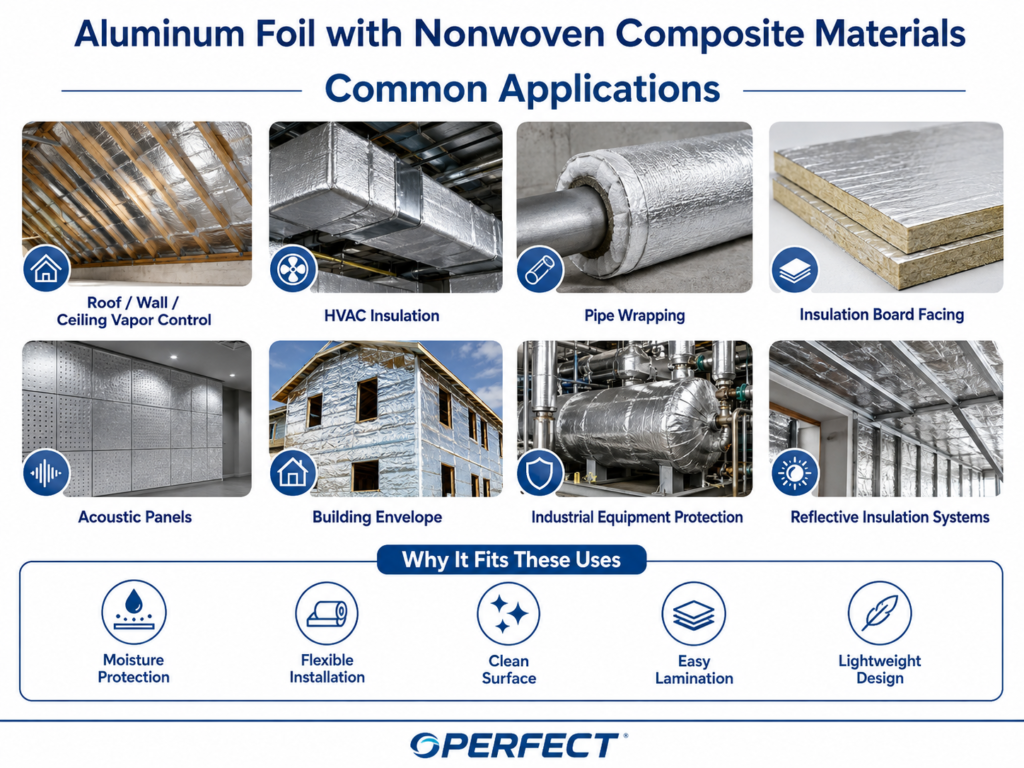
Common Applications
1. Vapor Barrier Materials
Aluminum foil nonwoven composites are widely used in building envelope systems.
Applications include:
- Wall insulation
- Roof insulation
- Ceiling insulation
- Thermal barrier systems
Avantages :
- Moisture protection
- Flexible installation
- Lightweight structure
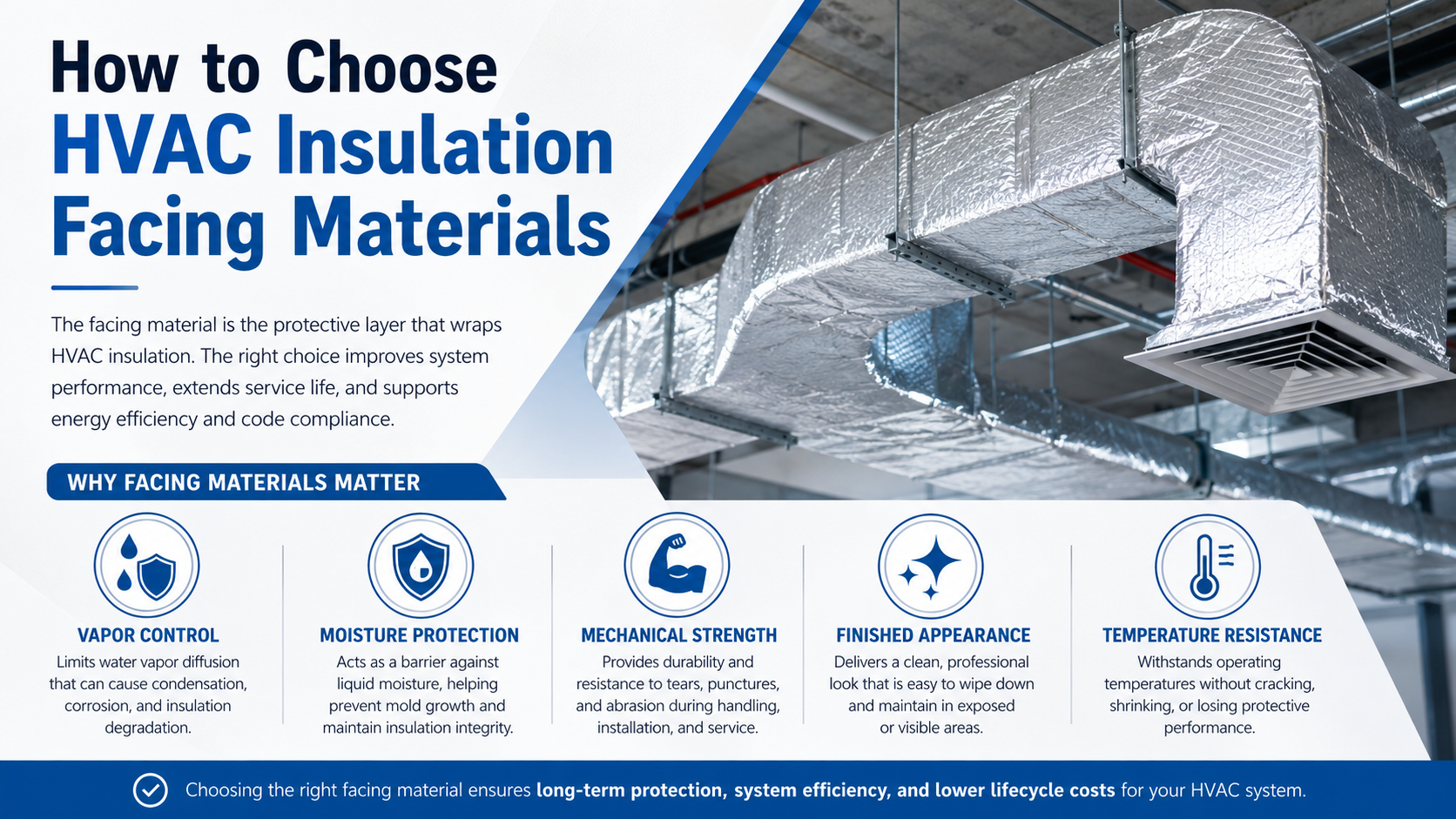
2. HVAC Insulation
Used for:
- Duct insulation
- Pipe insulation
- Equipment insulation
Benefits include:
- Clean surface
- Good vapor control
- Easy handling
- Compatibility with insulation materials
3. Acoustic Panel Materials
The soft nonwoven backing makes aluminum foil nonwoven composites suitable for:
- Acoustic panels
- Sound absorption products
- Decorative insulation materials
4. Insulation Board Facing
Used as facing materials for:
- Glass wool boards
- Rock wool boards
- Composite insulation panels
The nonwoven layer can improve bonding with insulation substrates.
5. Building Envelope Systems
Applications include:
- Air barrier components
- Vapor-control layers
- Reflective insulation systems
The final performance depends on the complete building assembly.
Heat-Sealing Aluminum Foil Nonwoven Composite
Some aluminum foil nonwoven composites include a heat-sealing PE layer.
This allows direct bonding through controlled:
- Temperature
- Pressure
- Production speed
Advantages include:
- Simplified manufacturing
- Stable bonding
- Reduced adhesive application
- Improved production efficiency
Important processing factors include:
- Sealing temperature
- Pressure
- Dwell time
- Polymer type
- Surface compatibility
Important Selection Factors
Nonwoven Material Type
Different fibers provide different performance:
PET Nonwoven
- Higher strength
- Better temperature resistance
- Good dimensional stability
PP Nonwoven
- Lightweight
- Flexible
- Cost-effective
Fiberglass Nonwoven
- High temperature resistance
- Excellent stability
Nonwoven Weight
Higher basis weight generally provides:
- Better protection
- Higher strength
- Improved handling
Aluminum Foil Thickness
Important for:
- Barrier performance
- Durability
- Pinhole resistance
Bond Strength
The lamination system should provide:
- Strong adhesion
- Resistance to delamination
- Long-term stability
Application Requirements
Consider:
- Indoor or outdoor use
- Moisture conditions
- Temperature exposure
- Required strength
- Installation method
Quality Control
Important tests include:
Mechanical Performance
- Tensile strength
- Tear resistance
- Peel strength
Barrier Performance
- Water vapor transmission rate
- Moisture resistance
Durability
- Aging resistance
- Temperature stability
- Lamination quality
Appearance
- Surface uniformity
- Roll quality
- Edge condition
Conclusion
Aluminum foil nonwoven composite materials combine the excellent barrier performance of aluminum foil with the flexibility and bonding advantages of nonwoven fabrics.
Compared with paper-backed or woven-reinforced foil materials, they provide a lightweight, flexible and versatile solution for modern insulation and building-envelope applications.
OPERFECT® supplies customized aluminum foil nonwoven composites using PET, PP and fiberglass nonwoven materials, with different foil thicknesses, structures, roll dimensions and private-label solutions for global customers.