Learn what insulation facing material is, how it protects thermal insulation, and how to select facings for glass wool, rock wool, HVAC and building applications.
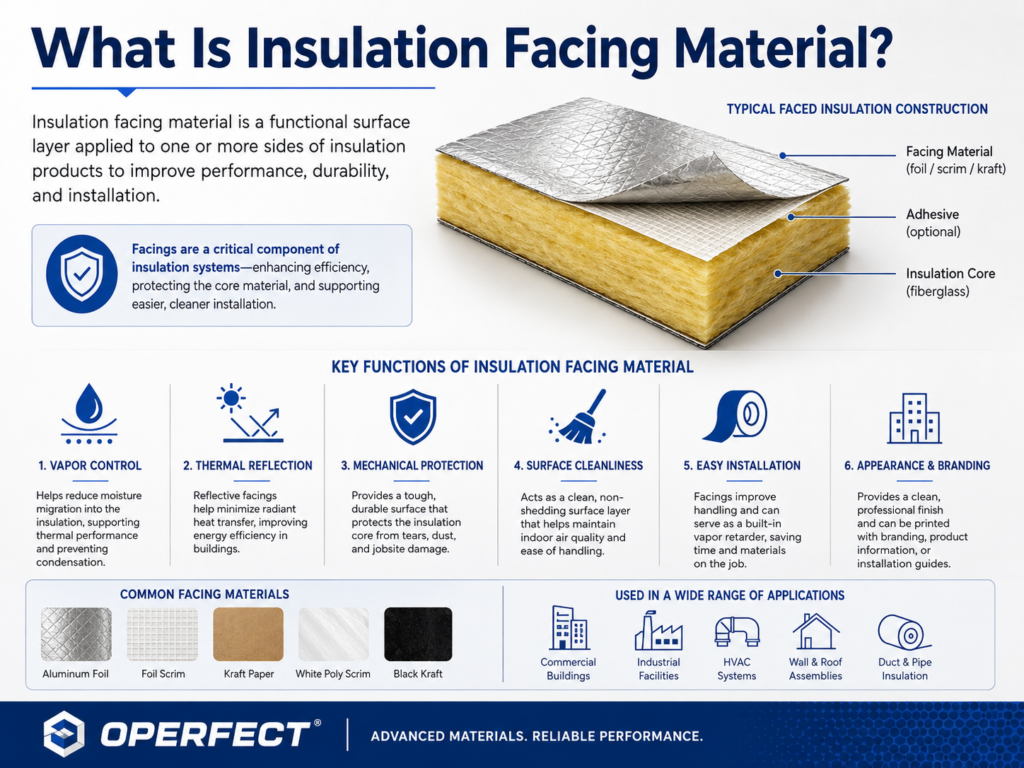
Insulation facing material is a functional surface layer applied to glass wool, rock wool, foam, rubber insulation and other thermal or acoustic insulation products.
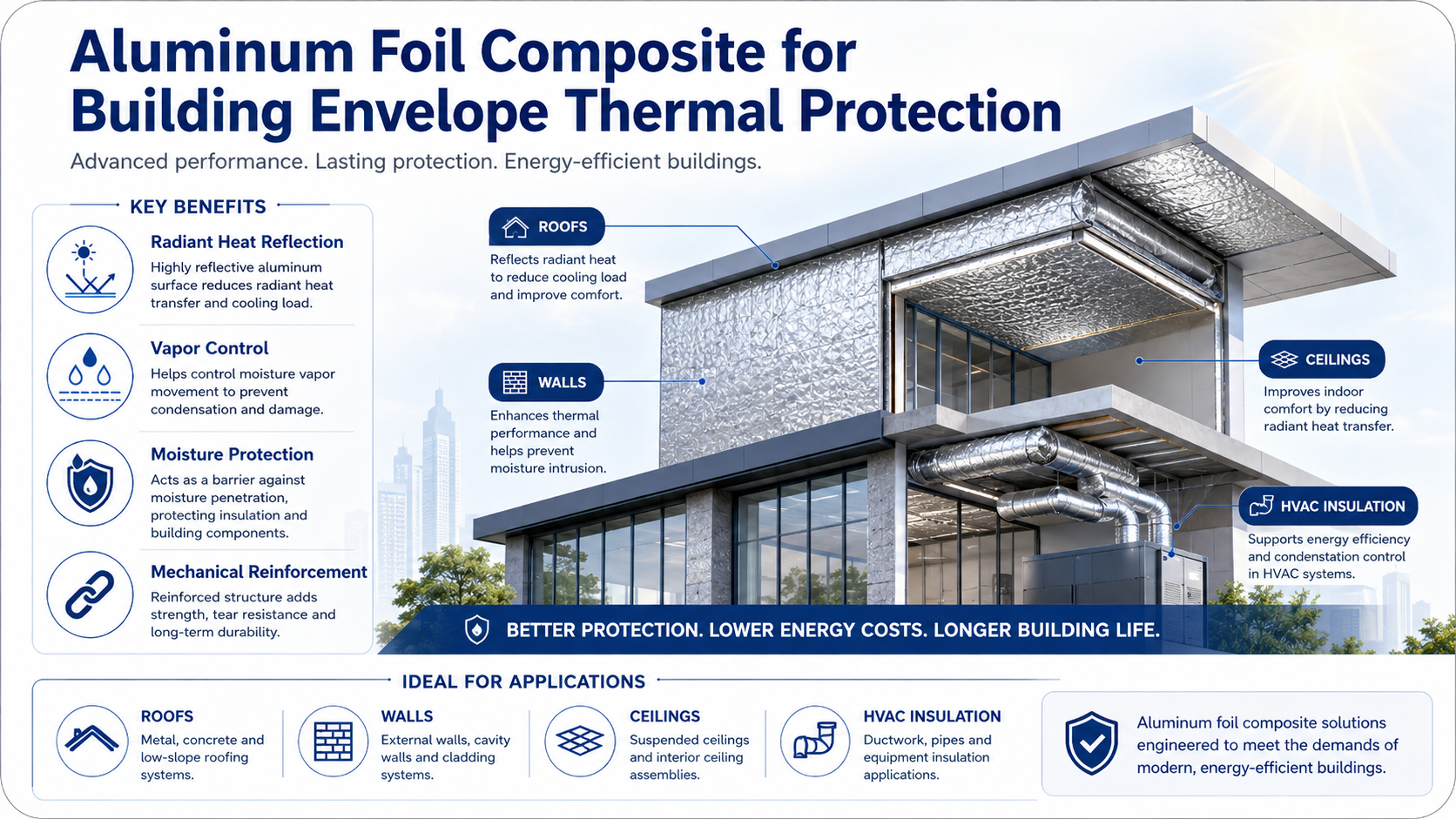
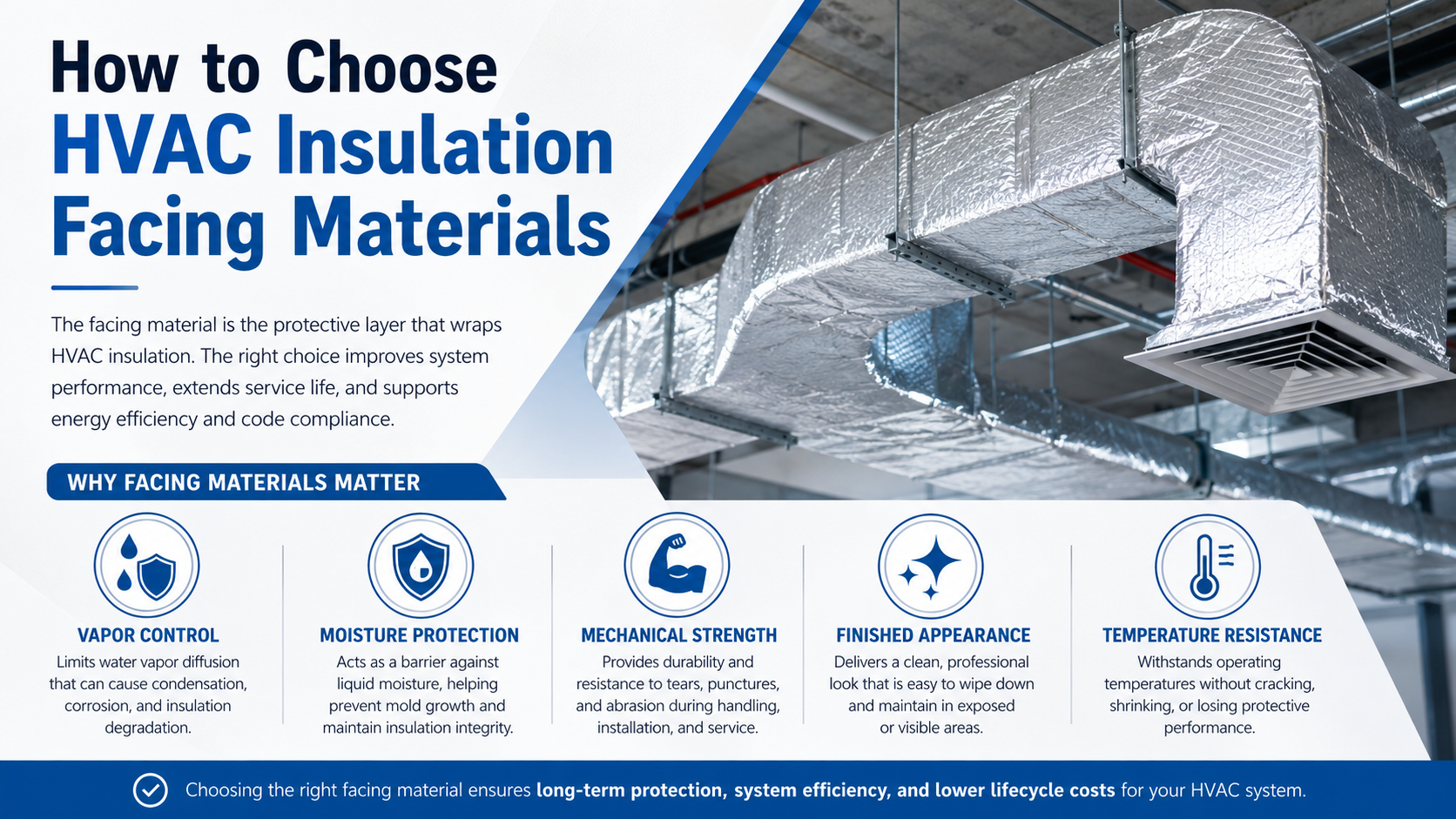
It is not simply a decorative covering. A properly selected facing can provide vapor control, radiant heat reflection, mechanical protection, reinforcement, surface cleanliness and improved handling during production and installation.
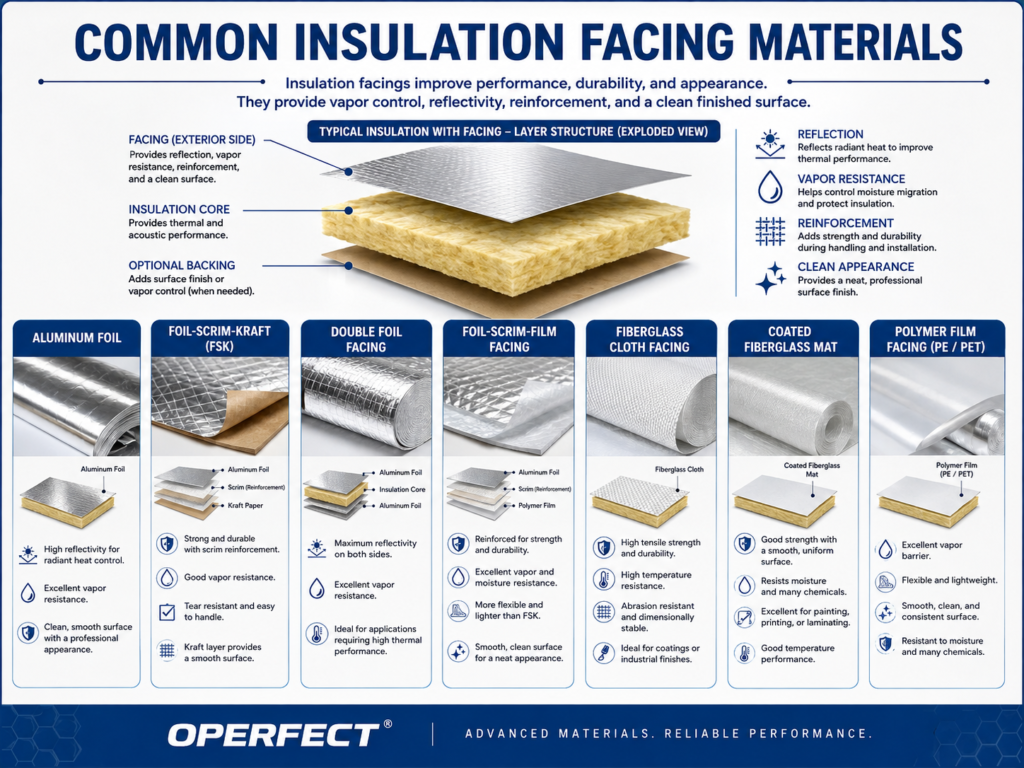
Common insulation facings include aluminum foil laminates, foil-scrim-kraft facings, double-foil laminates, foil-scrim-film composites, fiberglass cloth, coated fiberglass mats and polymer-film facings.
Why Insulation Needs a Facing
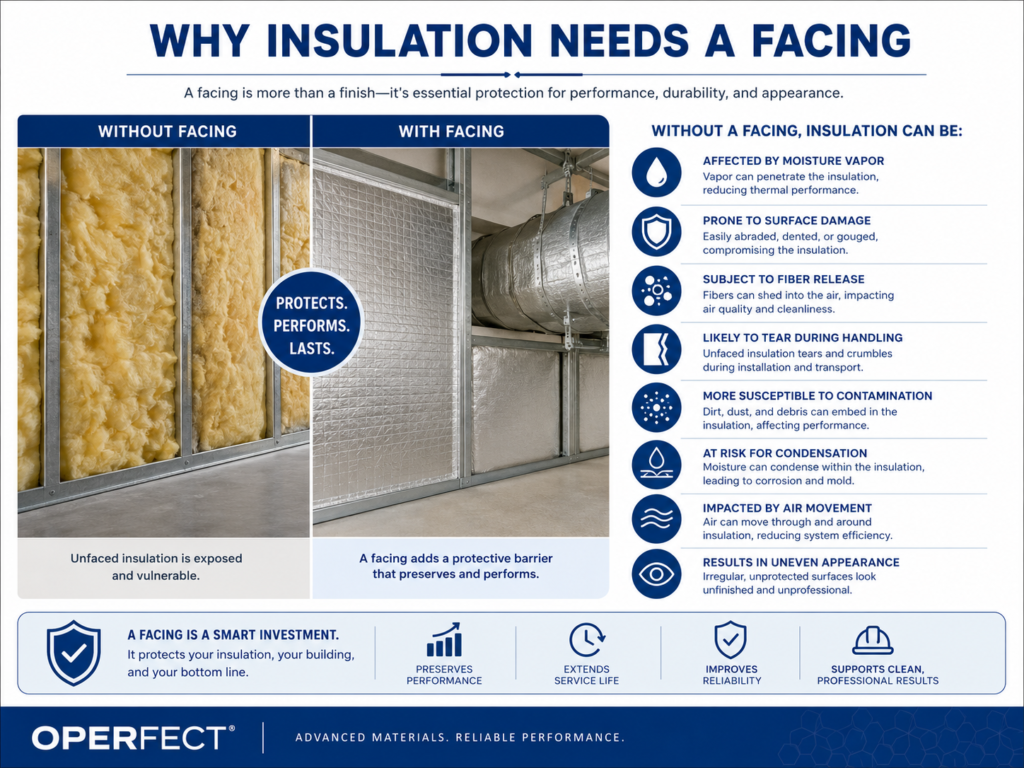
Many insulation materials have an open, fibrous or porous structure.
This structure helps reduce heat transfer and absorb sound, but it can also make the insulation vulnerable to:
- Moisture-vapor penetration
- Surface damage
- Fiber release
- Tearing during handling
- Contamination
- Condensation
- Air movement
- Mechanical stress
- Uneven appearance
An insulation facing creates a more functional external surface and helps the insulation maintain its intended performance.
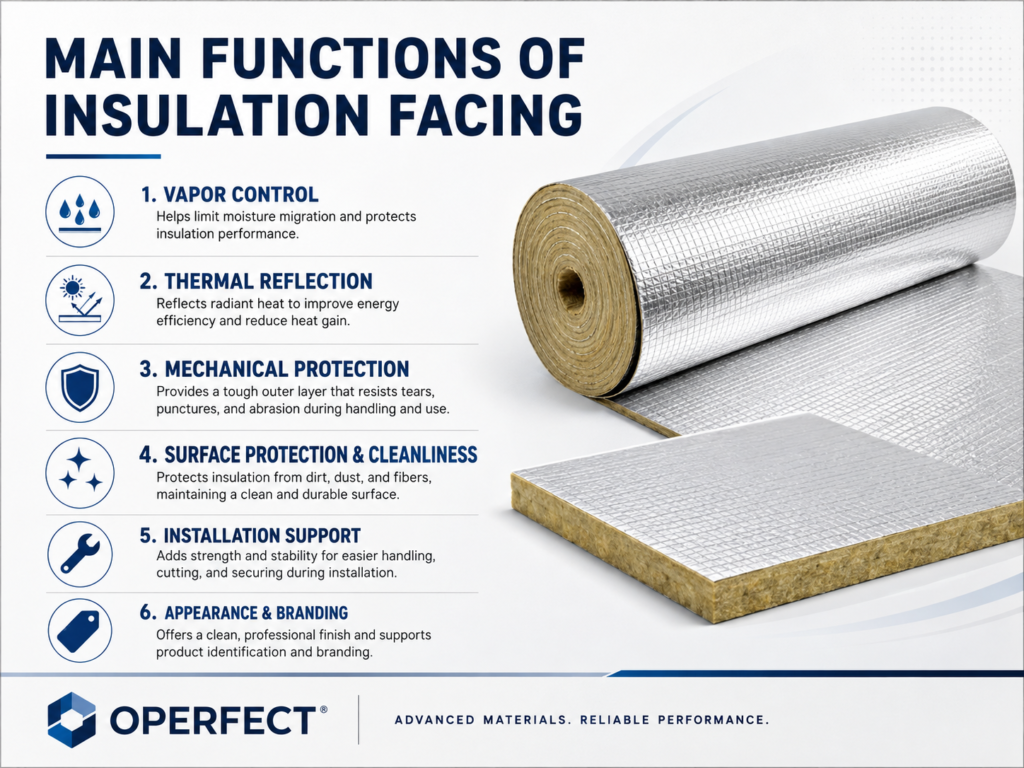
Main Functions of Insulation Facing
Vapor Control
Moisture vapor can migrate through walls, roofs, ceilings and HVAC systems.
If vapor reaches a cold surface, condensation may occur. This can reduce insulation performance and contribute to corrosion, mold, staining or material deterioration.
Low-permeance facings, such as aluminum foil composites, help control vapor movement when seams and penetrations are properly sealed.
Thermal Reflection
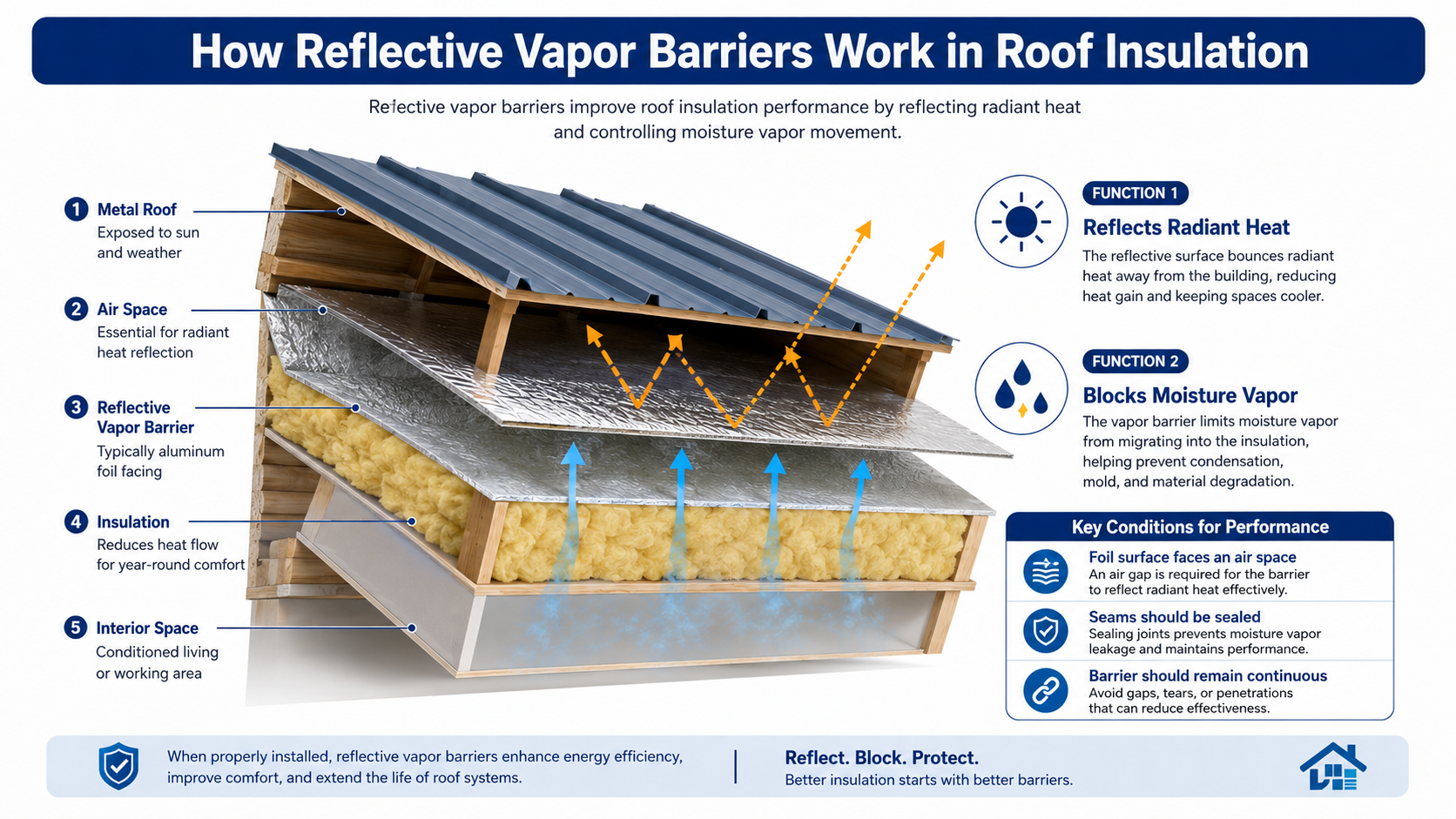
An aluminum foil surface can reduce radiant heat transfer when it faces an air space.
This function is especially useful in:
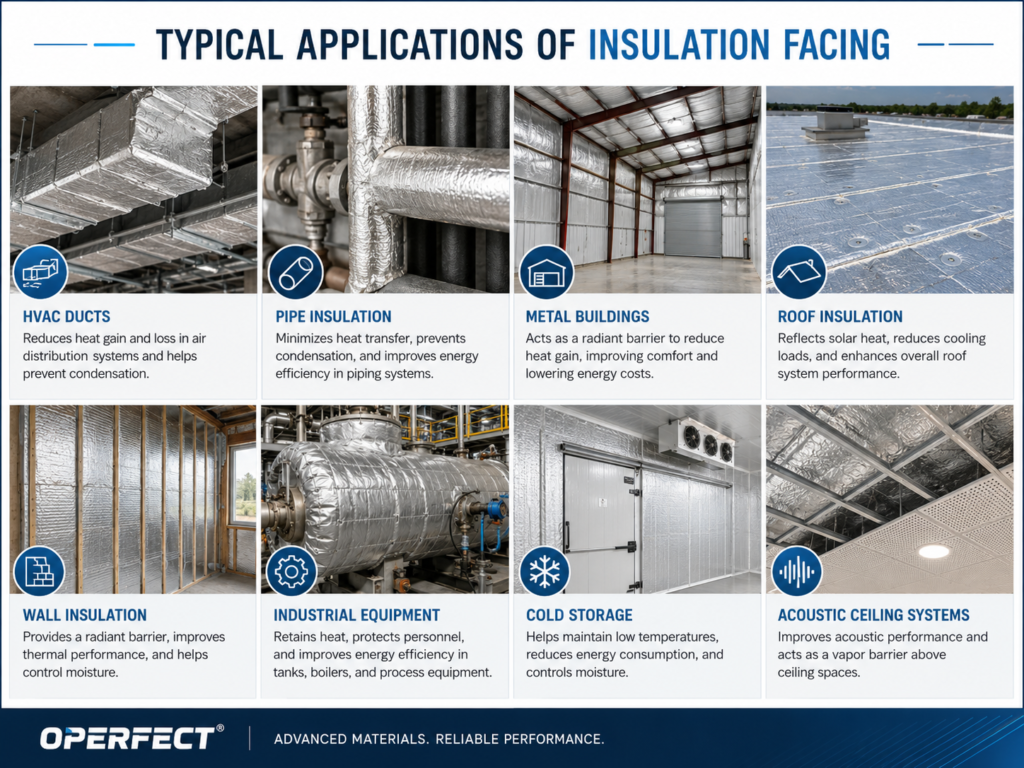
- Roof insulation
- Metal buildings
- HVAC systems
- Industrial equipment
- Wall and ceiling assemblies
Reflective facing should be considered part of the complete insulation system rather than a replacement for bulk insulation.
Mechanical Protection
Insulation surfaces can be damaged during production, transportation and installation.
A reinforced facing improves:
- Tear resistance
- Tensile strength
- Puncture resistance
- Dimensional stability
- Handling durability
Scrim, kraft paper, fiberglass cloth and woven fabric are commonly used to reinforce facing materials.
Surface Protection and Cleanliness
A facing can prevent direct exposure of insulation fibers and create a cleaner finished surface.
This is important in:
- HVAC ducts
- Warehouses
- Commercial buildings
- Mechanical rooms
- Industrial facilities
- Acoustic ceiling systems
The facing may also support printing, branding or identification information.
Installation Support
Faced insulation is generally easier to cut, position, wrap and fasten than unfaced insulation.
The facing may provide a suitable surface for:
- Adhesive bonding
- Foil tape
- Mechanical fasteners
- Heat sealing
- Overlapping joints
- Printed installation guides
Common Insulation Facing Materials
Aluminum Foil
Aluminum foil provides a reflective surface and low water-vapor permeability.
Unsupported foil is lightweight but may tear easily, so it is usually laminated with reinforcing materials.
Foil-Scrim-Kraft Facing
FSK facing combines aluminum foil, reinforcing scrim and kraft paper.
It provides a practical balance of:
- Vapor resistance
- Thermal reflection
- Handling strength
- Dimensional stability
- Cost efficiency
FSK is widely used on glass wool, rock wool and HVAC insulation.
Double-Foil Facing
Double-foil facing places aluminum foil on both sides of the reinforcement or backing structure.
It may provide:
- Two reflective surfaces
- Better protection from both directions
- Improved vapor resistance
- A metallic appearance on both sides
Foil-Scrim-Film Facing
This structure uses a polymer film instead of kraft paper.
It is often chosen where improved moisture resistance, flexibility or heat-sealing performance is required.
Fiberglass Cloth Facing
Fiberglass cloth provides high mechanical strength and temperature resistance.
It is suitable for HVAC systems, industrial equipment and heavy-duty insulation applications.
Estera de fibra de vidrio recubierta
Coated fiberglass mat is often used as a decorative and protective facing on acoustic panels, ceiling tiles and insulation boards.
It provides a clean surface while maintaining good dimensional stability.
Polymer-Film Facing
PE, PET and other films may provide:
- Moisture resistance
- Flexibility
- Heat-sealing performance
- Surface smoothness
- Dimensional stability
Their suitability depends on temperature, fire, bonding and application requirements.
Faced vs Unfaced Insulation
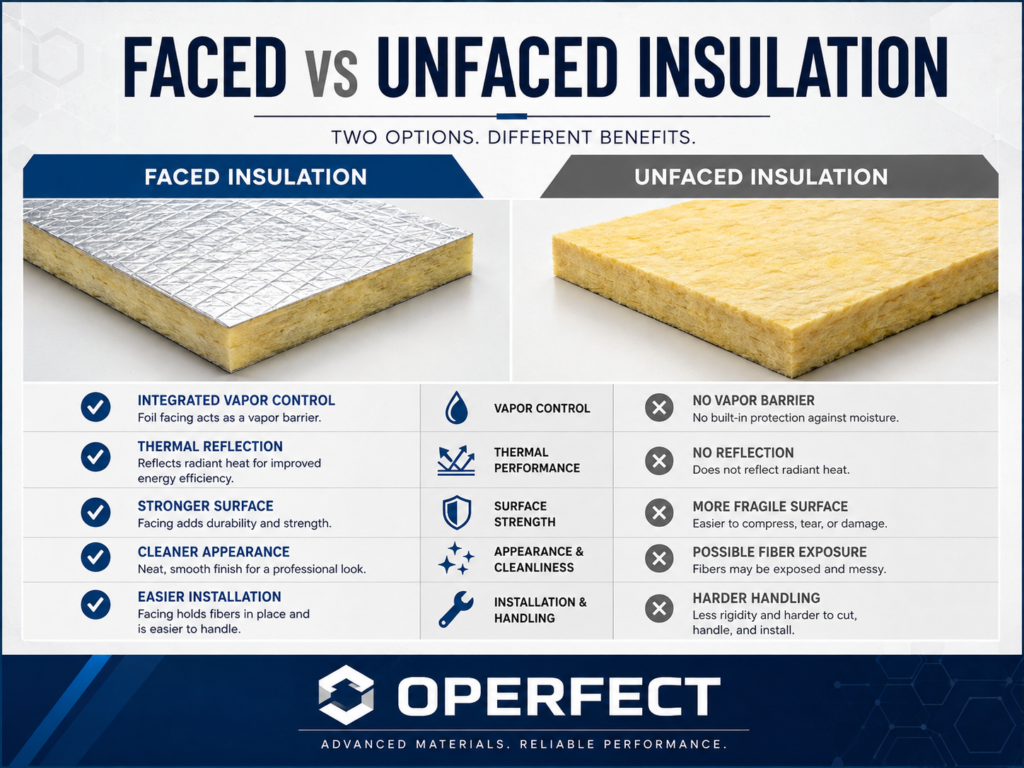
Unfaced insulation may be suitable when another layer in the assembly already provides vapor control or surface protection.
Faced insulation may be preferred when the product requires:
- An integrated vapor-control layer
- A reflective surface
- Improved handling strength
- A finished appearance
- Protection from contamination
- Easier installation and sealing
The correct option depends on the complete building or equipment assembly.
Important Selection Factors
Before selecting an insulation facing, consider:
- Insulation type
- Indoor or outdoor use
- Operating temperature
- Moisture exposure
- Required vapor permeance
- Required tensile and tear strength
- Fire-performance requirements
- Surface appearance
- Lamination method
- Heat-sealing requirements
- Roll width and length
- Printing and branding requirements
- Local building standards
A facing should be selected according to tested performance and application conditions, not appearance alone.
Importance of Seams and Installation
Even a high-performance facing can fail if joints and penetrations are not properly sealed.
Common weak points include:
- Open seams
- Damaged foil
- Staple holes
- Pipe penetrations
- Unsealed overlaps
- Incorrect tape
- Poor adhesion
- Exposed edges
The facing, joint tape, adhesive and installation method should work as one continuous system.
Conclusion
Insulation facing material is a functional component that protects insulation and helps control heat, moisture and mechanical damage.
The right facing improves handling, durability, appearance and long-term insulation performance.
OPERFECT® supplies customized insulation facings for glass wool, rock wool, HVAC, roofing and industrial thermal-protection applications. Available options include FSK, double foil, foil-scrim-film, fiberglass cloth and other engineered composite structures.