Learn what aluminum foil composite material is, how it is structured, its key performance characteristics, and how it is used in insulation, HVAC and building applications.
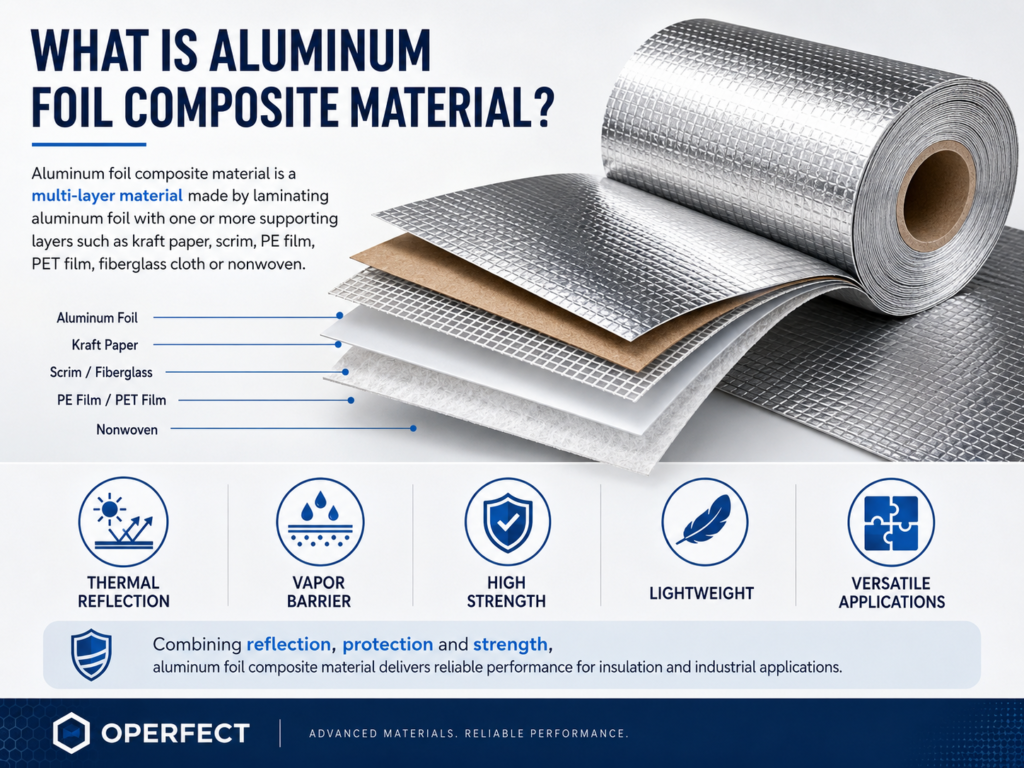
Aluminum foil composite material is a functional multi-layer material that combines aluminum foil with one or more supporting substrates, such as kraft paper, polyethylene film, PET film, fiberglass cloth, woven fabric, nonwoven fabric or reinforcing scrim.
Unlike unsupported aluminum foil, which is thin and can be easily torn or creased, a composite structure improves strength, dimensional stability, handling and application performance. Depending on its construction, an aluminum foil composite can provide thermal reflection, vapor resistance, moisture protection, reinforcement, heat-sealing performance or surface protection.
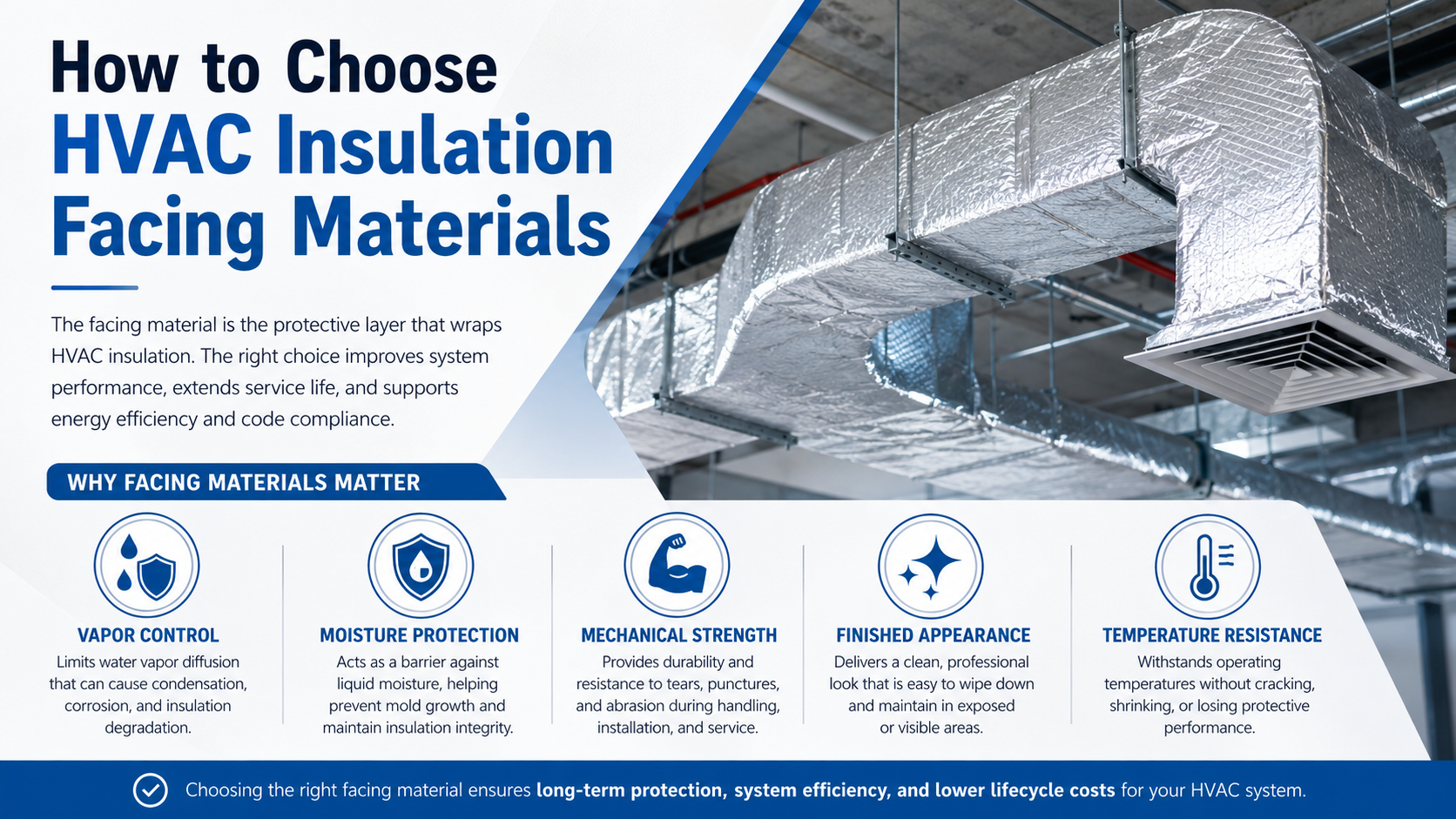
These materials are widely used as insulation facings, vapor retarders, radiant barriers, HVAC duct facings and protective layers for glass wool, rock wool, rubber foam and other insulation products.
Basic Structure of Aluminum Foil Composite Material
A typical aluminum foil composite contains three functional parts:
- Aluminum foil surface
- Reinforcement or supporting layer
- Bonding or sealing layer
The aluminum foil forms the exposed functional surface. Supporting materials improve tensile strength and tear resistance, while adhesives or polyethylene layers bond the different materials together.
A simple structure may contain only aluminum foil and kraft paper. More advanced structures may include foil, scrim, kraft paper and polyethylene coating.
Examples include:
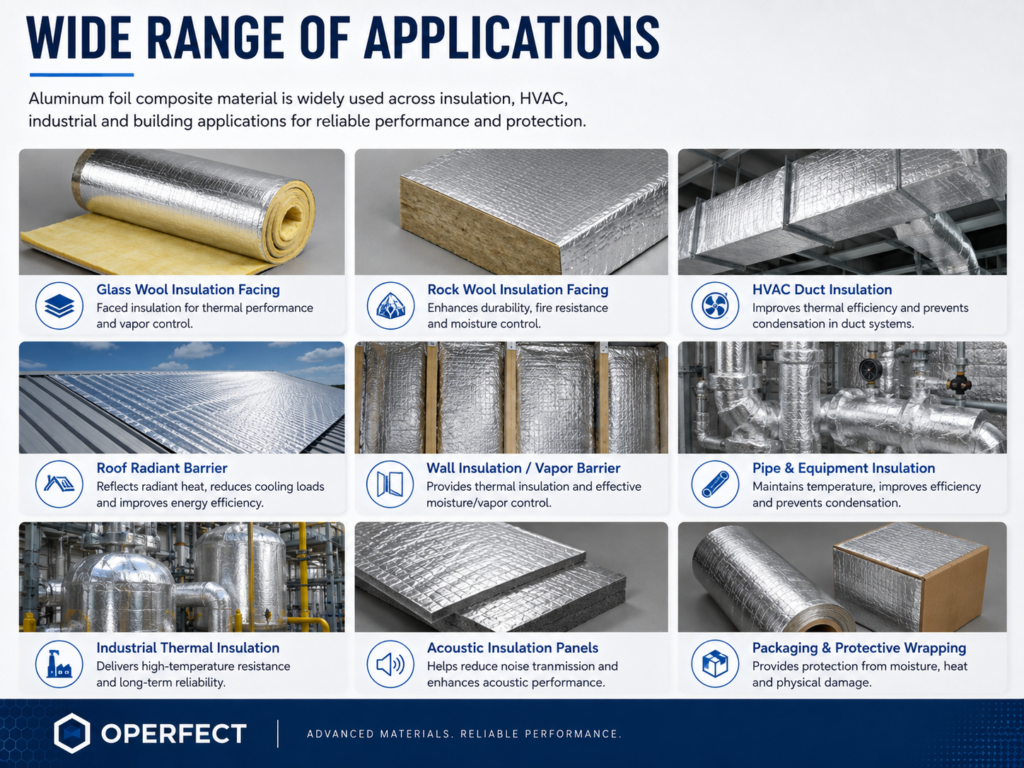
- Aluminum foil + kraft paper
- Aluminum foil + fiberglass scrim + kraft paper
- Aluminum foil + woven fabric
- Aluminum foil + fiberglass cloth
- Aluminum foil + PE film
- Aluminum foil + PET film
- Aluminum foil + nonwoven fabric
- Aluminum foil + scrim + PE film
Each structure is designed for a different balance of strength, vapor resistance, flexibility, fire performance and production compatibility.
Why Is Aluminum Foil Used?
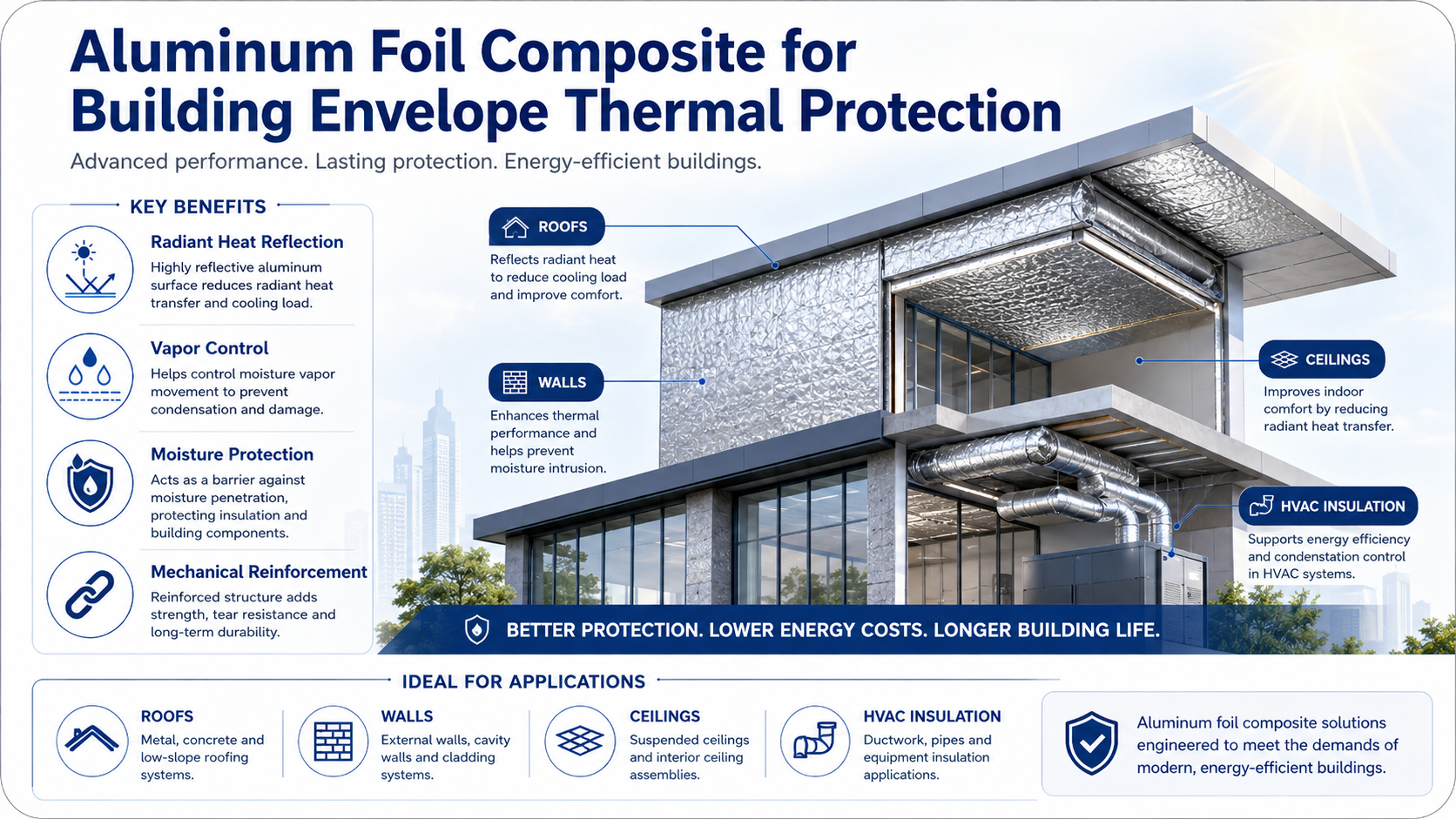
Aluminum foil is commonly selected because of its reflective surface and low water-vapor transmission.
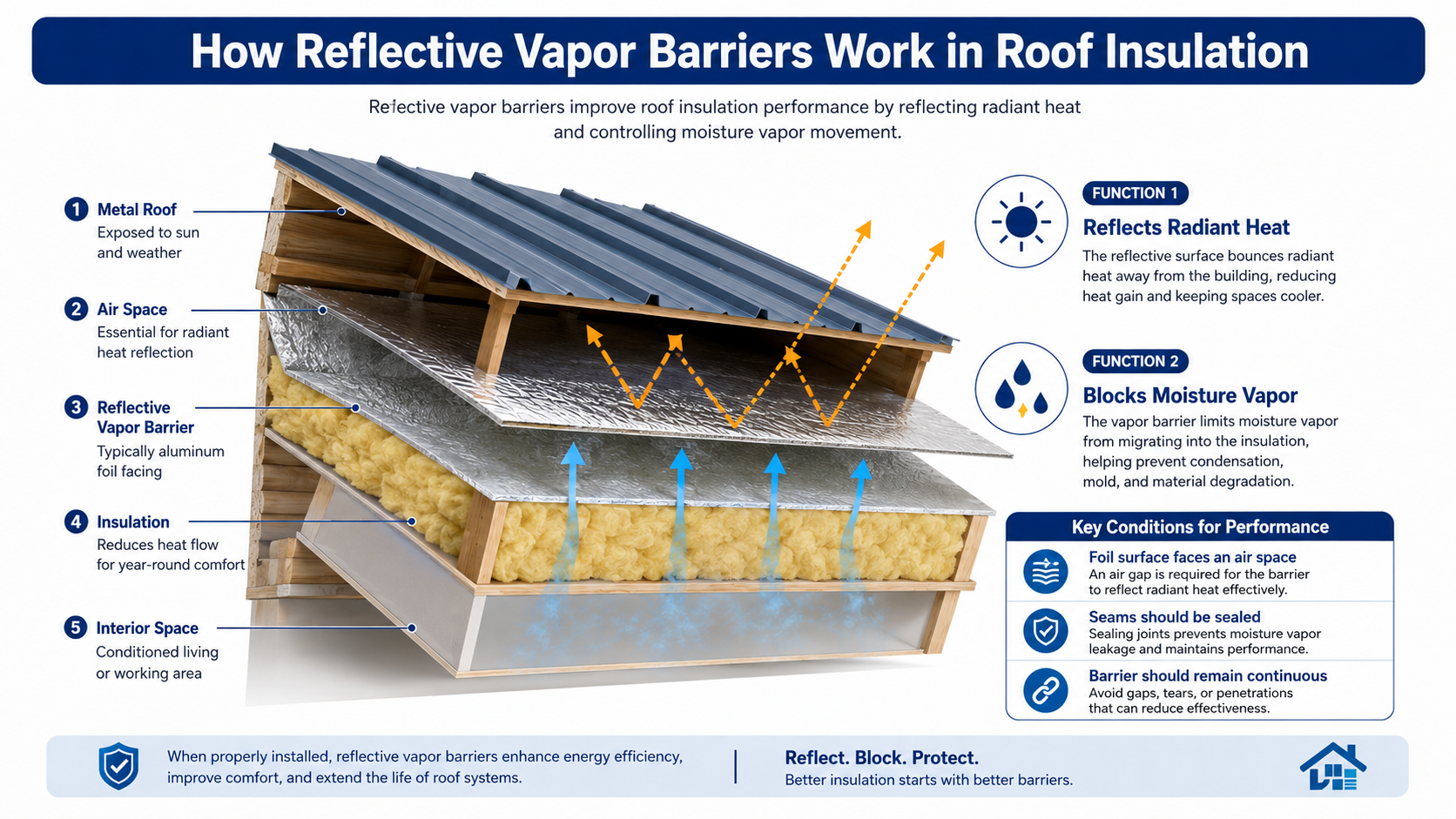
When installed facing an air space, the foil surface can reflect a significant portion of radiant heat. This makes it suitable for roofing systems, wall systems, HVAC insulation and industrial thermal insulation.
Aluminum foil also acts as a barrier layer against moisture vapor. This is important because moisture entering an insulation system can reduce thermal efficiency, cause condensation or damage surrounding materials.
Additional advantages include:
- Low weight
- Good temperature resistance
- Clean and professional appearance
- Compatibility with multiple substrates
- Resistance to many oils and chemicals
- Easy printing and embossing
- Suitability for roll-to-roll lamination
The final performance, however, depends on the complete composite structure rather than the aluminum foil alone.
Main Supporting Materials
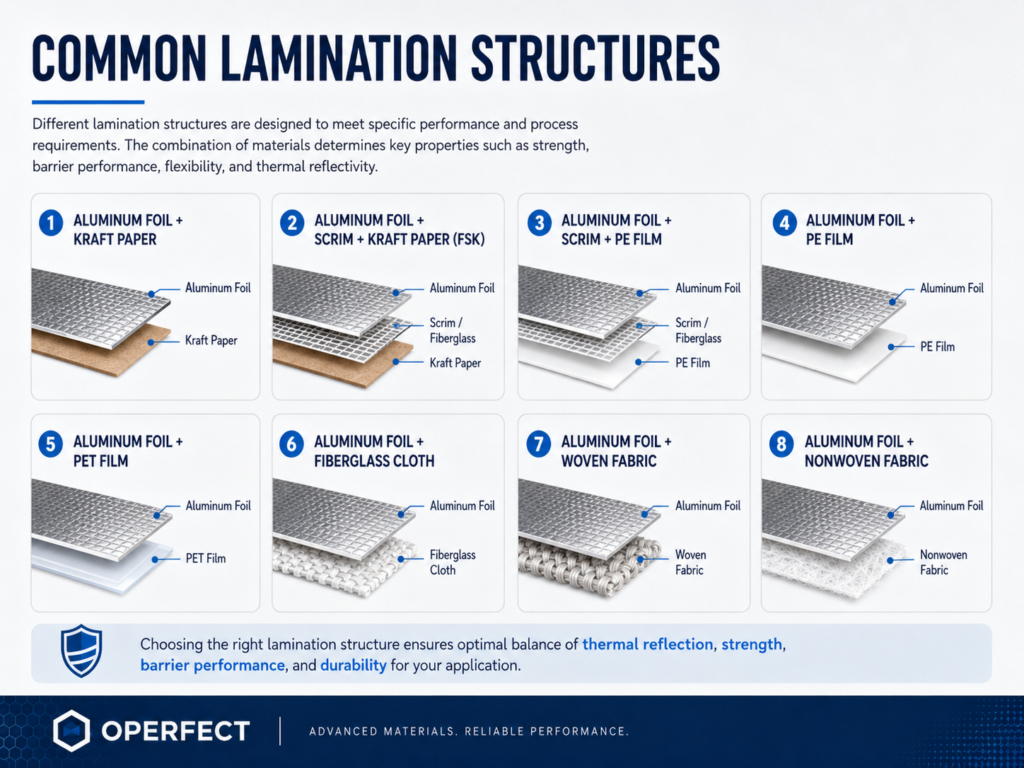
Different supporting materials give aluminum foil composites different properties.
Kraft Paper
Kraft paper provides stiffness, economical reinforcement and good processing performance. It is commonly used in FSK insulation facings.
Fiberglass Scrim
Fiberglass scrim improves dimensional stability, tensile strength and tear resistance. It is suitable for insulation products that require a stronger facing.
Polyethylene Film
PE film can function as a bonding layer, moisture barrier, heat-sealing layer or flexible backing.
PET Film
PET film offers good dimensional stability, smoothness and temperature resistance. It is often used in multi-layer technical laminates.
Fiberglass Cloth
Fiberglass cloth provides high mechanical strength and good heat resistance. It is commonly used in demanding industrial and HVAC applications.
Woven Fabric
Woven reinforcement is suitable for heavy-duty applications requiring high tensile and puncture resistance.
Nonwoven Fabric
Nonwoven materials provide flexibility, surface protection and compatibility with coatings or adhesives.
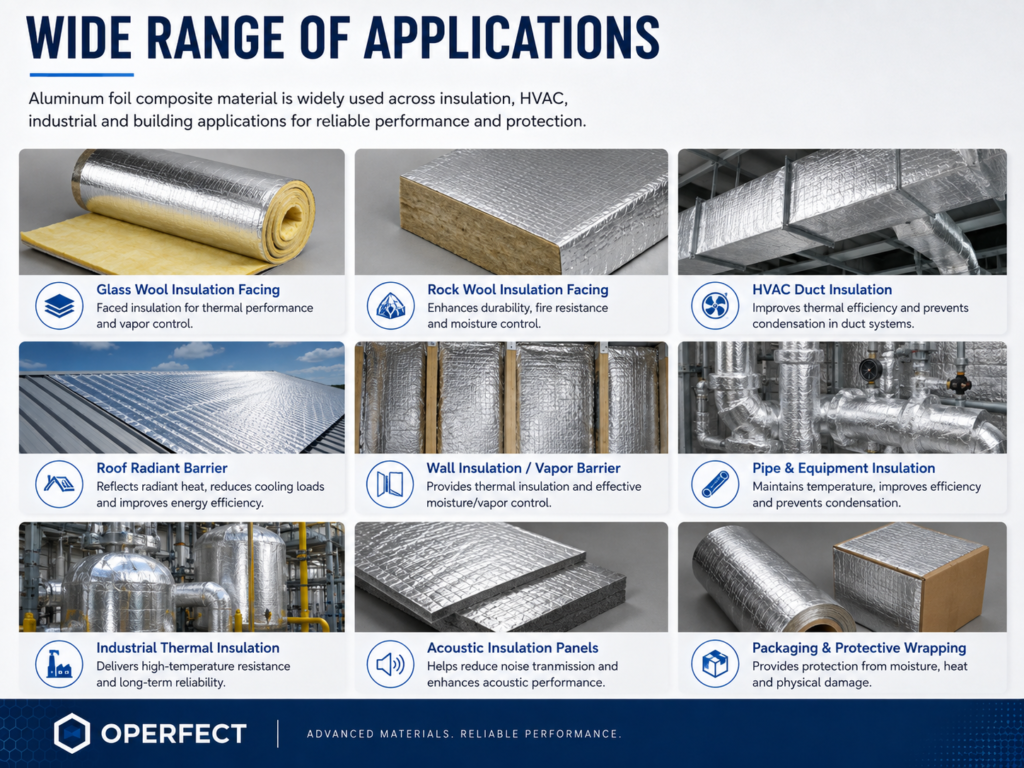
Common Applications
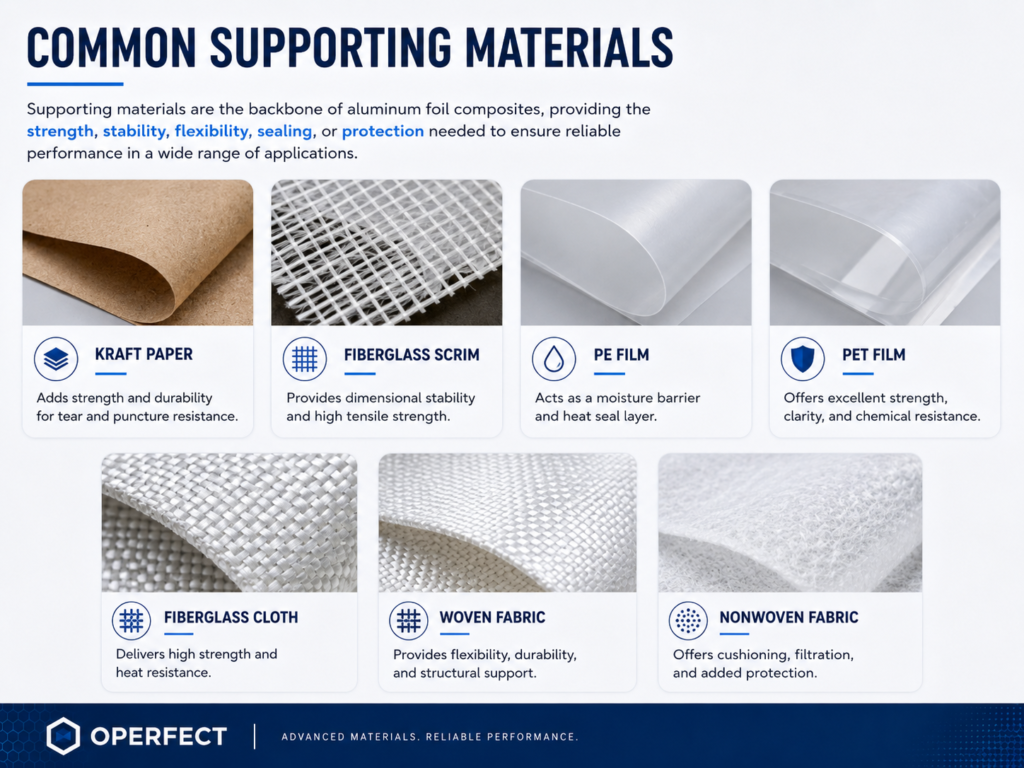
Aluminum foil composite materials are used in many thermal protection systems.
Typical applications include:
- Glass wool insulation facing
- Rock wool insulation facing
- HVAC duct wrap and duct board
- Rubber foam insulation facing
- Roof radiant barriers
- Wall vapor barriers
- Metal building insulation
- Pipe and equipment insulation
- Industrial thermal insulation
- Acoustic insulation panels
- Packaging and protective wrapping
The appropriate structure depends on the installation environment and the manufacturing process of the insulation producer.
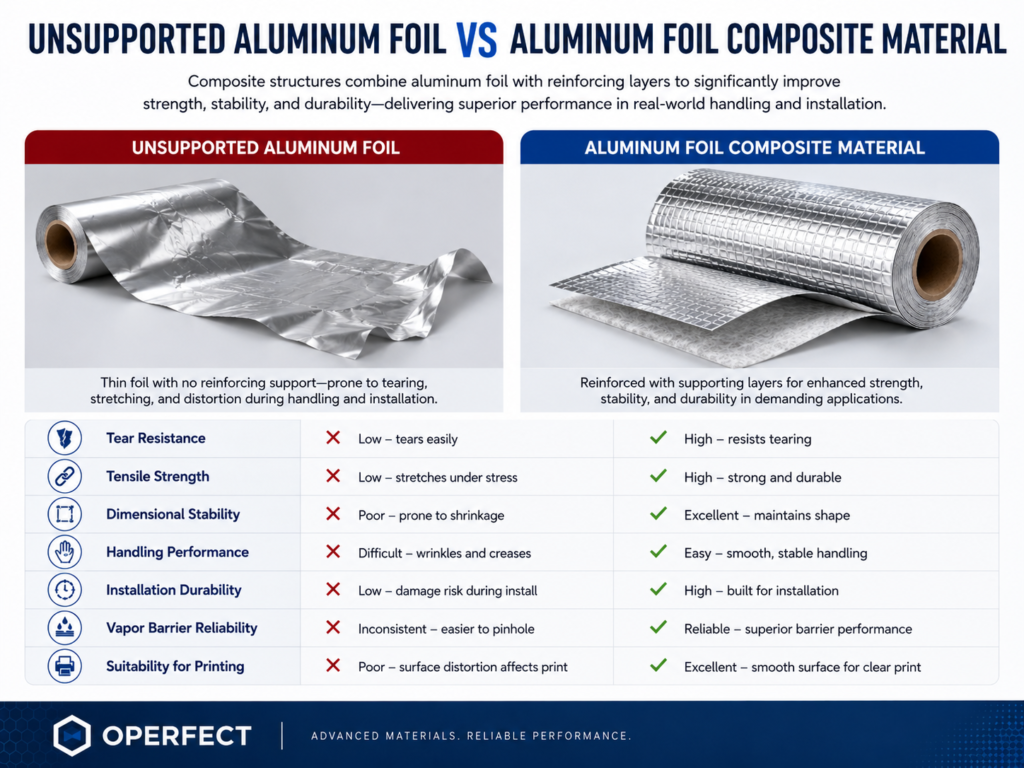
Aluminum Foil Composite vs Unsupported Foil
Unsupported foil provides reflection and barrier performance, but its mechanical strength is limited. It can tear during lamination, handling, installation or transportation.
Composite aluminum foil offers several improvements:
- Better tear resistance
- Higher tensile strength
- Improved roll stability
- Easier converting and lamination
- Reduced risk of damage during installation
- Additional heat-sealing or adhesive properties
- Greater suitability for printing and branding
For most insulation applications, a properly engineered composite is more practical than unsupported aluminum foil.
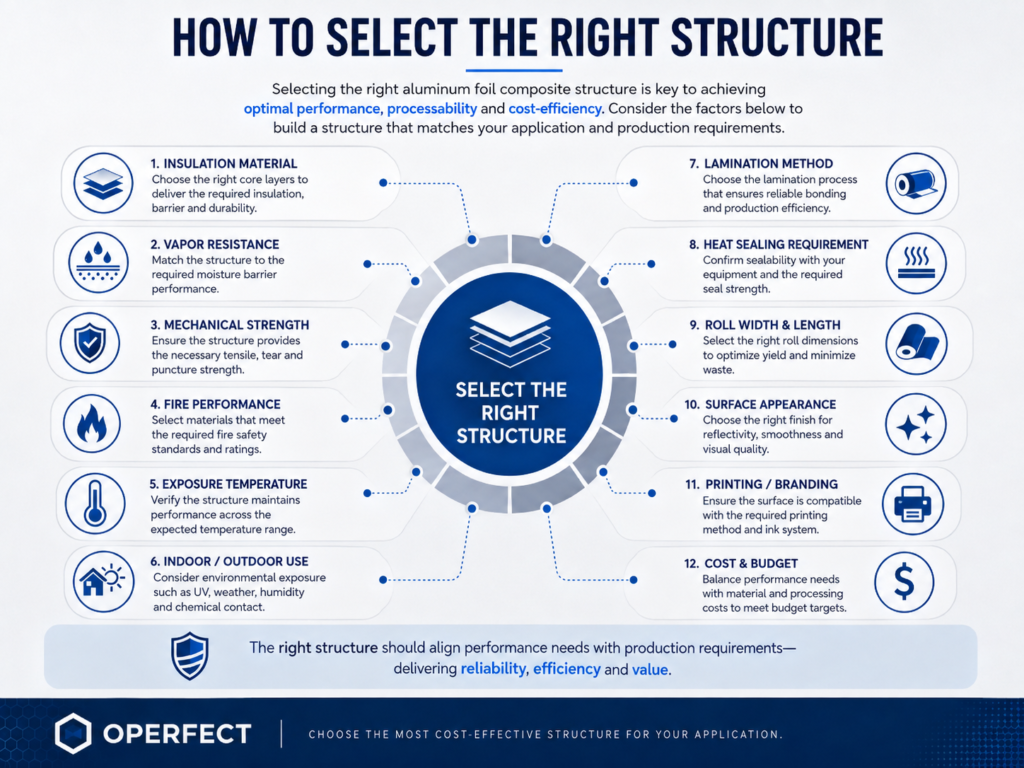
How to Select the Right Structure
When choosing an aluminum foil composite material, buyers should evaluate:
- Intended insulation material
- Required vapor resistance
- Required tensile and tear strength
- Fire-performance requirements
- Exposure temperature
- Indoor or outdoor use
- Lamination method
- Roll width and roll length
- Required surface appearance
- Heat-sealing requirements
- Printing and private-label needs
There is no single structure suitable for every insulation system. The most cost-effective solution is the one that meets the actual performance and production requirements without adding unnecessary layers.
Conclusion
Aluminum foil composite material is not simply aluminum foil with a backing. It is an engineered multi-layer material in which each component performs a specific function.
The foil provides thermal reflection and vapor protection, while the supporting and bonding layers provide strength, flexibility and manufacturing compatibility.
OPERFECT® supplies aluminum foil composite materials for glass wool, rock wool, HVAC, roof insulation and industrial thermal protection applications. Structures, widths, roll lengths, reinforcement materials and printing can be customized according to project and production requirements.