Why Modern Building Envelope Systems Must Balance Waterproofing and Breathability
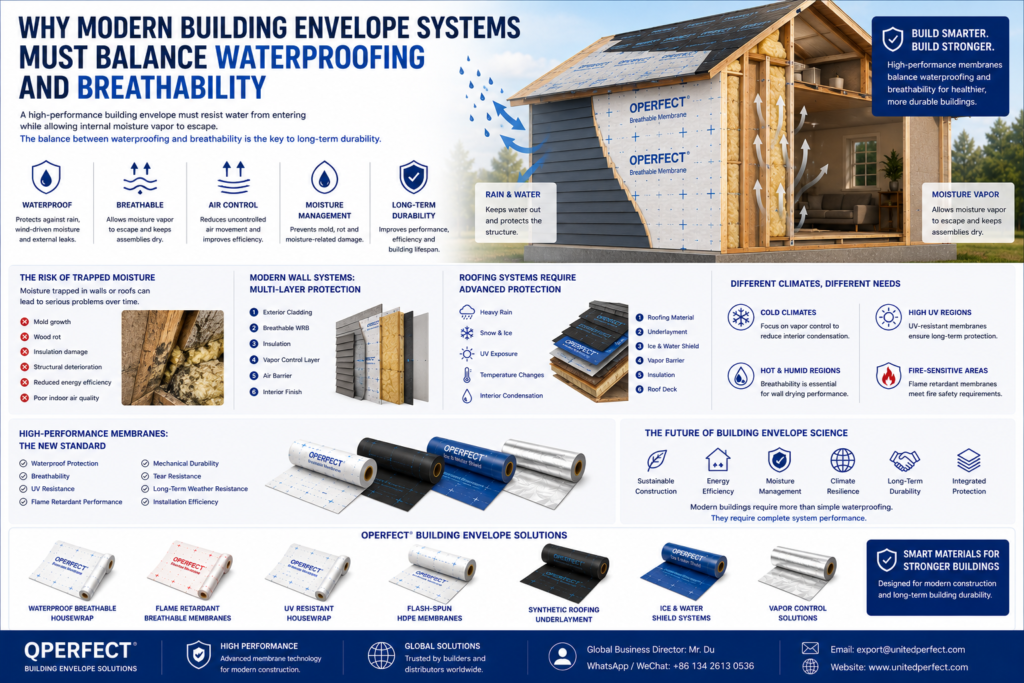
In modern construction, protecting a building is no longer simply about stopping water from entering the structure.
Today’s buildings must also manage:
- Moisture movement
- Vapor diffusion
- Air leakage
- Energy efficiency
- Long-term durability
This is why modern building envelope science increasingly focuses on one critical principle:
Balancing waterproofing and breathability.
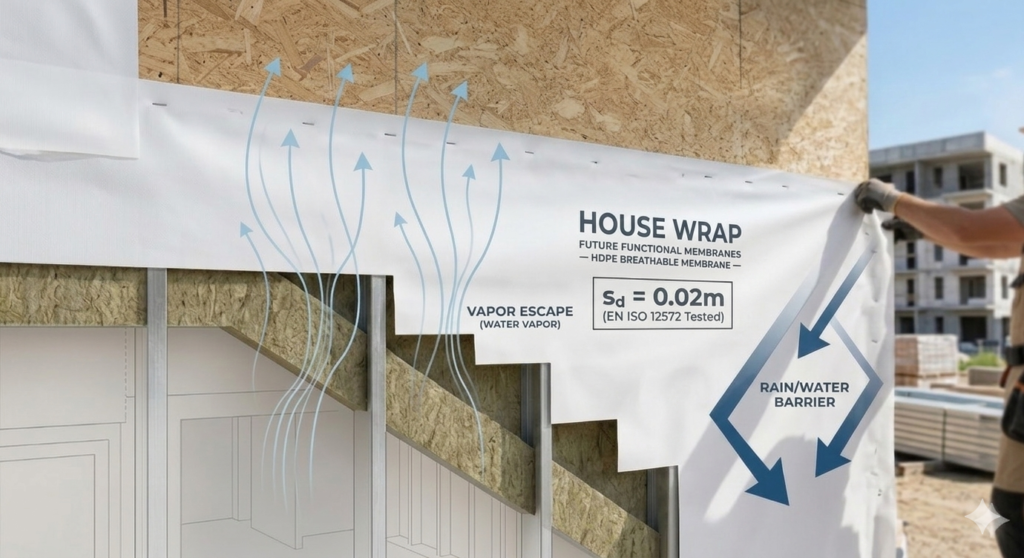
A high-performance wall or roofing system must not only resist external water intrusion, but also allow internal moisture to escape safely.
The Hidden Risk of Trapped Moisture
Modern buildings are becoming more airtight in order to improve thermal efficiency and reduce energy loss.
While tighter assemblies improve insulation performance, they also increase the risk of trapped moisture.
Moisture can enter wall and roof systems through:
- Indoor humidity
- Vapor diffusion
- Air leakage
- Condensation
- Construction moisture
- Small exterior leaks
If moisture cannot dry properly, buildings may experience:
- Mold growth
- Wood rot
- Insulation damage
- Structural deterioration
- Reduced energy efficiency
- Poor indoor air quality
Many long-term building failures are actually caused by uncontrolled moisture accumulation inside concealed assemblies.
Why Waterproofing Alone Is Not Enough
Traditional waterproof barriers were primarily designed to stop external water intrusion.
However, many older systems also trapped internal vapor inside wall assemblies.
This created a major problem:
Moisture could enter the wall system, but could not easily escape.
Modern building science now recognizes that drying potential is just as important as waterproofing performance.
A durable building envelope must carefully manage both liquid water and water vapor movement.
What Is a Breathable Building Envelope?
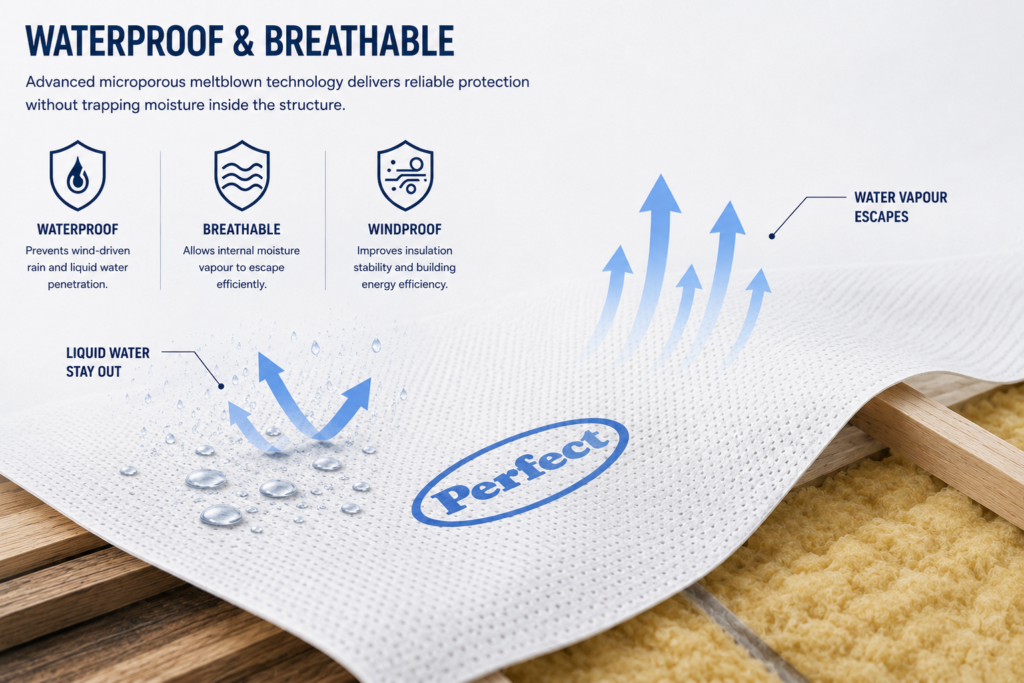
A breathable building envelope system is designed to provide:
- Waterproof protection
- Vapor permeability
- Air control
- Moisture management
This allows the assembly to resist rain and external weather while still permitting internal moisture vapor to dry outward.
Breathable membrane systems are commonly used in:
- Housewrap systems
- Weather Resistant Barriers (WRB)
- Roofing underlayments
- Breathable roofing membranes
- High-performance wall assemblies
Why Breathability Improves Building Durability
Moisture-damaged materials lose performance over time.
Wet insulation becomes less effective.
Wood framing may deteriorate.
Mold growth can impact indoor environments.
Breathable membranes help reduce these risks by allowing moisture vapor to escape from inside the assembly.
This helps improve:
- Wall drying performance
- Roof moisture control
- Insulation efficiency
- Long-term durability
- Building lifespan
This balance between waterproofing and breathability is one of the foundations of modern building envelope design.
Modern Wall Systems Require Multi-Layer Protection
Today’s wall assemblies often include multiple performance layers working together, including:
- Exterior cladding
- Breathable WRB systems
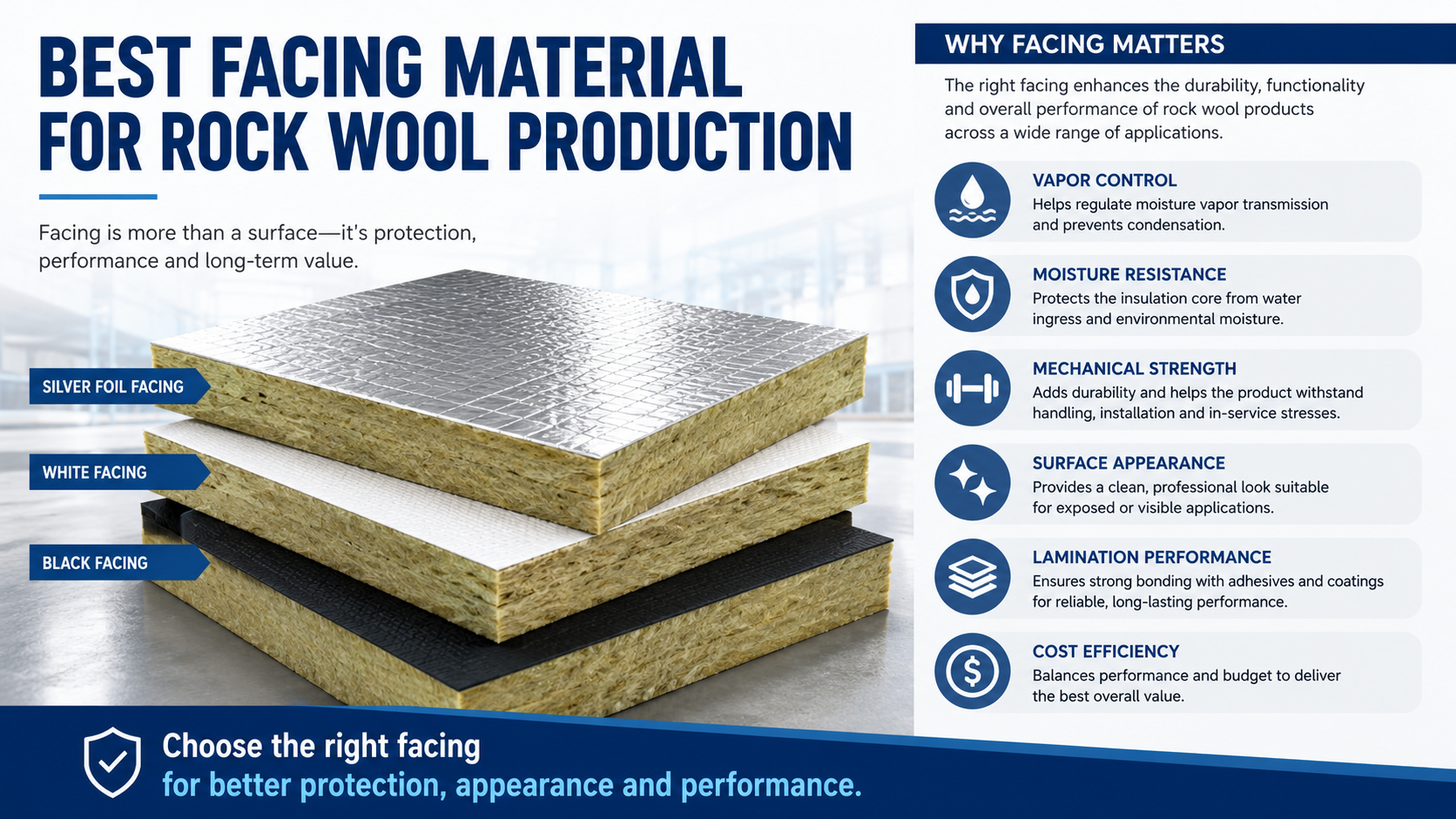
- Insulation systems
- Vapor control layers
- Air barriers
- Interior finishes
Each layer contributes to:
- Moisture management
- Thermal efficiency
- Weather resistance
- Air control
- Structural durability
No single material alone can deliver complete protection.
Modern construction depends on integrated system performance.
Roofing Systems Face Similar Challenges
Roof assemblies are exposed to some of the harshest environmental conditions in construction.
Modern roofs must resist:
- Heavy rain
- Snow accumulation
- Ice dams
- UV exposure
- Temperature fluctuations
- Interior condensation
As a result, modern roofing systems increasingly combine:
- Synthetic roofing underlayment
- Ice & Water Shield systems
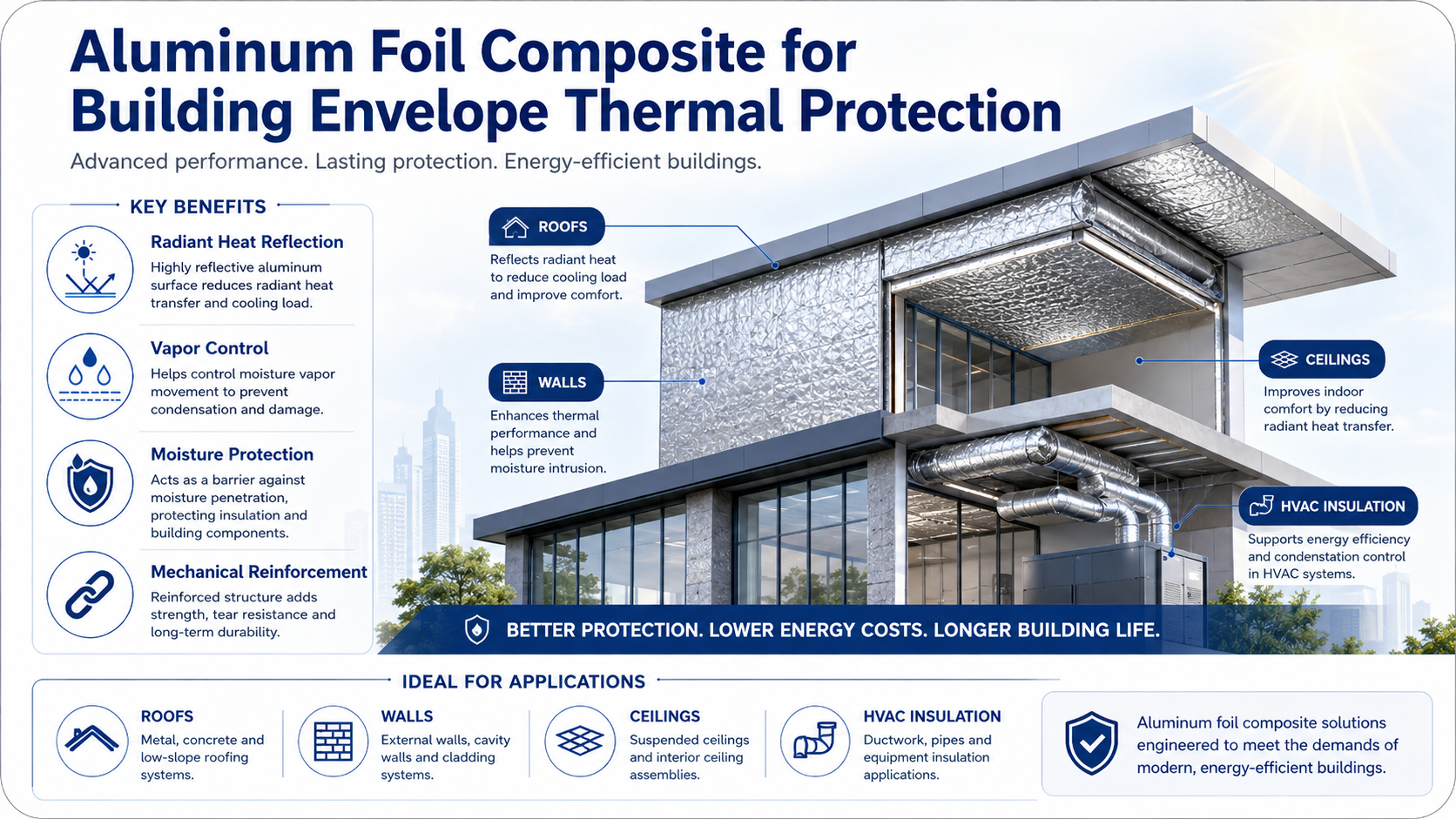
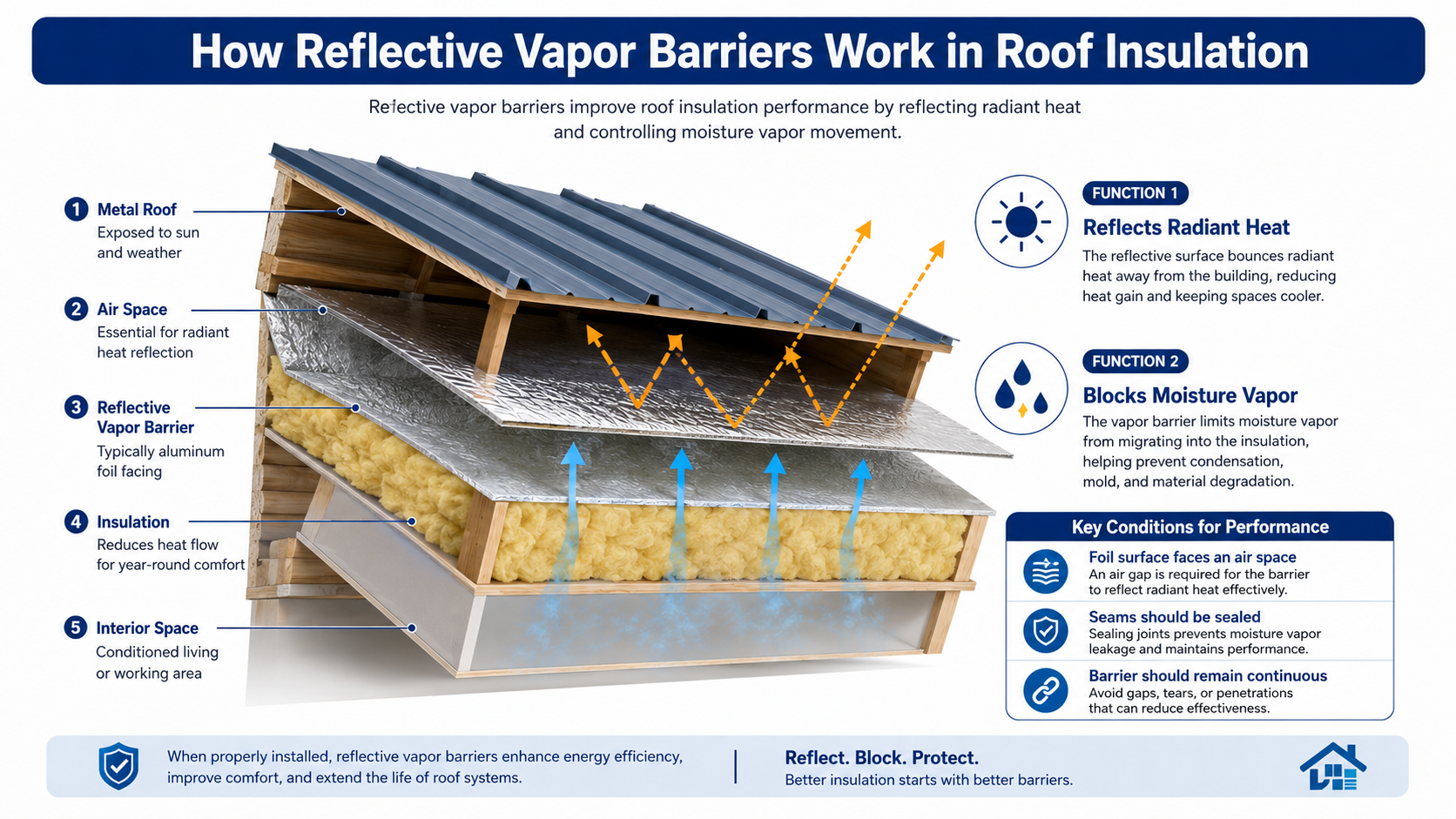
- Vapor barriers
- Ventilation systems
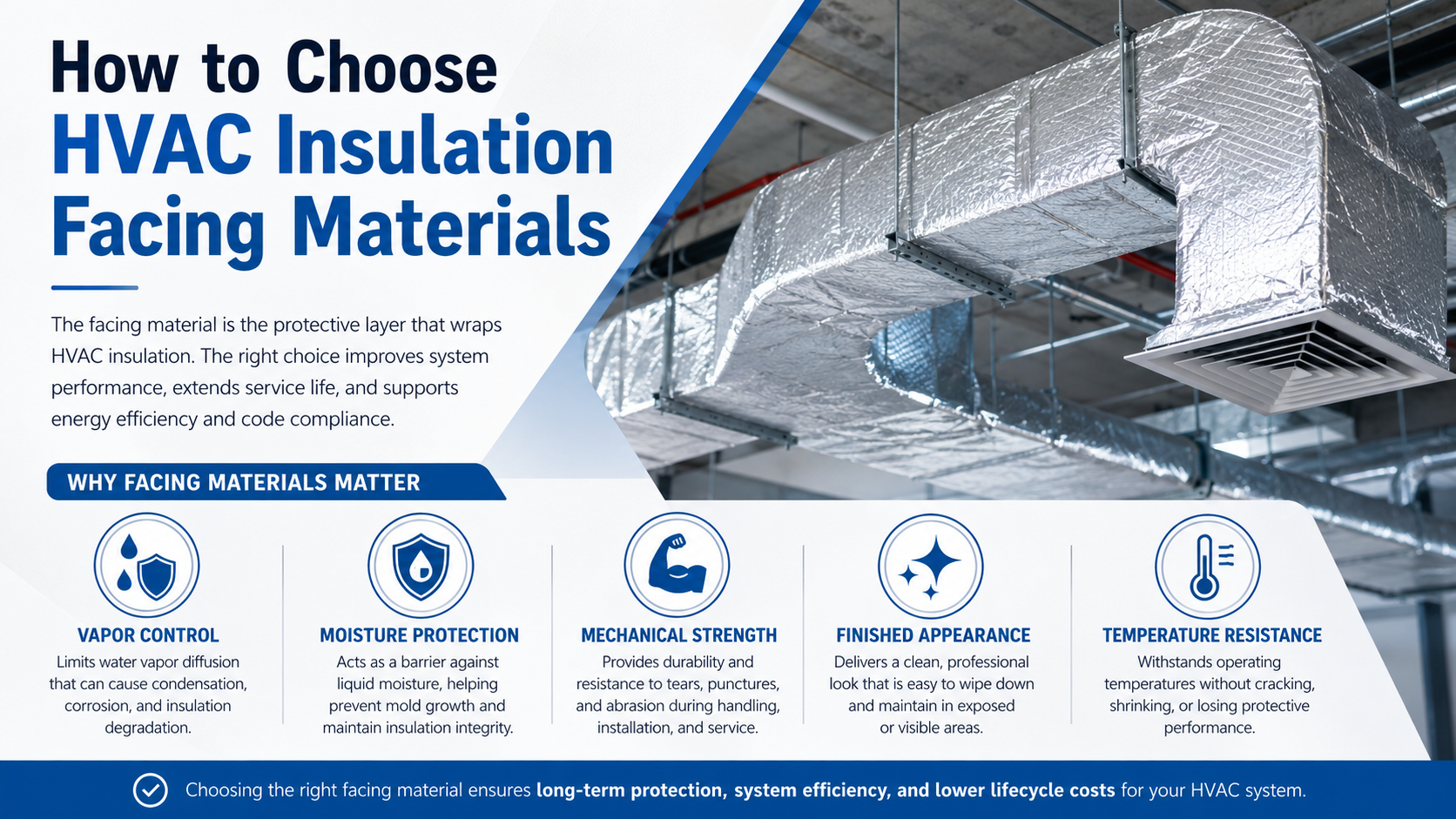
- Reflective insulation materials
Together, these layers help improve moisture control and long-term roof durability.
Climate Conditions Influence Membrane Requirements
Different climates create different building envelope challenges.
For example:
Cold Climates
Buildings may require improved vapor control to reduce interior condensation risks.
Hot and Humid Regions
Breathability becomes increasingly important for wall drying performance.
High UV Regions
UV-resistant membranes help maintain long-term protection during construction exposure.
Fire-Sensitive Areas
Flame retardant breathable membranes may be required depending on local building codes.
Modern membrane technology is becoming increasingly specialized to meet these different environmental requirements.
High-Performance Membranes Are Becoming the New Standard
Today’s advanced building envelope membranes increasingly combine:
- Waterproof protection
- Breathability
- UV resistance
- Flame retardant performance
- Mechanical durability
- Long-term weather resistance
This multi-functional approach is becoming the future of modern construction.
The Future of Building Envelope Science
Modern buildings are expected to last longer, perform better, and operate more efficiently than ever before.
As a result, building envelope systems are becoming increasingly important in global construction.
The future of construction will continue to focus on:
- Intelligent moisture management
- Sustainable construction
- Climate resilience
- Energy efficiency
- Long-term durability
- Integrated protection systems
Because modern buildings require more than simple waterproofing.
They require complete system performance.
OPERFECT Building Envelope Solutions
At OPERFECT, we provide high-performance membrane systems designed for modern roofing and wall protection applications worldwide.
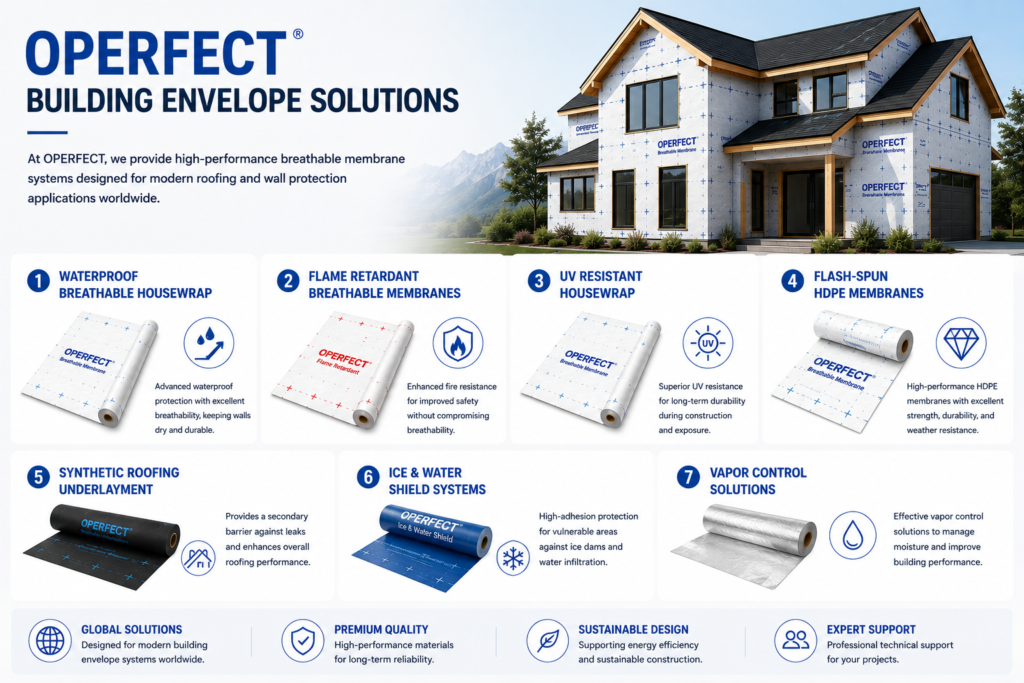
Our solutions include:
- Waterproof Breathable Housewrap
- Flame Retardant Breathable Membranes
- UV Resistant Housewrap
- Flash-Spun HDPE Membranes
- Synthetic Roofing Underlayment
- Ice & Water Shield Systems
- Vapor Control Solutions
Designed for modern building envelope systems and long-term construction durability.
United Perfect Group “To Make Buildings Perfect, together.”
Global Business Director: Mr. Du
WhatsApp/WeChat: +86 134 2613 0536
Email: export@unitedperfect.com
Website: www.unitedperfect.com