Meta Description: Why North American pros choose synthetic over felt. Compare durability, UV resistance, cost, and code compliance for shingles and metal roofs.
Why Synthetic Wins
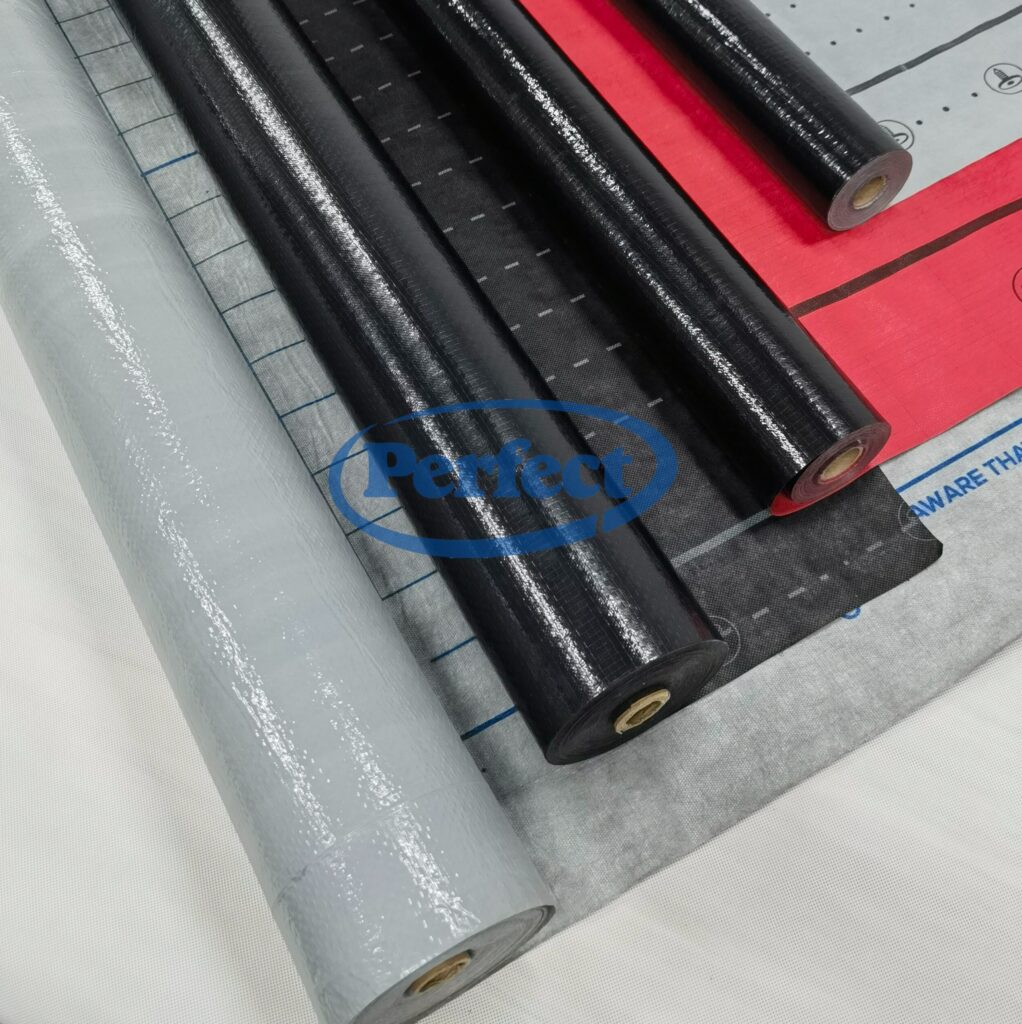
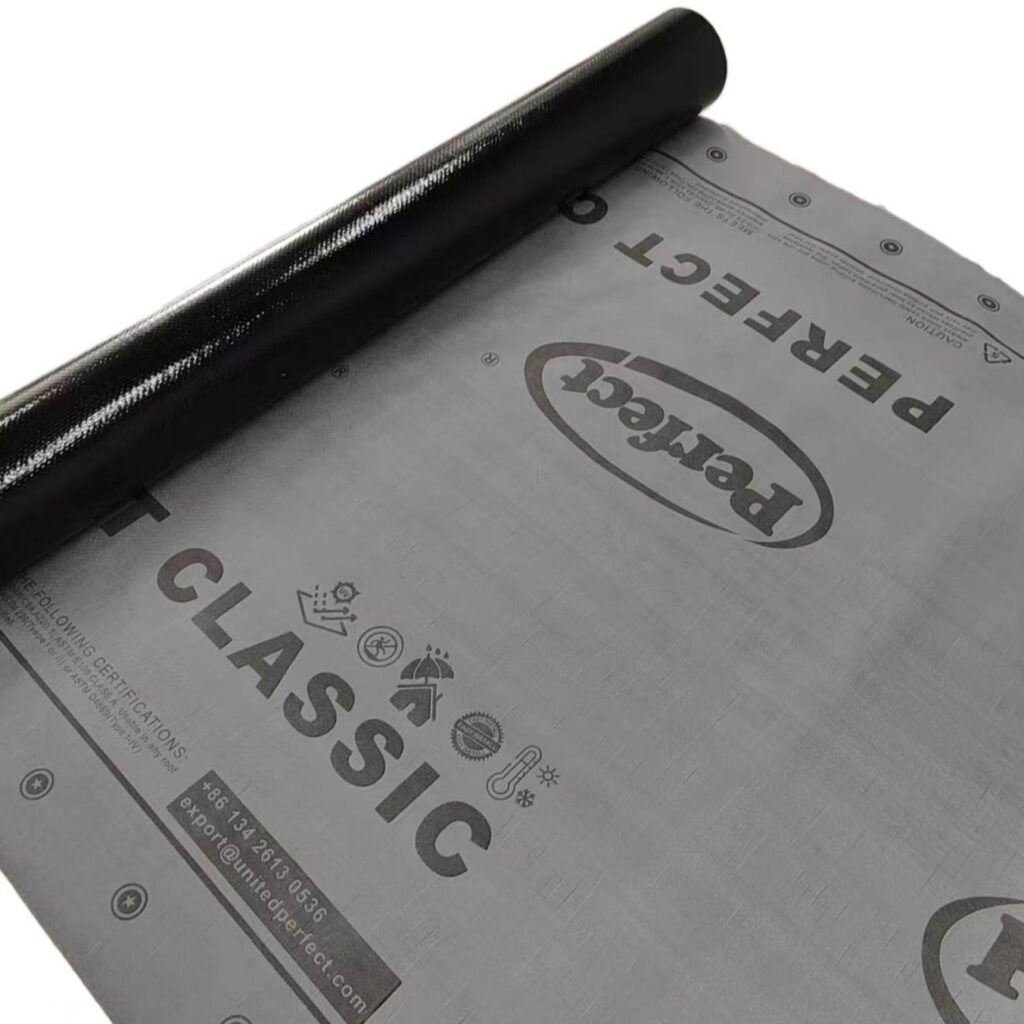
Synthetic roofing underlayment (made from polypropylene or polyethylene) outperforms traditional #15 felt in every key metric. While felt costs less upfront, synthetic delivers better long-term value.
Key Benefits
- Tensile Strength: Up to 10x stronger than felt. Resists tear during installation and high-wind events.
- Lightweight: One 10-square roll covers the same area as 2.5 rolls of felt but weighs 67% less.
- UV Resistance: Exposed UV ratings from 60-180 days (vs. days for felt).
- Walkability: Slip-resistant surface even when wet.
- Moisture Resistance: Zero absorption prevents mold and rot.
Technical & Code Compliance
US & Canada Standards:
- ASTM D226 Type II (exceeds)
- ICC-ES AC48 approval
- UL Class A fire-rated when used with shingles
- Miami-Dade HVHZ approved options available
Fast Installation Tips
- Install horizontally, start at eave
- Laps: 4″ side, 6″ end
- Must use capped nails (1″ heads)
- Spacing: 8″ at laps, 24″ field (double in high-wind zones)
Low Slope (2:12-4:12): Double layer or self-adhered required.
For Metal Roofs
- Mechanically attached: Cost-effective but fasteners unsealed
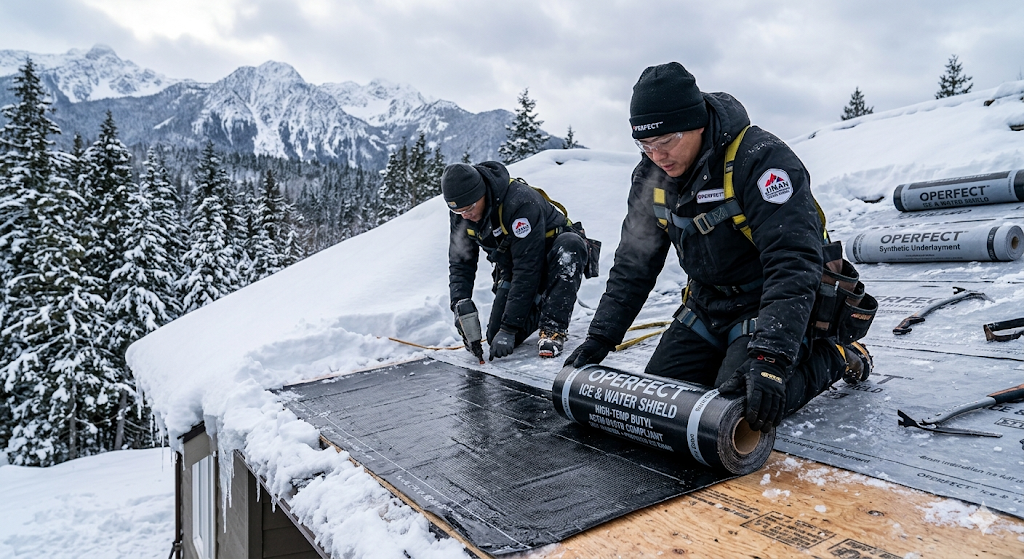
- Peel-and-stick: Better seal, but requires high-temperature variant
Cost vs. Value
| Factor | Felt | Synthetic |
|---|---|---|
| Material Cost | Lower | Higher ($0.10-0.55/sq ft) |
| Labor Cost | Higher | Lower |
| Lifespan | 5-10 years | 25-40 years |
| Safety | Slippery | Grip surface |
Verdict: Lower total installed cost with synthetic.
FAQ
Q: How long does it last?
A: 25-40 years.
Q: Worth the extra cost?
A: Yes. Labor savings + durability = better ROI.
Q: Vapor barrier?
A: Most are low-perm. Ensure attic ventilation.