Learn about aluminum foil fiberglass fabric, its structure, thermal performance, strength advantages and applications in HVAC, insulation and industrial protection.
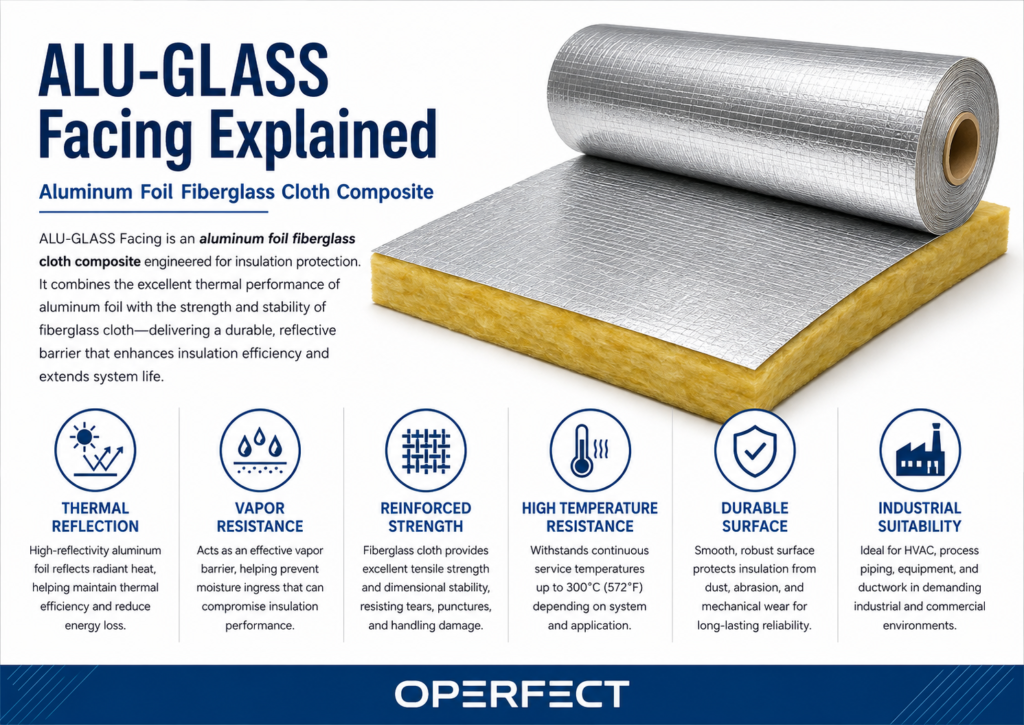
Aluminum foil fiberglass fabric is a high-performance composite material combining aluminum foil with fiberglass fabric reinforcement.
Unlike lightweight foil laminates designed mainly for insulation facing, aluminum foil fiberglass fabric is engineered for applications requiring higher mechanical strength, durability and temperature resistance.
The combination of aluminum foil and fiberglass fabric creates a protective composite that provides thermal reflection, moisture resistance, abrasion resistance and excellent dimensional stability.
It is widely used in HVAC insulation, industrial insulation, pipe wrapping, equipment protection, fire-resistant applications and specialized building systems.
What Is Aluminum Foil Fiberglass Fabric?
Aluminum foil fiberglass fabric is a laminated material consisting of:
- Aluminum foil surface layer
- Adhesive or bonding layer
- Fiberglass fabric reinforcement
The aluminum foil provides reflective and barrier properties, while the fiberglass fabric provides mechanical strength and temperature resistance.
A typical structure:
Aluminum Foil + Adhesive + Fiberglass Fabric
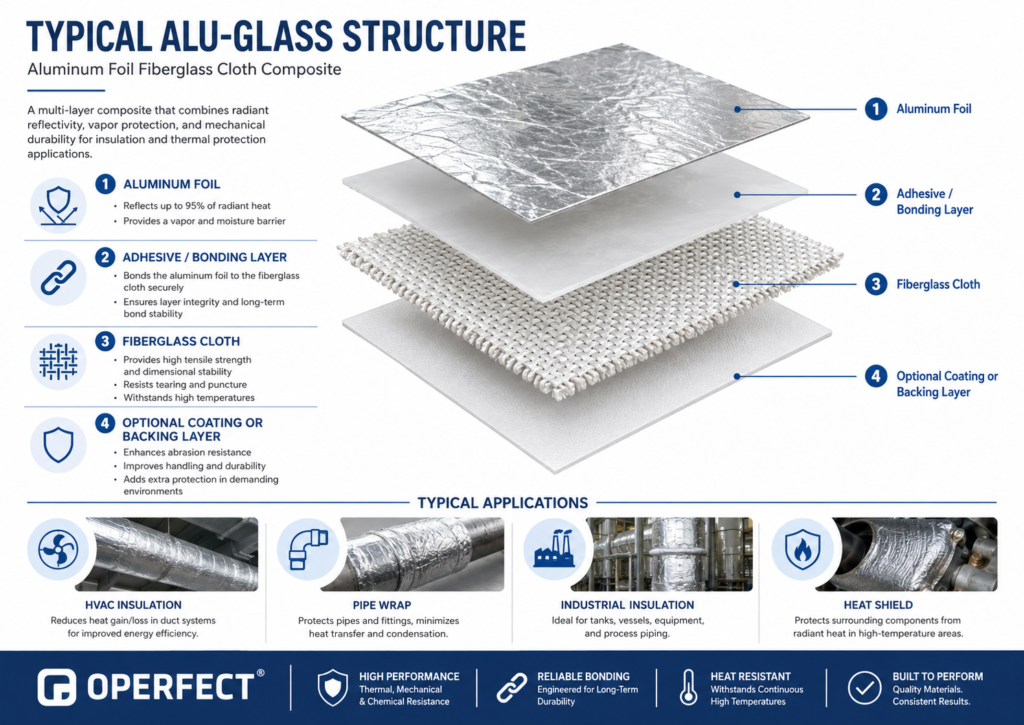
Depending on the application, additional layers may be added, such as:
- Silicone coating
- Acrylic coating
- PE film
- Release coating
- Protective surface treatment
Function of Each Layer
Aluminum Foil Layer
The aluminum foil surface provides:
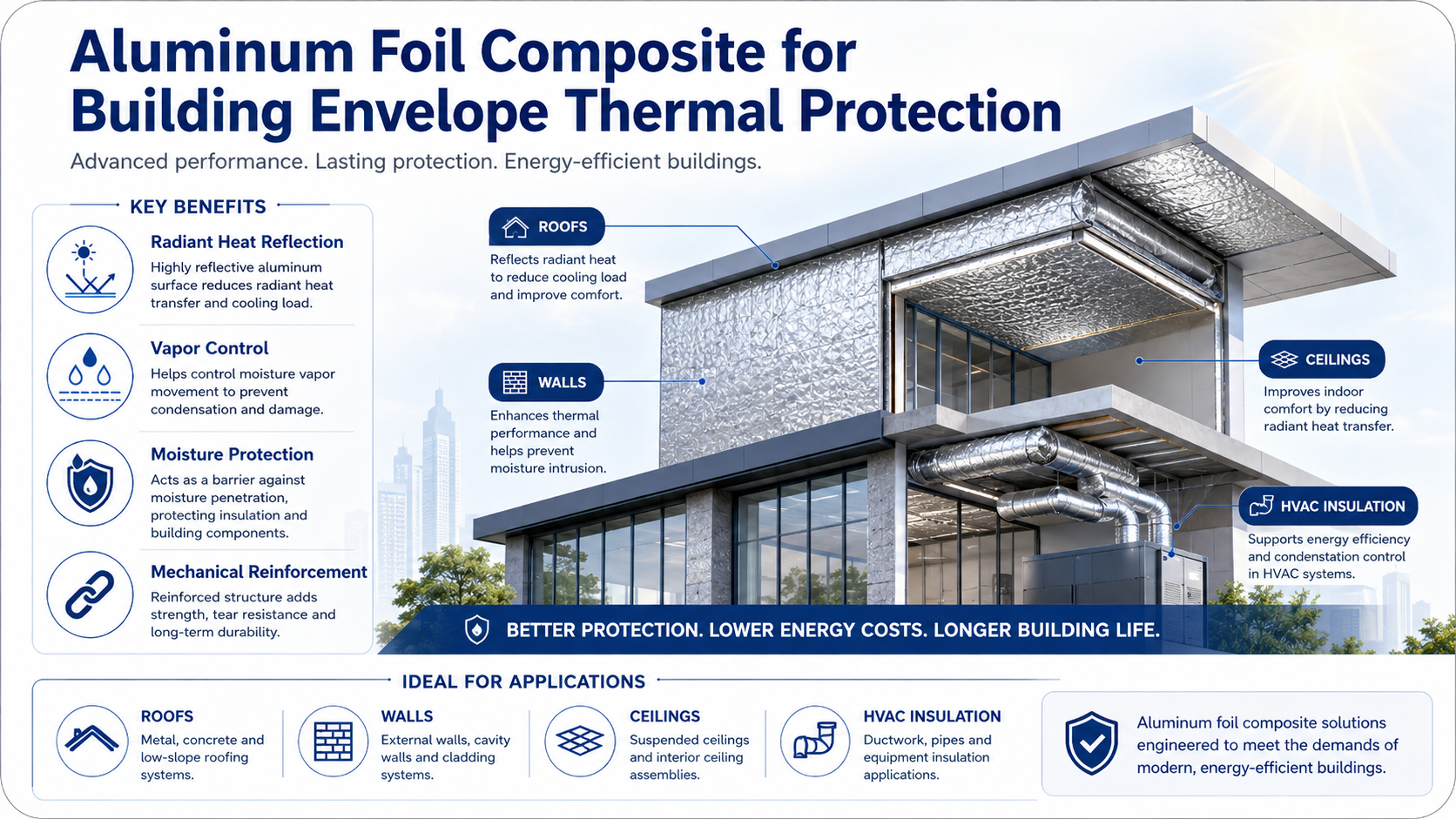
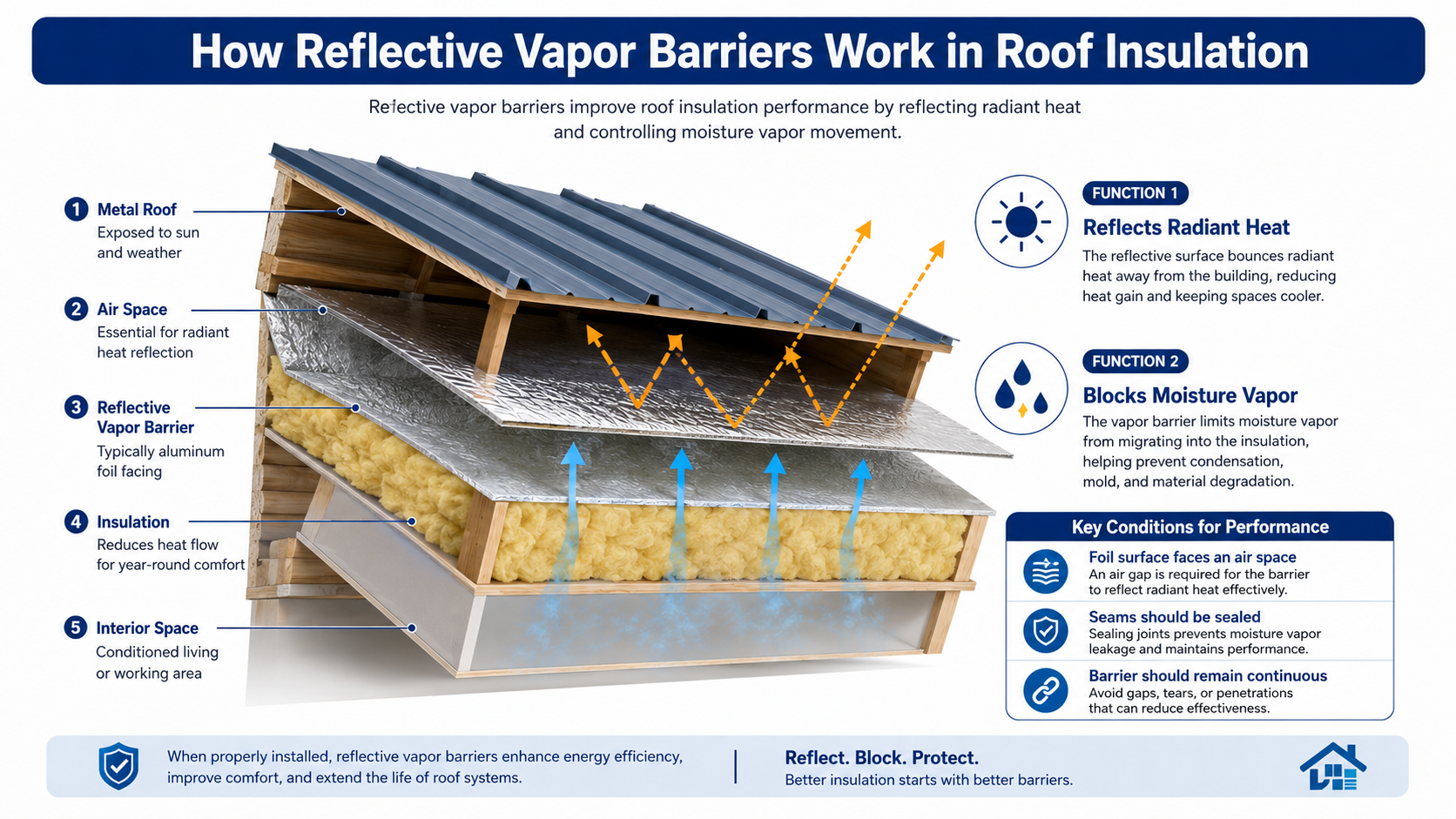
Radiant Heat Reflection
The reflective metallic surface helps reduce radiant heat transfer when facing an air space.
This makes aluminum foil fiberglass fabric suitable for:
- Heat shields
- Industrial insulation
- HVAC systems
- Equipment protection
Moisture and Vapor Protection
Aluminum foil provides a low-permeability barrier that helps limit moisture vapor transmission.
This helps protect insulation materials from humidity and condensation.
Surface Protection
The foil layer creates a clean and durable outer surface that protects the fiberglass fabric from contamination and abrasion.
Fiberglass Fabric Layer
Fiberglass fabric is the main reinforcement layer.
Compared with kraft paper, PE film or lightweight scrim, fiberglass fabric provides much higher mechanical performance.
Advantages include:
- High tensile strength
- Excellent dimensional stability
- Low elongation
- Heat resistance
- Tear resistance
- Long-term durability
The fabric structure allows the composite to withstand demanding industrial environments.
Key Performance Advantages
High Temperature Resistance
Fiberglass fabric can withstand higher temperatures compared with many polymer-based reinforcement materials.
This makes aluminum foil fiberglass fabric suitable for:
- Hot pipes
- Industrial equipment
- HVAC systems
- Thermal insulation jackets
- Heat protection applications
The actual temperature limit depends on:
- Adhesive type
- Coating system
- Foil thickness
- Fiberglass grade
Excellent Mechanical Strength
The woven fiberglass reinforcement provides strong resistance against:
- Pulling
- Tearing
- Puncturing
- Repeated handling
This makes it suitable for applications where insulation facing may experience mechanical stress.
Superior Dimensional Stability
Fiberglass fabric has low thermal expansion and low stretching.
This helps maintain:
- Flatness
- Shape stability
- Consistent installation
- Long-term performance
Abrasion Resistance
Compared with thin foil laminates, fiberglass fabric-backed foil provides better resistance against surface wear.
This is important in industrial environments where materials may experience friction or repeated contact.
Clean and Professional Appearance
The aluminum surface provides:
- Metallic appearance
- Easy cleaning
- Professional finish
- Compatibility with industrial environments
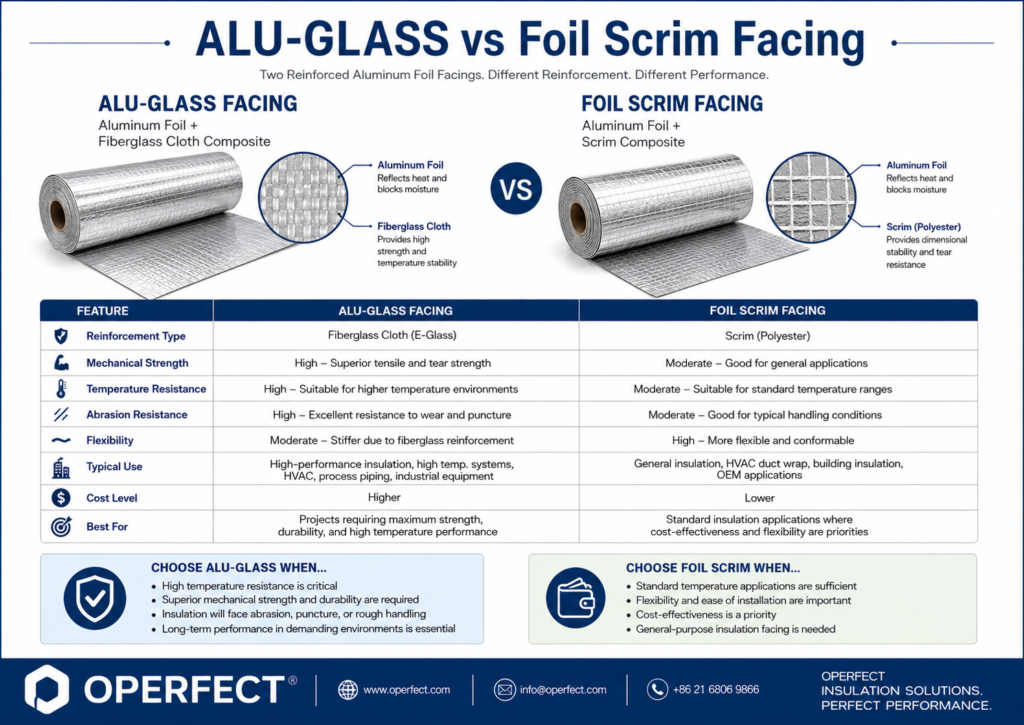
Aluminum Foil Fiberglass Fabric vs Aluminum Foil Scrim
Both products use fiberglass reinforcement, but their structures and applications are different.
Aluminum Foil Scrim
Structure:
Foil + Fiberglass Scrim + Backing Material
Characteristics:
- Lightweight
- Cost-effective
- Suitable for insulation facings
- Good reinforcement
Typical applications:
- Laine de verre
- Laine de roche
- HVAC duct wrap
Aluminum Foil Fiberglass Fabric
Structure:
Foil + Fiberglass Fabric
Characteristics:
- Higher strength
- Better abrasion resistance
- Higher temperature capability
- More durable
Typical applications:
- Industrial insulation
- Pipe wrapping
- Heat protection
- Heavy-duty applications
The correct choice depends on the required performance level.
Common Applications
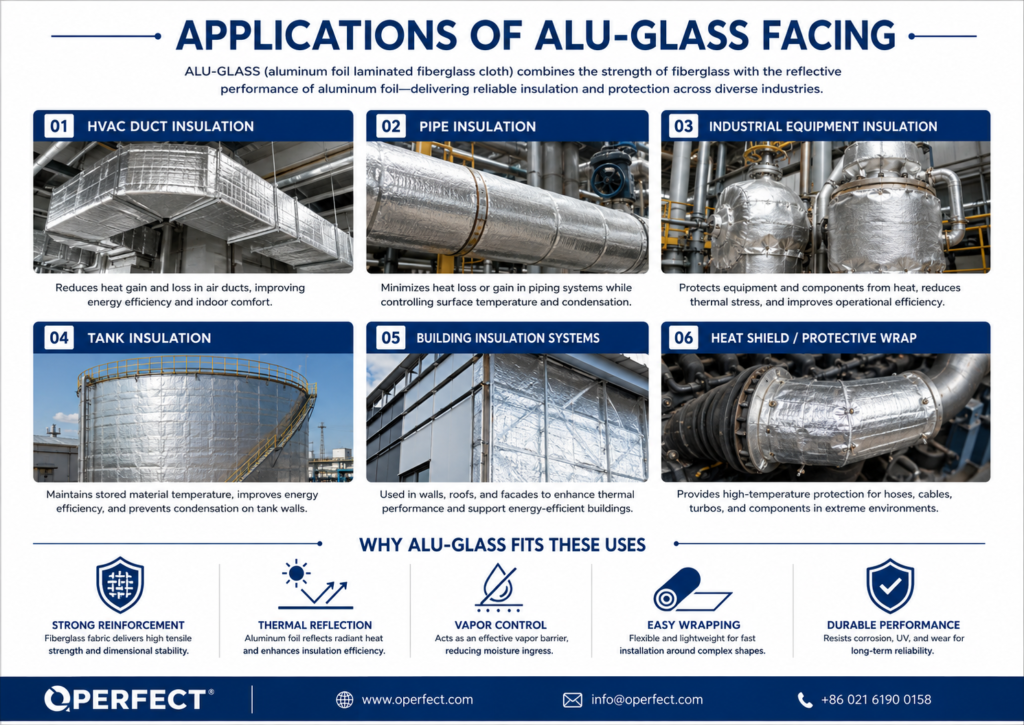
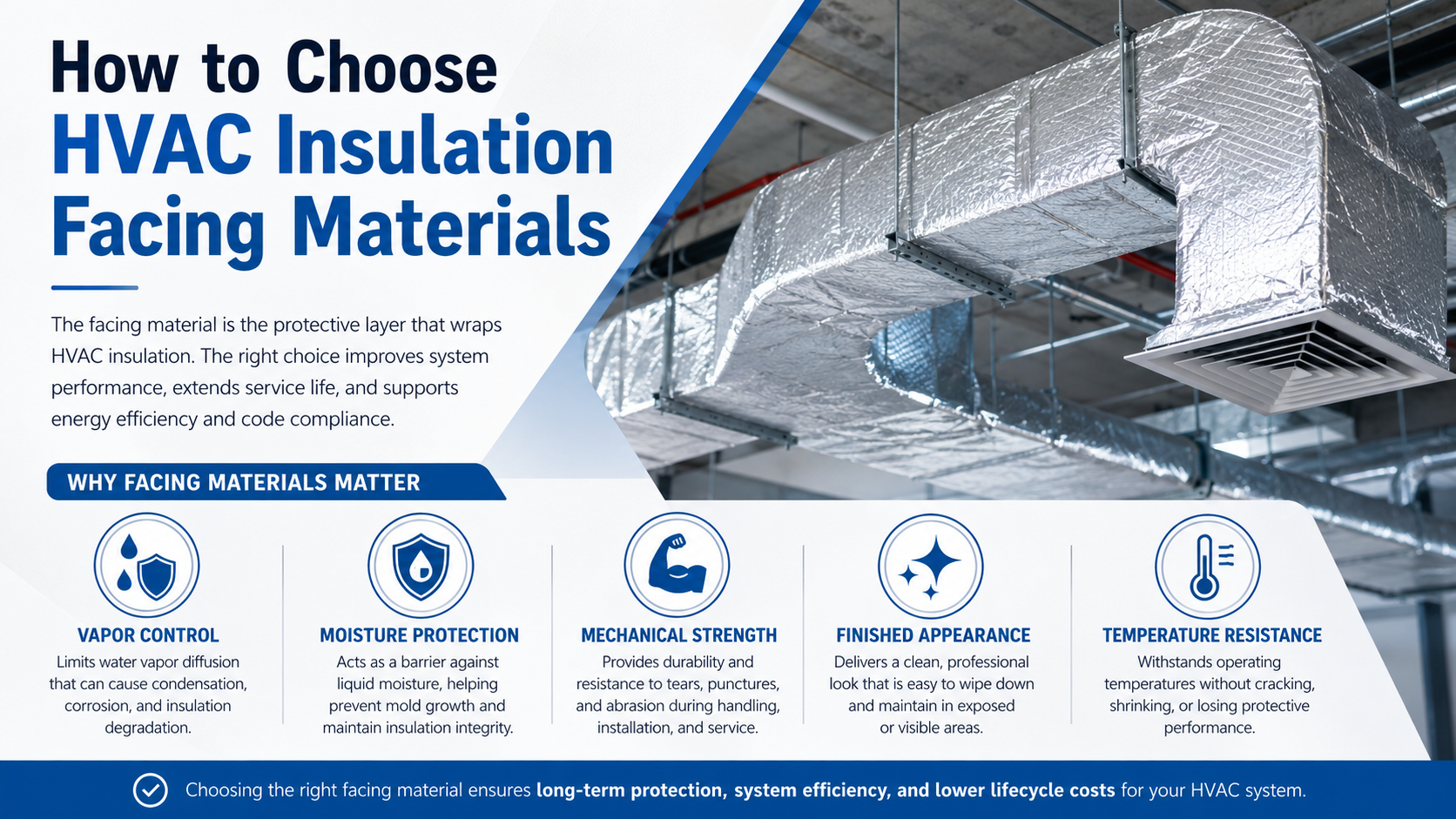
HVAC Insulation
Aluminum foil fiberglass fabric is used in:
- Duct insulation
- Flexible duct systems
- Air-handling equipment
- Mechanical insulation
It provides a durable outer surface while helping control moisture.
Industrial Equipment Insulation
Industrial equipment often requires insulation materials that can withstand:
- Heat
- Mechanical impact
- Environmental exposure
Aluminum foil fiberglass fabric can be used on:
- Boilers
- Tanks
- Pipes
- Exhaust systems
- Processing equipment
Pipe Insulation
The flexible structure allows wrapping around:
- Straight pipes
- Elbows
- Irregular surfaces
It provides protection while maintaining insulation performance.
Fire and Heat Protection Applications
Fiberglass fabric provides a heat-resistant reinforcement layer.
Depending on the complete system, aluminum foil fiberglass fabric may be used in:
- Heat shields
- Welding protection
- Thermal barriers
- Industrial safety products
Building and Construction
Applications include:
- Insulation board facing
- Roof insulation systems
- Wall insulation protection
- Specialized building materials
Important Selection Factors
When selecting aluminum foil fiberglass fabric, consider:
Fiberglass Fabric Weight
Heavier fabric generally provides:
- Higher strength
- Better durability
- Improved protection
Weave Type
Different weave structures affect:
- Flexibility
- Tensile strength
- Surface appearance
- Handling performance
Common options include:
- Plain weave
- Twill weave
- Heavy woven fabric
Foil Thickness
Thicker foil generally provides:
- Better durability
- Improved vapor resistance
- Higher puncture resistance
Adhesive System
The adhesive affects:
- Bond strength
- Temperature resistance
- Aging performance
- Flexibility
Coating Requirements
Additional coatings may provide:
- Chemical resistance
- Waterproof performance
- Improved surface durability
- Color customization
Quality Control Considerations
Important testing includes:
- Peel strength
- Tensile strength
- Tear resistance
- Thickness consistency
- Surface appearance
- Temperature resistance
- Aging stability
- Roll quality
A reliable supplier should control both raw materials and lamination processes.
Conclusion
Aluminum foil fiberglass fabric combines the reflective and barrier properties of aluminum foil with the strength and durability of fiberglass fabric.
Compared with lightweight foil facings, it provides enhanced mechanical performance and better suitability for demanding thermal-protection applications.
OPERFECT® supplies customized aluminum foil fiberglass fabric with different foil thicknesses, fiberglass weights, widths, coatings and roll specifications for HVAC, insulation and industrial applications.