Learn how to choose the right aluminum foil facing for insulation projects, including FSK, DFC, FSV and other reinforced foil materials.
Introduction
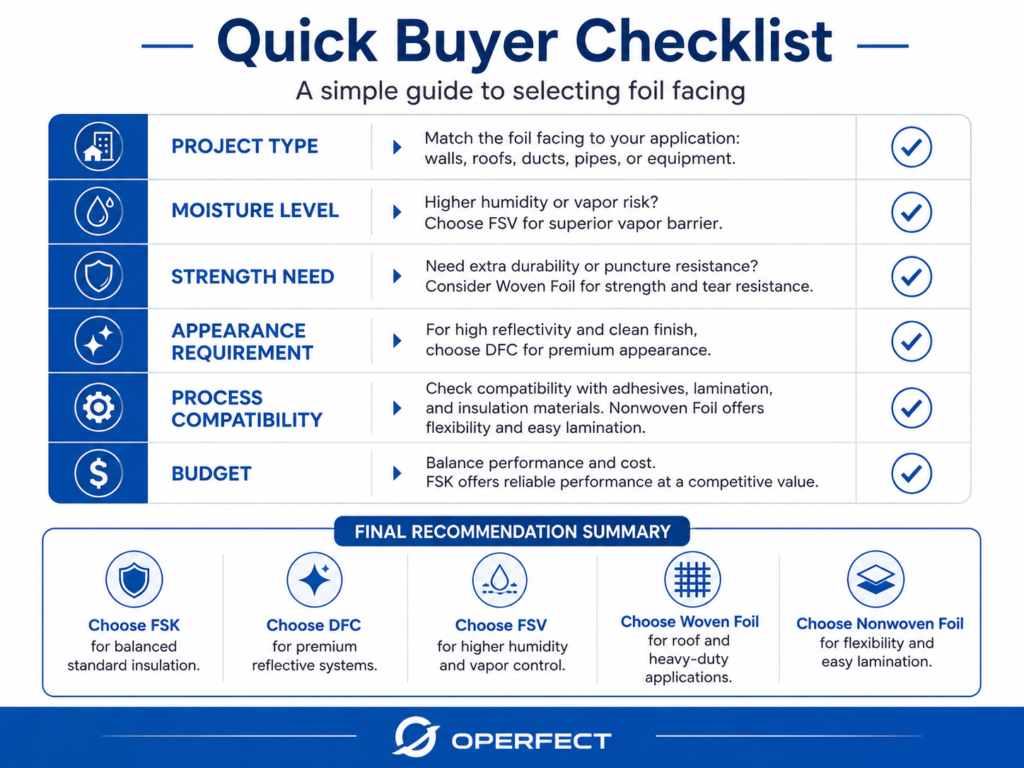
Selecting the right aluminum foil facing is an important decision for insulation manufacturers, contractors and building material distributors.
Although many foil facing materials look similar, their structures, reinforcement layers and performance characteristics can be significantly different.
The correct facing choice affects:
- Moisture protection
- Vapor barrier performance
- Mechanical strength
- Installation efficiency
- Product durability
- Final project requirements
Common aluminum foil facing structures include:
- FSK (Foil Scrim Kraft)
- DFC (Double Foil Facing)
- FSV (Foil Scrim Vapor Barrier)
- Aluminum foil fiberglass fabric
- Tejido de papel de aluminio
- Aluminum foil nonwoven composites
This guide explains the key factors to consider when selecting aluminum foil facing materials.
Step 1: Understand the Basic Structure
An aluminum foil facing usually consists of multiple layers:
Aluminum Foil Layer
↓
Reinforcement Layer
↓
Backing Layer
Each layer has a different function.
Aluminum Foil
Provides:
- Vapor barrier performance
- Radiant heat reflection
- Surface protection
Reinforcement Layer
Improves:
- Tensile strength
- Tear resistance
- Dimensional stability
Common reinforcement materials:
- Fiberglass scrim
- Woven fabric
- Nonwoven fabric
Backing Layer
Provides:
- Support
- Processing stability
- Surface characteristics
Common backing materials:
- Kraft paper
- PE film
- PP film
- PET film
Step 2: Define Your Application Requirements
Before choosing a foil facing, consider:
1. Is Vapor Barrier Performance Required?
For applications requiring strong moisture control, consider:
- FSK
- DFC
- FSV
- Aluminum foil laminate structures
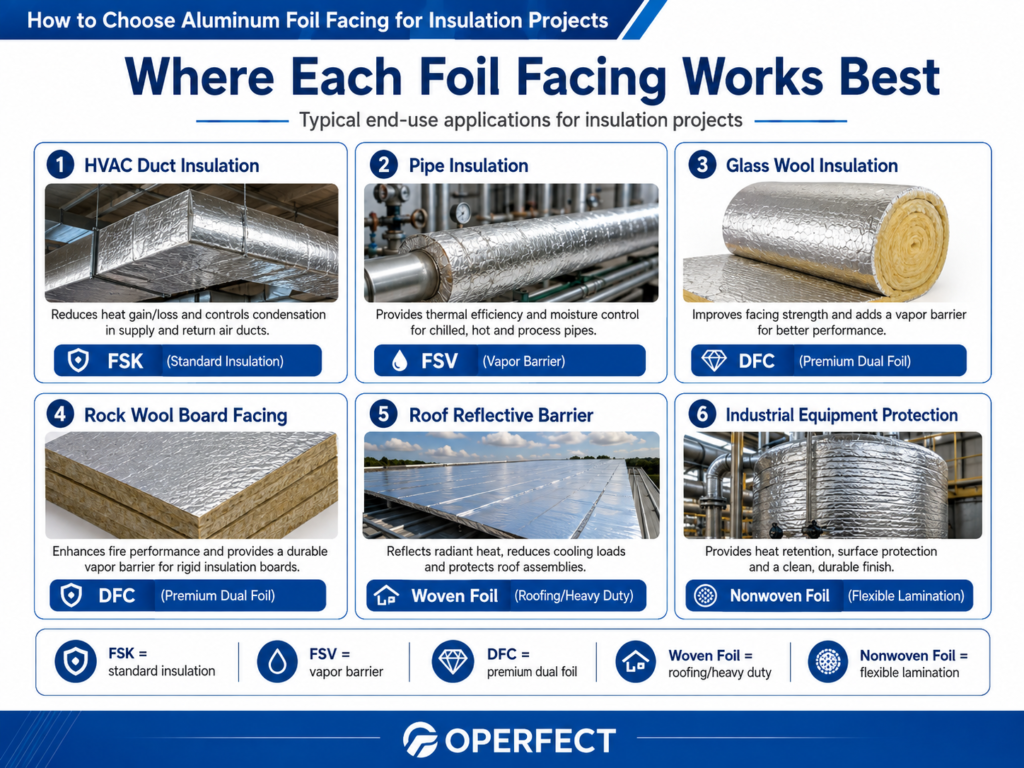
Typical applications:
- HVAC insulation
- Cold storage
- Industrial insulation
- Building envelope systems
2. Is Mechanical Strength Important?
If the material will experience:
- Transportation stress
- Installation handling
- Outdoor exposure
- Heavy processing
choose reinforced structures.
Examples:
- Fiberglass scrim
- Woven scrim
- Heavy-duty composite materials
3. Is Appearance Important?
For visible insulation systems:
Choose materials with:
- Clean surface
- Stable appearance
- Better durability
Examples:
- DFC
- WMP
- White PP facing
Step 3: Understand Common Aluminum Foil Facing Types
FSK (Foil Scrim Kraft)
Structure:
Aluminum Foil + Fiberglass Scrim + Kraft Paper
Ventajas:
- Excellent vapor barrier
- Good reinforcement
- Cost-effective
- Widely used
Aplicaciones:
- Glass wool insulation
- Rock wool insulation
- HVAC duct insulation
DFC (Double Foil Facing)
Structure:
Aluminum Foil + Reinforcement + Aluminum Foil
Ventajas:
- Aluminum foil on both sides
- High reflective performance
- Clean appearance
- Strong barrier performance
Aplicaciones:
- Premium insulation systems
- Reflective insulation
- High-performance projects
FSV (Foil Scrim Vapor Barrier)
Structure:
Aluminum Foil + Scrim + Polymer Backing
Ventajas:
- Excellent moisture resistance
- More flexible than kraft-backed products
- Suitable for demanding environments
Aplicaciones:
- HVAC systems
- Industrial insulation
- Vapor-control applications
Aluminum Foil Woven Fabric
Structure:
Aluminum Foil + Woven Fabric
Ventajas:
- High strength
- Excellent tear resistance
- Durable surface
Aplicaciones:
- Roofing sarking
- Building protection
- Heavy-duty applications
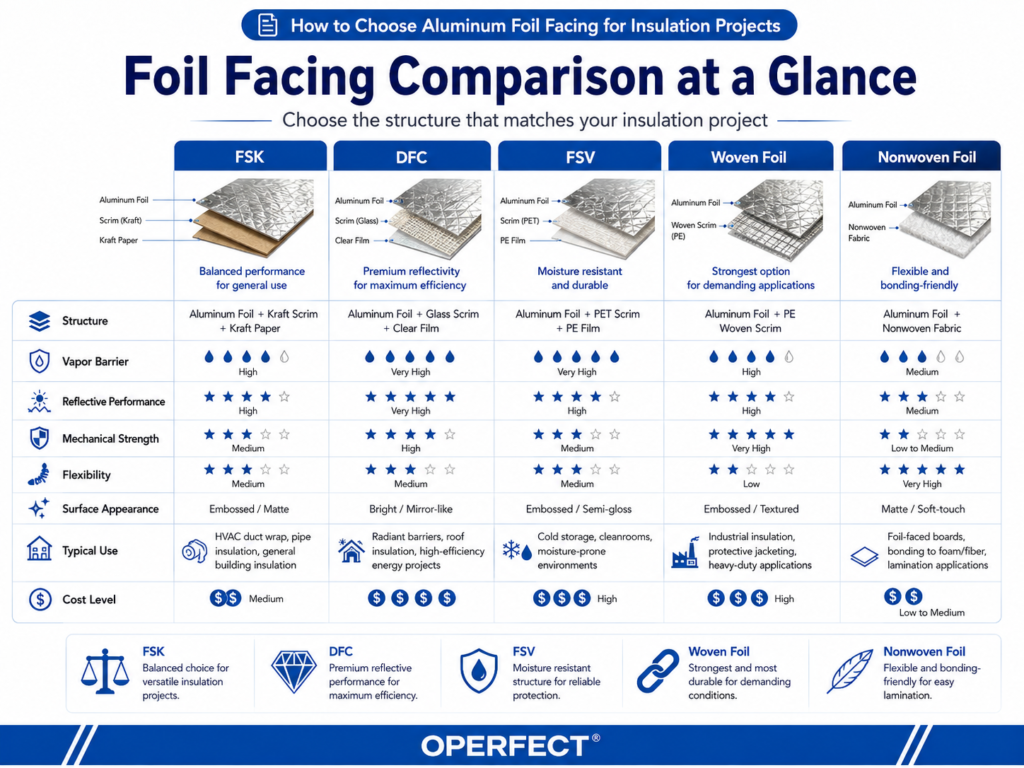
Comparison Table
| Producto | Structure | Main Advantage | Typical Application |
|---|---|---|---|
| FSK | Foil + Scrim + Kraft | Balanced performance | HVAC & insulation |
| DFC | Foil + Reinforcement + Foil | Double foil protection | Premium insulation |
| FSV | Foil + Scrim + Polymer | Moisture resistance | Vapor barrier systems |
| Woven Foil | Foil + Woven Fabric | High strength | Roofing & outdoor use |
| Nonwoven Foil | Foil + Nonwoven | Flexible & bonding | Composite insulation |
Step 4: Consider Manufacturing Requirements
For insulation manufacturers, consider:
Lamination Compatibility
The facing should match your production process:
- Adhesive lamination
- Heat sealing
- Hot melt bonding
Roll Specifications
Important factors:
- Width
- Length
- Core size
- Packaging
Customization
Many projects require:
- Logo printing
- Special colors
- Customized structures
- Private label packaging
Common Buyer Questions
Is thicker aluminum foil always better?
Not always.
The correct foil thickness depends on:
- Application requirements
- Barrier performance
- Cost target
- Processing conditions
Which facing is best for HVAC insulation?
FSK is one of the most commonly used options because it provides a good balance of:
- Vapor resistance
- Strength
- Cost efficiency
What is the difference between FSK and FSV?
FSK uses kraft paper backing.
FSV uses polymer-based backing.
FSV generally provides better moisture resistance, while FSK is widely used due to cost efficiency and industry acceptance.
Conclusion
Choosing the right aluminum foil facing requires balancing:
- Vapor protection
- Mechanical strength
- Application environment
- Appearance requirements
- Cost considerations
OPERFECT® supplies customized aluminum foil facing materials including FSK, DFC, FSV, woven foil and nonwoven foil composites for global insulation manufacturers and building material suppliers.