Understand double foil facing structures, their benefits, limitations and applications in insulation, HVAC, radiant barriers and industrial thermal protection.
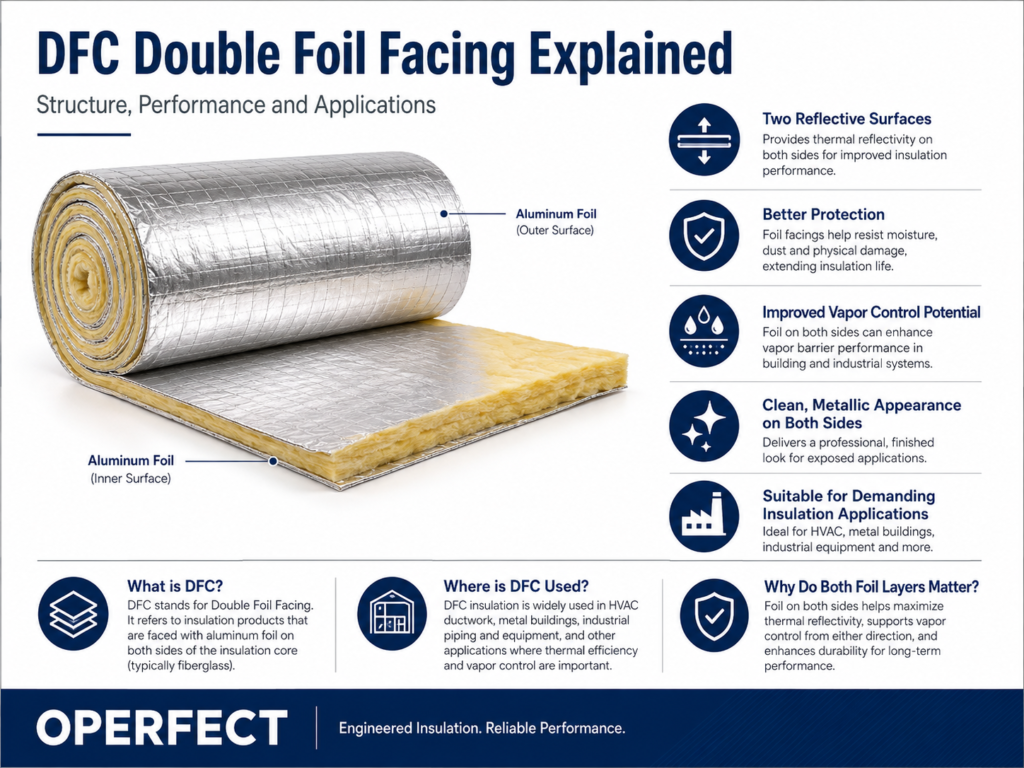
DFC double foil facing is a multi-layer insulation-facing material with an aluminum foil surface on both sides of the central reinforcement or supporting structure.
Compared with single-sided foil facing, double foil provides two metallic surfaces and protects the internal reinforcement from both directions.
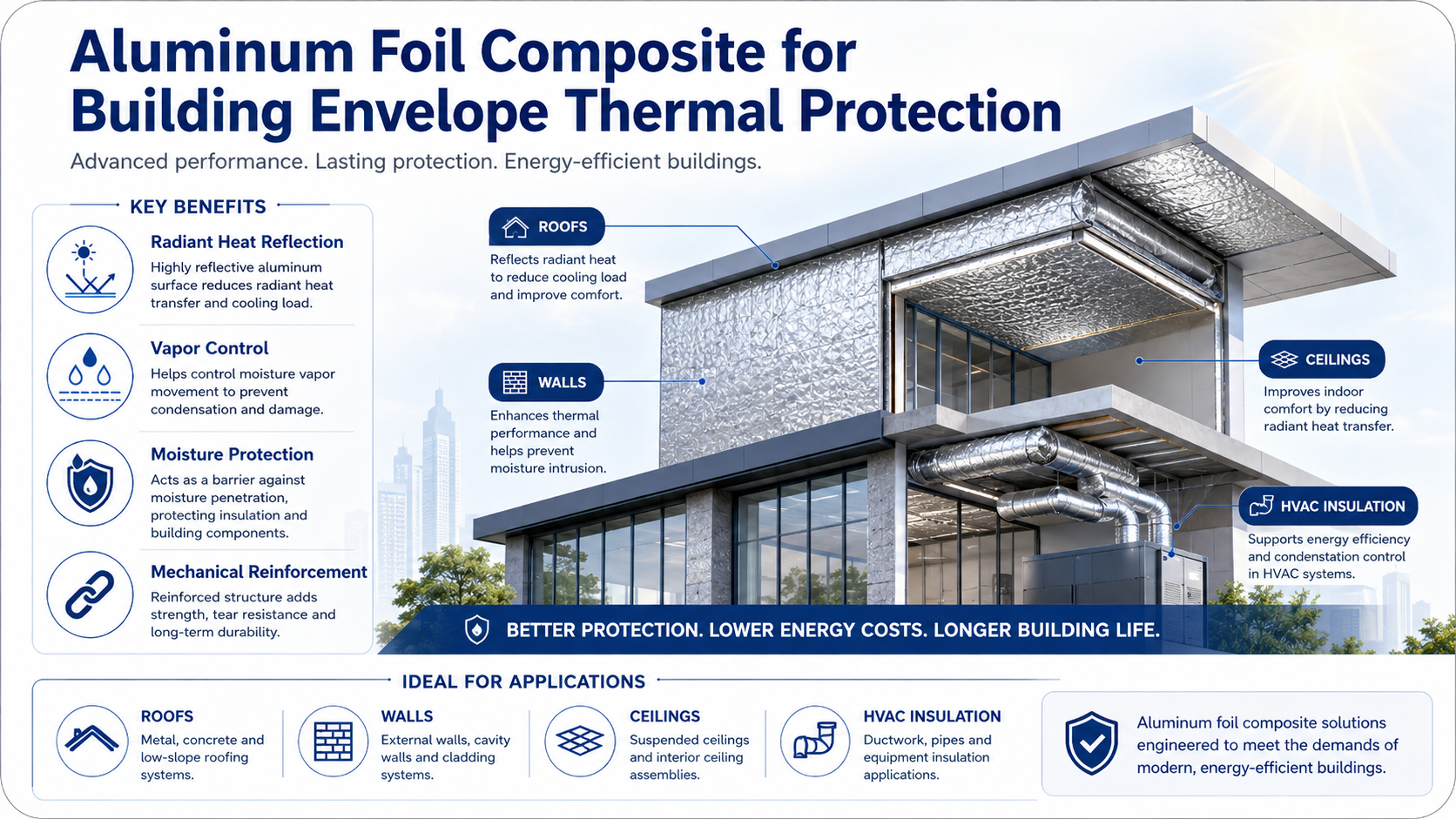
DFC may be used on insulation products, HVAC systems, radiant barriers, industrial equipment and other thermal-protection applications.
Typical Double Foil Structure
A common double foil facing may contain:
- Outer aluminum foil
- Adhesive or PE bonding layer
- Reinforcing scrim or supporting core
- Adhesive or PE bonding layer
- Inner aluminum foil
Depending on the application, the central layer may include:
- Fiberglass scrim
- Polyester scrim
- Kraft paper
- PE film
- PET film
- Fiberglass cloth
- Woven fabric
- Multiple supporting layers
The exact structure determines mechanical strength, flexibility, vapor performance and cost.
Functions of the Two Foil Surfaces
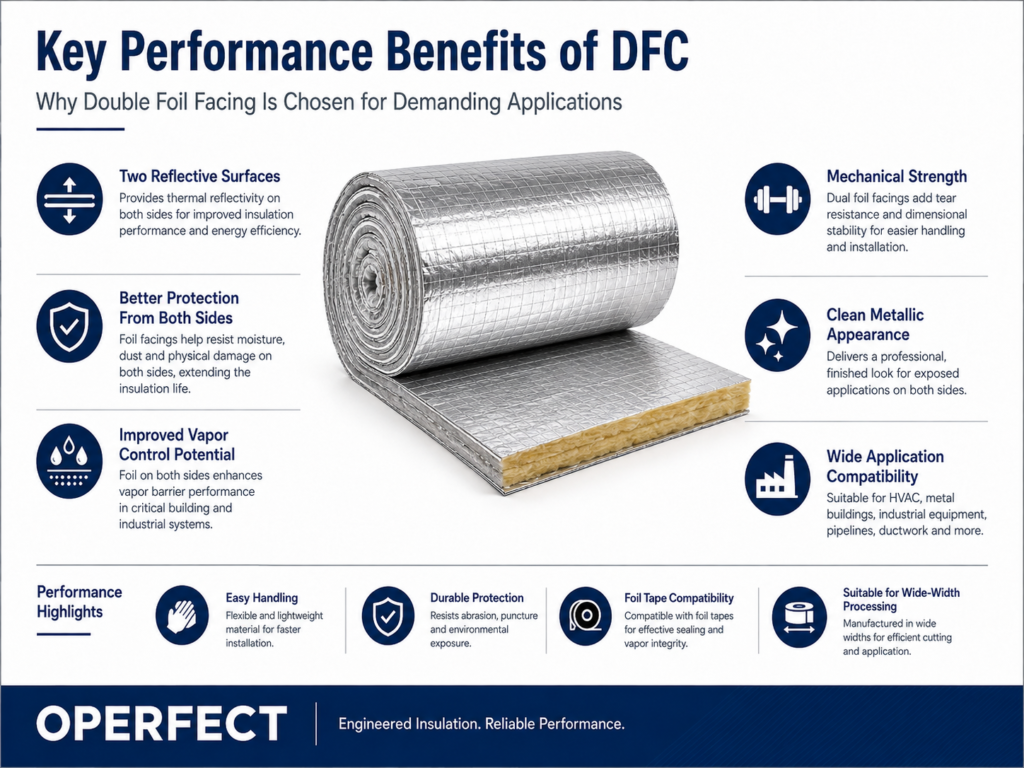
Two Reflective Surfaces
Both sides provide a metallic reflective surface.
This can be useful when either side may face an air space or when the material requires a finished metallic appearance on both sides.
Protection from Both Directions
The double-sided design protects the internal support layers and may improve resistance to:
- Moisture exposure
- Surface contamination
- Abrasion
- Handling damage
- Fiber exposure
Improved Vapor-Control Potential
Two foil layers can reduce the risk that the support material becomes directly exposed.
However, vapor performance still depends on:
- Foil integrity
- Pinholes
- Bond strength
- Seams
- Edge sealing
- Penetrations
- Installation quality
Improved Appearance
Double foil provides a clean, reflective surface on both sides.
This may be important where both surfaces remain visible during processing or installation.
Double Foil vs Single Foil Facing
Reflective Surfaces
Single foil provides one reflective surface.
Double foil provides two reflective surfaces.
Protection
Single foil protects one main side of the supporting structure.
Double foil encloses and protects the core from both sides.
Cost
Double foil usually requires more material and more complex lamination, so it generally costs more.
Flexibility
A double-foil structure may be slightly stiffer depending on foil thickness and core construction.
Weight
Double foil normally has a higher total basis weight than a comparable single-foil laminate.
Application Suitability
Single foil is often sufficient for standard insulation-facing applications.
Double foil is more suitable where two-sided appearance, higher protection or additional barrier performance is required.
Common Double Foil Constructions
Foil + Scrim + Foil
A lightweight reinforced structure with foil on both sides of the scrim.
It provides:
- Two reflective surfaces
- Improved tear resistance
- Low paper content
- Balanced appearance
Foil + Scrim + Kraft + Foil
This structure adds kraft paper for stiffness.
It may be selected when stronger handling support is required.
Foil + PE Film + Foil
A polymer-based structure suitable where paper is not preferred.
The PE layer can contribute flexibility, bonding or sealing performance.
Foil + Fiberglass Cloth + Foil
A heavy-duty structure for demanding HVAC and industrial applications.
Foil + PET + Foil
A dimensionally stable composite that can provide smoothness and technical barrier performance.
Main Applications
Insulation Facing
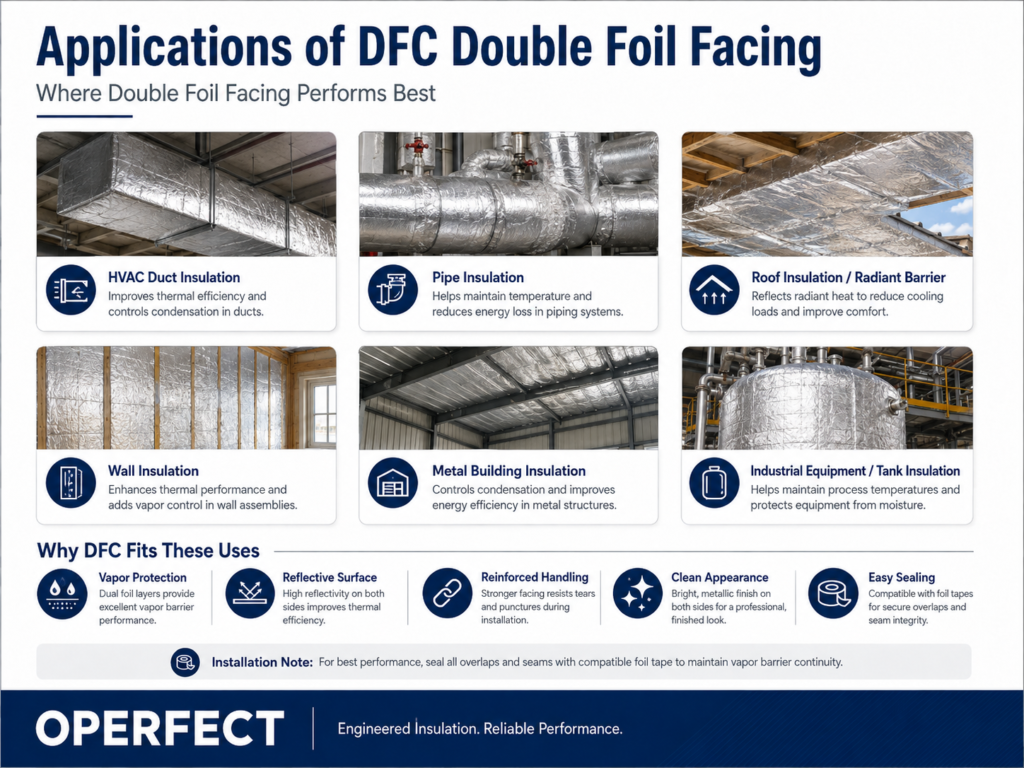
DFC can be laminated to glass wool, rock wool and other thermal-insulation products requiring a metallic surface on both sides.
Sistemas HVAC
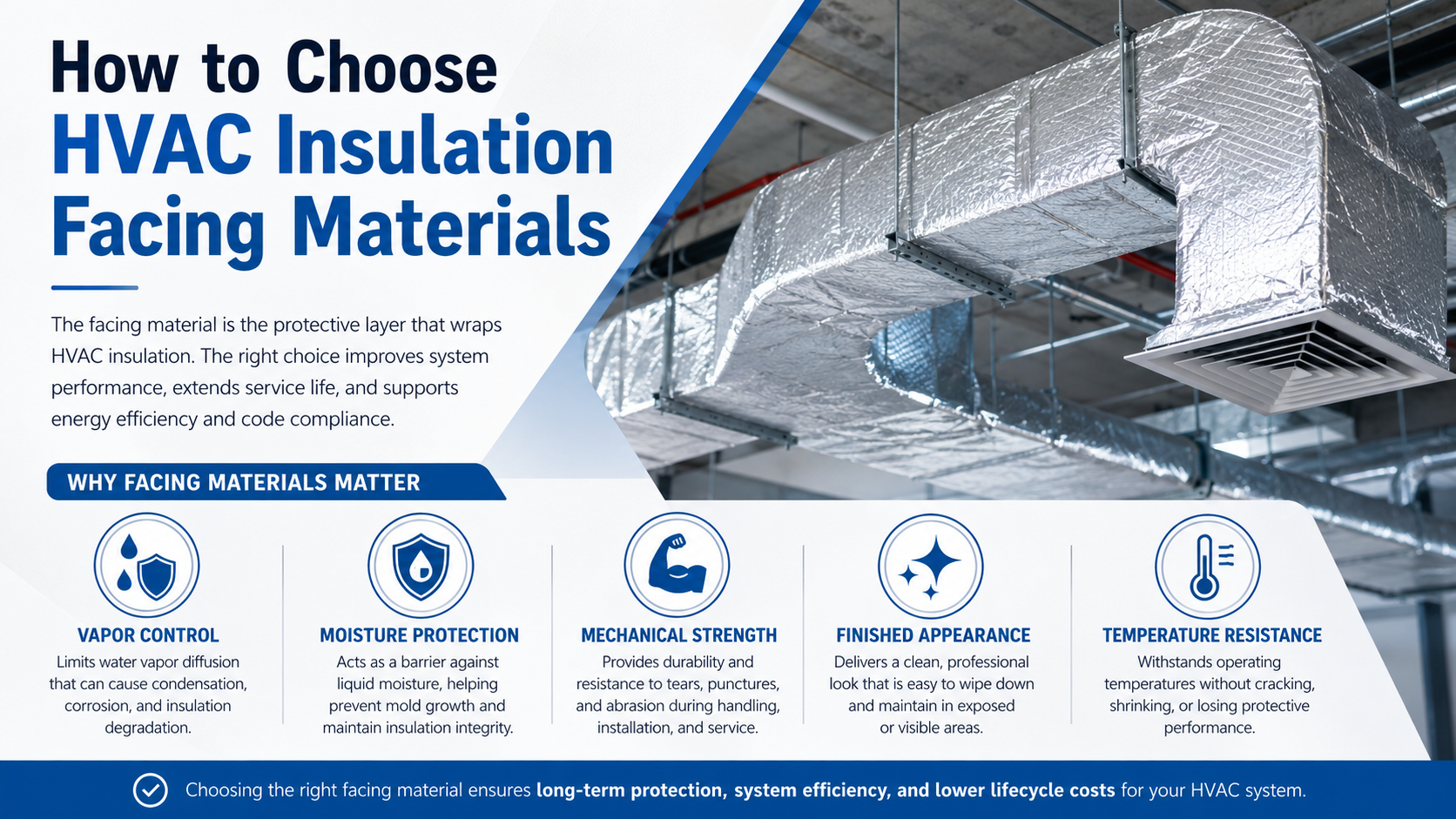
Double foil may be used in duct insulation, duct-board systems and equipment insulation where vapor control and clean surfaces are important.
Radiant Barriers
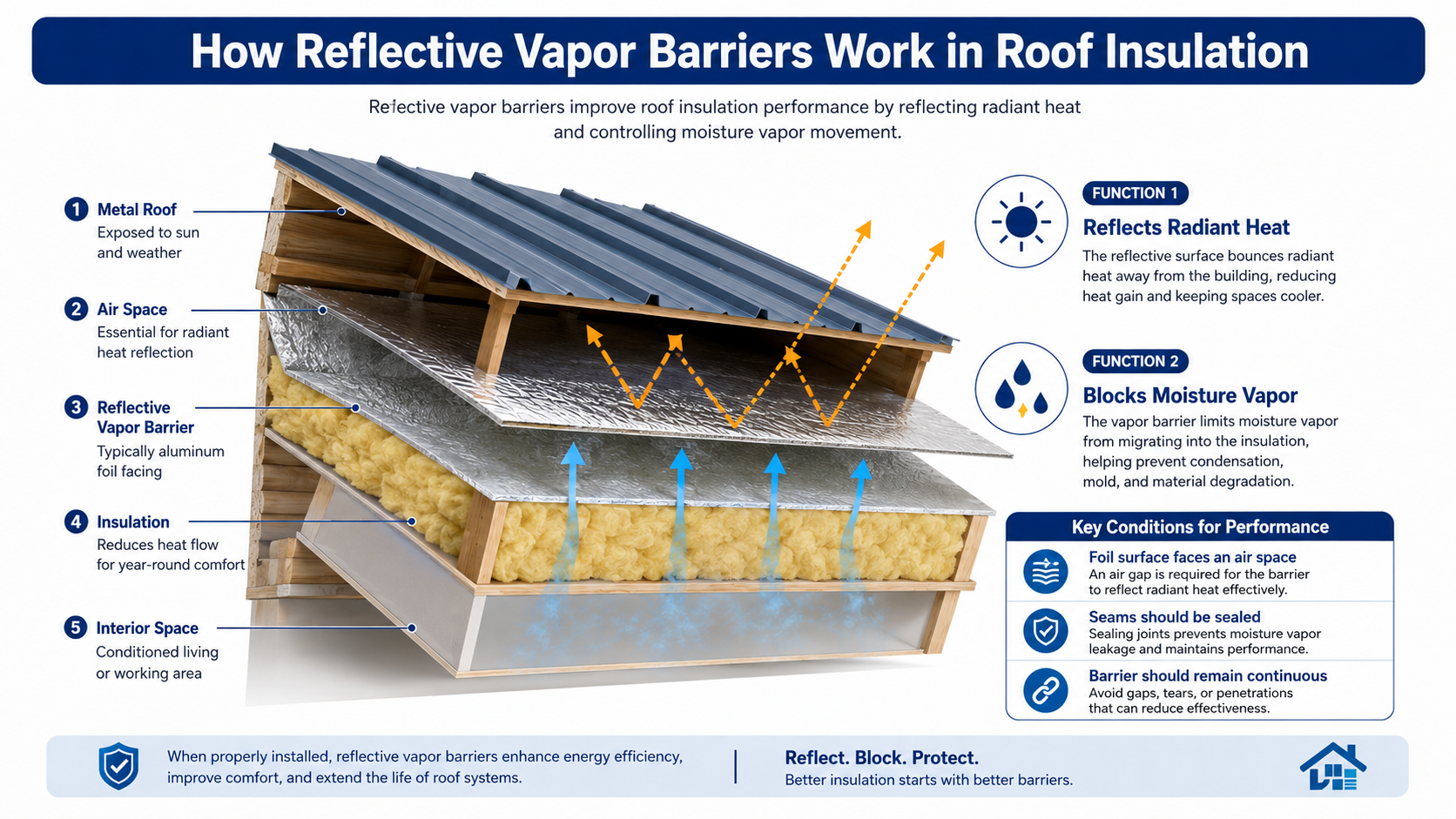
Two-sided reflective structures may be used in roof, wall or metal-building assemblies.
Actual performance depends on the presence and orientation of adjacent air spaces.
Industrial Insulation
Heavy-duty DFC structures can be used around:
- Tanks
- Pipes
- Ducts
- Boilers
- Equipment
- Process systems
Packaging and Protective Wrapping
Some double-foil composites are used where both surfaces require moisture protection or metallic appearance.
When Double Foil Is Not Necessary
Double foil should not be selected automatically.
A single-foil facing may be more cost-effective when:
- Only one side is exposed
- One vapor-control surface is sufficient
- The backing remains protected
- Lower weight is preferred
- Greater flexibility is required
- The second foil layer adds no functional value
The laminate should be designed around the actual assembly.
Important Performance Considerations
When selecting DFC, evaluate:
- Foil thickness on each side
- Core or reinforcement material
- Total basis weight
- Tensile and tear strength
- Bond strength
- Flexibility
- Vapor permeance
- Fire performance
- Temperature resistance
- Roll width and length
- Surface finish
- Printing requirements
If the two foil layers have different functions, their thicknesses or surface treatments may also differ.
Fire Performance
Double foil is not automatically fireproof or noncombustible.
The central scrim, film, paper and adhesive layers affect the behavior of the complete composite.
Fire-performance claims should be based on testing of the complete supplied structure.
Installation and Sealing
For reliable vapor control, seams and edges must be sealed with compatible materials.
Common installation considerations include:
- Foil tape compatibility
- Overlap width
- Mechanical-fastener penetrations
- Edge sealing
- Damage repair
- Correct foil orientation
- Continuity around corners and joints
Conclusion
DFC double foil facing provides aluminum foil surfaces on both sides of a reinforced or supported core.
Its primary advantages include two-sided reflection, improved surface protection, clean appearance and potential for enhanced vapor control.
However, it should be selected only when both foil layers serve a clear purpose.
OPERFECT® supplies customized double-foil facings using scrim, kraft paper, PE film, PET film, fiberglass cloth and woven reinforcement.