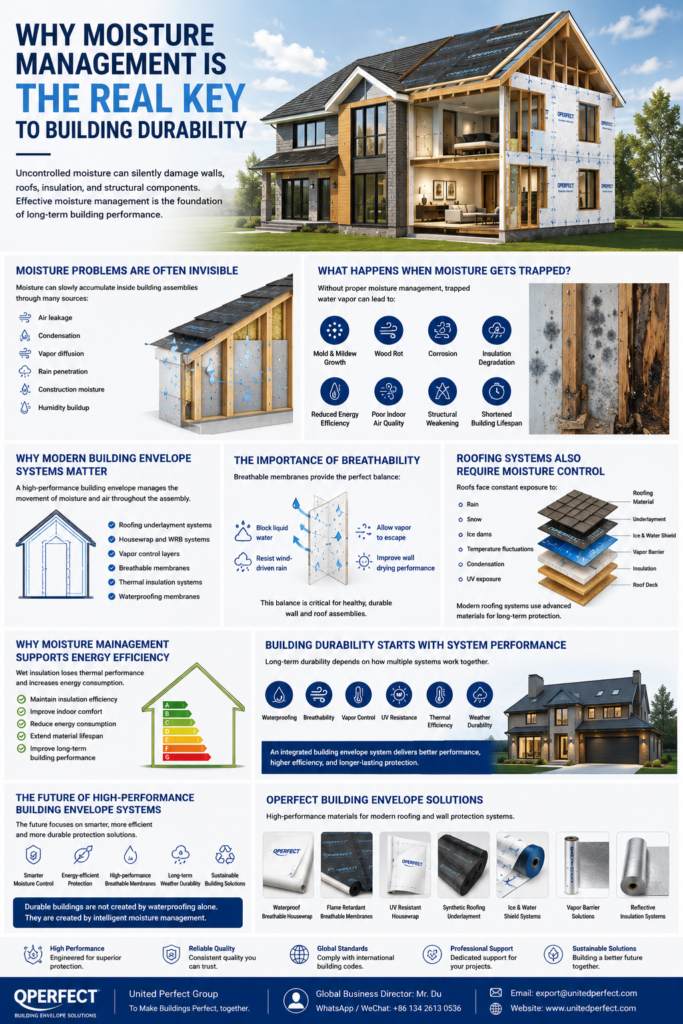
Why Moisture Management Is the Real Key to Building Durability
When people think about protecting a building, they often focus on exterior materials such as roofing, siding, or waterproof coatings.
However, one of the biggest threats to modern buildings is often hidden inside the structure itself:
Moisture accumulation.
Over time, uncontrolled moisture can silently damage walls, roofs, insulation systems, and structural components.
This is why moisture management has become one of the most important principles in modern building envelope science.
Moisture Problems Are Often Invisible
Many building failures begin long before visible damage appears.
Moisture can slowly accumulate inside wall systems and roof assemblies through:
- Air leakage
- Condensation
- Vapor diffusion
- Rain penetration
- Construction moisture
- Humidity buildup
Because these problems often develop inside concealed spaces, damage may continue for years before becoming noticeable.
By the time mold, stains, or structural deterioration become visible, significant internal damage may already exist.
What Happens When Moisture Gets Trapped?
Modern buildings are becoming more airtight and energy efficient.
While this improves thermal performance, it also increases the importance of proper moisture control.
Without effective moisture management, trapped water vapor can lead to:
- Mold and mildew growth
- Wood rot
- Corrosion
- Insulation degradation
- Reduced energy efficiency
- Poor indoor air quality
- Structural weakening
In many cases, moisture-related damage can significantly shorten the lifespan of a building.
Why Modern Building Envelope Systems Matter
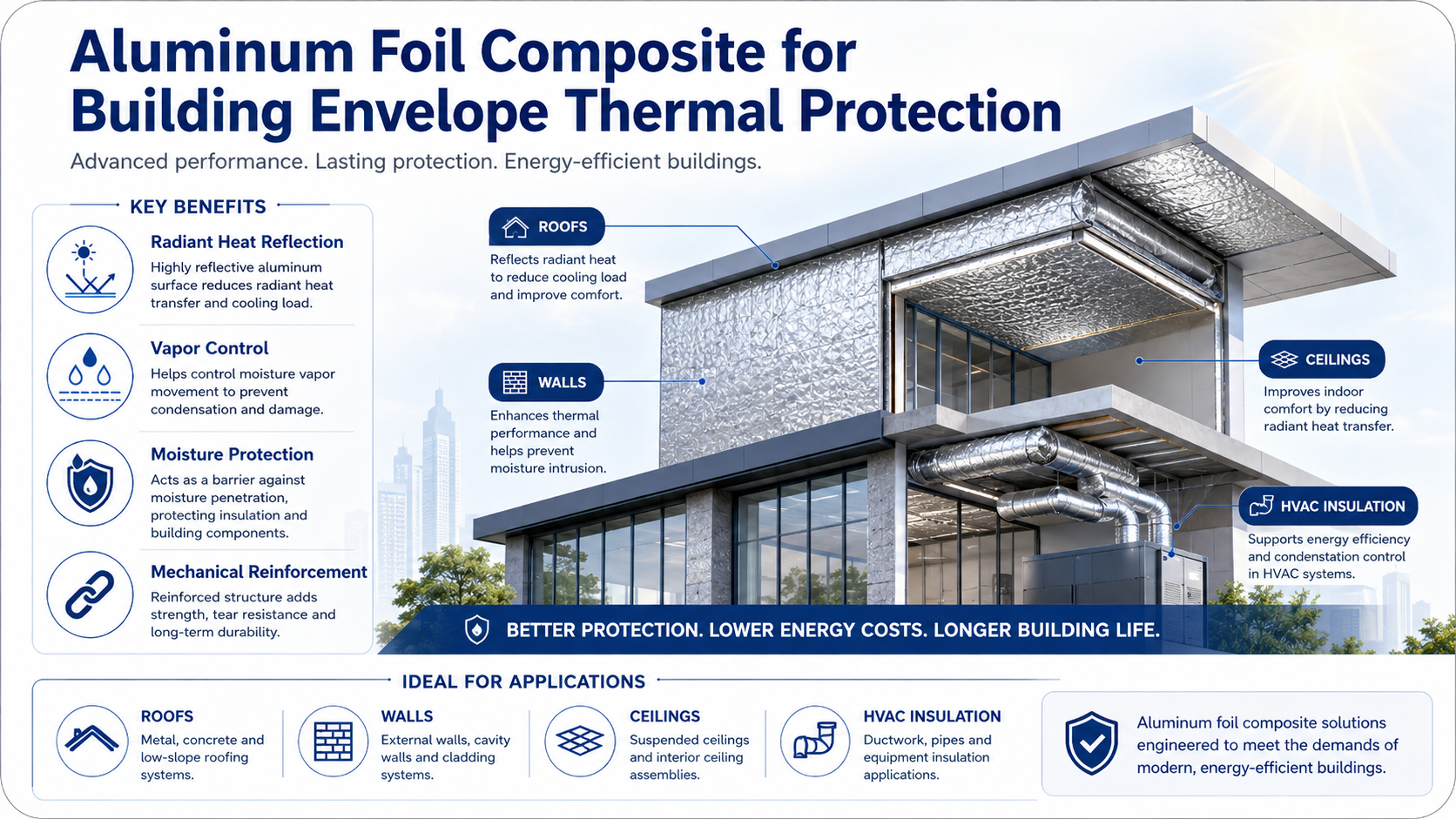
A high-performance building envelope is designed not only to block water intrusion, but also to manage the movement of moisture and air throughout the building assembly.
Modern building envelope systems combine multiple protective layers, including:
- Roofing underlayment systems
- Housewrap and WRB systems
- Vapor control layers
- Breathable membranes
- Thermal insulation systems
- Waterproofing membranes
Each layer plays an important role in maintaining long-term building performance.
The Importance of Breathability
One of the biggest advancements in modern construction is the use of breathable membrane technology.
Traditional waterproof barriers often trap vapor inside wall systems.
Breathable membranes are different.
They are designed to:
- Block liquid water
- Resist wind-driven rain
- Allow vapor to escape
- Improve wall drying performance
This balance between waterproofing and vapor permeability is critical for maintaining healthy wall and roof assemblies.
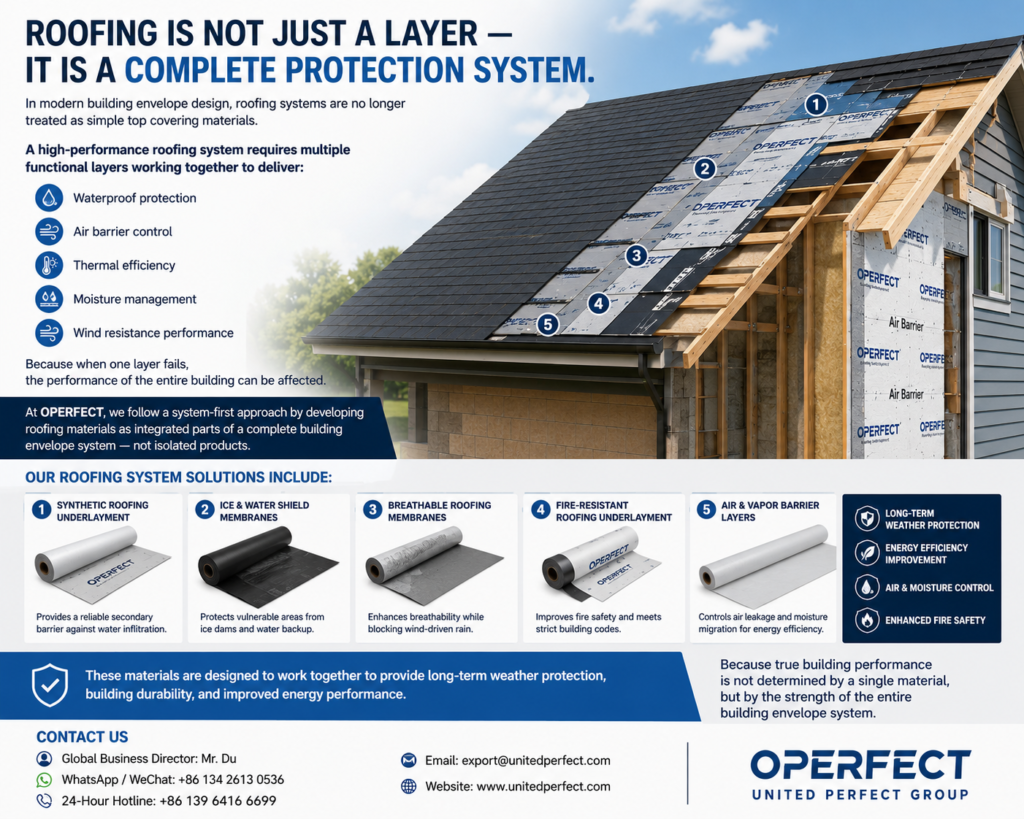
Roofing Systems Also Require Moisture Control
Moisture management is not limited to walls.
Roof systems are constantly exposed to:
- Rain
- Snow
- Ice dams
- Temperature fluctuations
- Condensation
- UV exposure
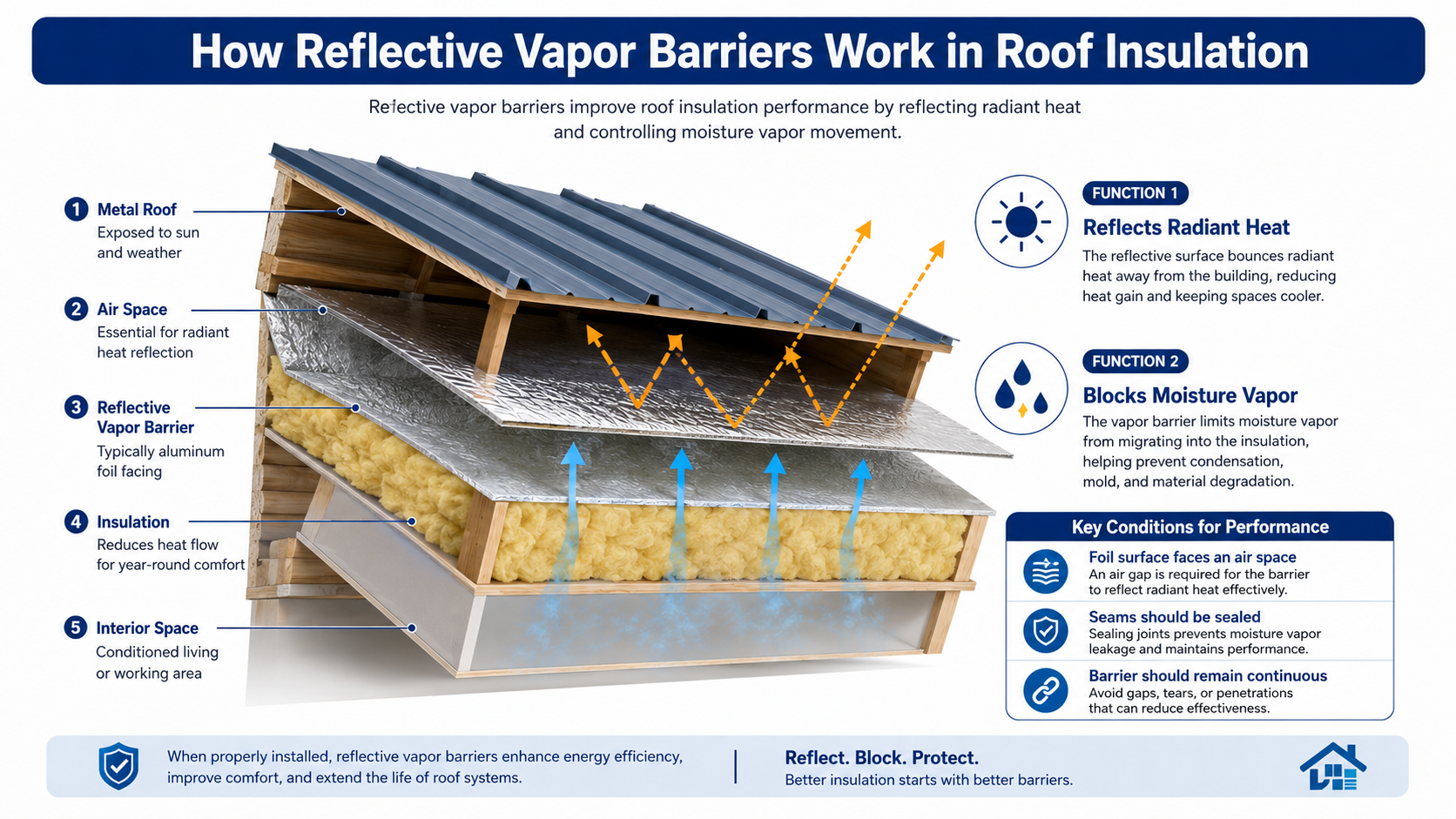
Modern roofing systems increasingly rely on high-performance materials such as:
- Synthetic roofing underlayment
- Ice & Water Shield membranes
- Roofing vapor barriers
- Reflective insulation systems
Together, these systems help create a more durable and weather-resistant roof assembly.
Why Moisture Management Supports Energy Efficiency
Wet insulation loses thermal performance.
When moisture accumulates inside wall or roof systems, buildings often require more energy for heating and cooling.
Proper moisture control helps:
- Maintain insulation efficiency
- Improve indoor comfort
- Reduce energy consumption
- Extend material lifespan
- Improve long-term building performance
This is one reason why moisture management is becoming increasingly important in sustainable and energy-efficient construction.
Building Durability Starts With System Performance
Modern construction is no longer based on isolated materials.
Long-term durability depends on how multiple building envelope systems work together.
A complete protection system must balance:
- Waterproofing
- Breathability
- Vapor control
- UV resistance
- Thermal efficiency
- Weather durability
This integrated approach is becoming the standard for modern residential and commercial construction worldwide.
The Future of High-Performance Building Envelope Systems
As construction standards continue to evolve, moisture management will remain one of the most critical factors in building science.
The future of building envelope systems will focus on:
- Smarter moisture control
- Energy-efficient protection systems
- High-performance breathable membranes
- Long-term weather durability
- Sustainable building solutions
Because durable buildings are not created by waterproofing alone.
They are created by intelligent moisture management.
OPERFECT Building Envelope Solutions
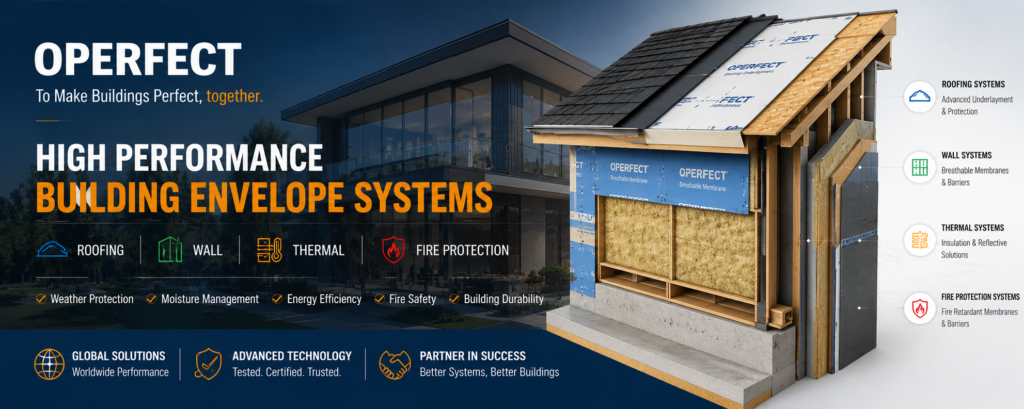
At OPERFECT, we focus on high-performance building envelope materials designed for modern roofing and wall protection systems.
Our solutions include:
- Waterproof Breathable Housewrap
- Flame Retardant Breathable Membranes
- UV Resistant Housewrap
- Synthetic Roofing Underlayment
- Ice & Water Shield Systems
- Vapor Barrier Solutions
- Reflective Insulation Systems
Designed for modern building envelope systems worldwide.
United Perfect Group “To Make Buildings Perfect, together.”
Global Business Director: Mr. Du
WhatsApp/WeChat: +86 134 2613 0536
Correo electrónico: export@unitedperfect.com
Página web: www.unitedperfect.com