Why UV Resistance Matters in Modern Building Envelope Systems
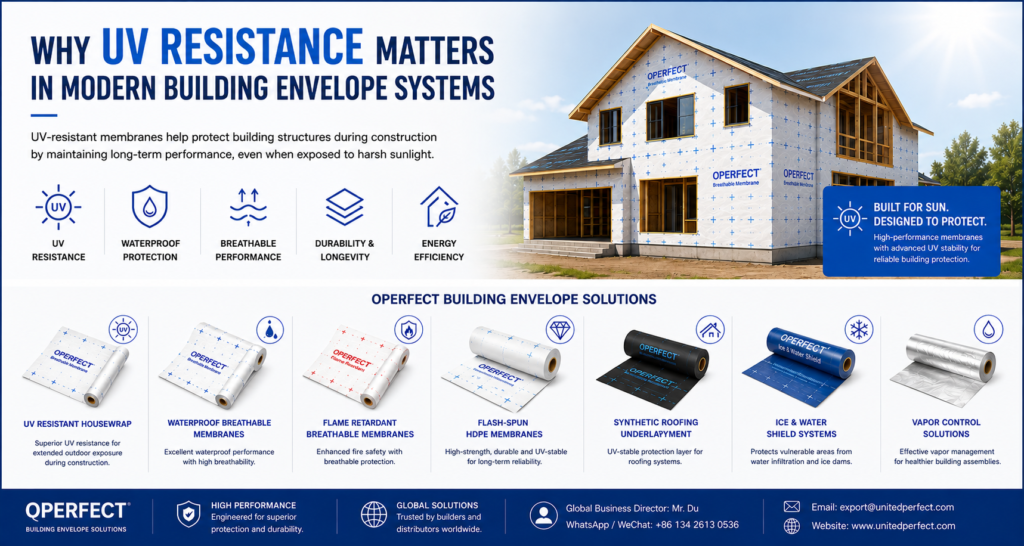
Modern construction projects often expose building materials to harsh environmental conditions long before the exterior cladding or roofing system is fully installed.
During this stage, one hidden factor can significantly affect long-term building performance:
UV exposure.
Prolonged ultraviolet (UV) radiation can gradually weaken many construction membranes, reducing their durability and protective performance.
As a result, UV resistance is becoming an increasingly important feature in modern building envelope systems.
What Is UV Exposure in Construction?
Ultraviolet radiation from sunlight continuously impacts exposed construction materials during transportation, storage, and installation.
In many projects, roofing underlayments and wall protection membranes may remain exposed for weeks or even months before final exterior finishes are completed.
Without sufficient UV stability, membrane materials can experience:
- Surface degradation
- Brittleness
- Reduced waterproof performance
- Material cracking
- Loss of flexibility
- Shortened service life
These issues can compromise the long-term durability of the entire building envelope system.
Why UV Resistance Is Becoming More Important
Modern construction schedules are often more complex than before.
Large residential and commercial projects may face:
- Delayed installation timelines
- Harsh weather exposure
- High-temperature environments
- Extended jobsite storage conditions
As a result, modern membranes must provide more than waterproof protection alone.
They must also withstand temporary UV exposure during the construction process.
This is especially important for:
- Housewrap systems
- Breathable membranes
- Roofing underlayments
- Ice & Water Shield systems
- Exterior wall protection layers
How UV Exposure Affects Building Membranes
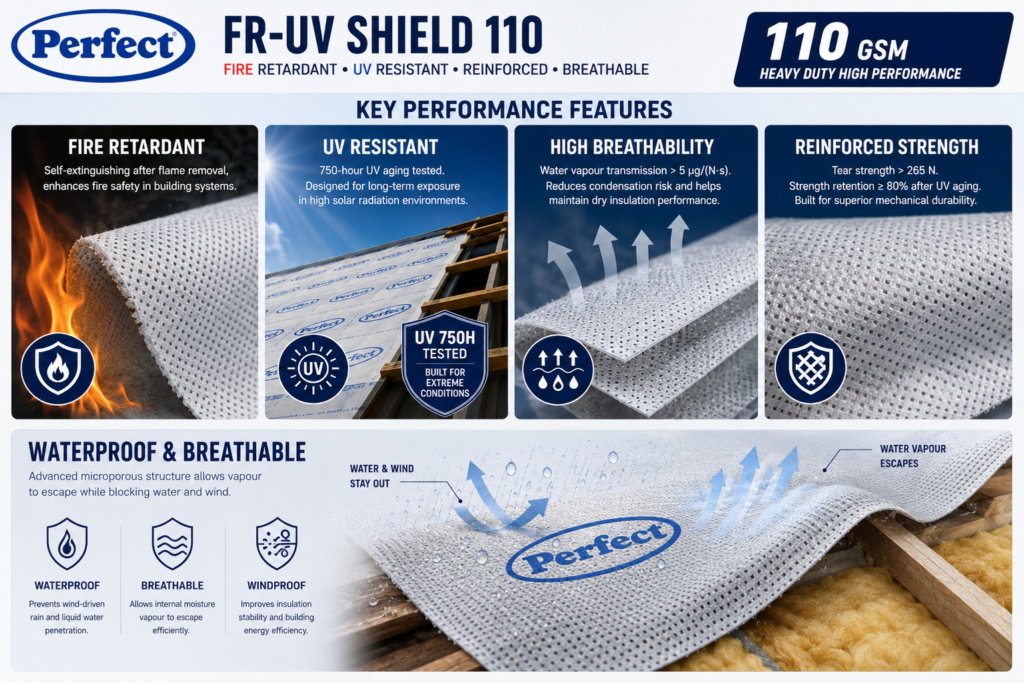
UV radiation can gradually break down the chemical structure of certain materials over time.
When membrane performance deteriorates, buildings may face increased risks of:
- Water intrusion
- Air leakage
- Moisture accumulation
- Insulation damage
- Reduced energy efficiency
In roofing systems, UV degradation may also weaken the secondary waterproof layer beneath shingles or metal roofing systems.
This is why modern high-performance membranes increasingly incorporate advanced UV-resistant technologies.
UV Resistance and Housewrap Performance
In wall systems, Housewrap membranes are often exposed before siding installation is completed.
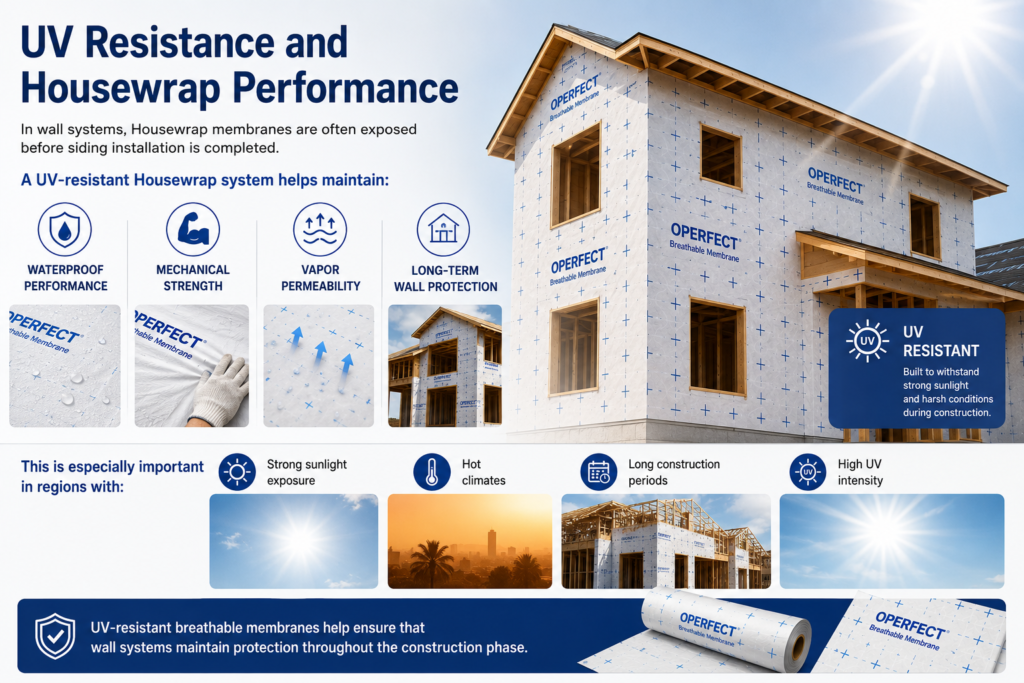
A UV-resistant Housewrap system helps maintain:
- Waterproof performance
- Mechanical strength
- Vapor permeability
- Long-term wall protection
This is especially important in regions with:
- Strong sunlight exposure
- Hot climates
- Long construction periods
- High UV intensity
UV-resistant breathable membranes help ensure that wall systems maintain protection throughout the construction phase.
Roofing Systems Also Require UV Durability
Roofing assemblies are exposed to some of the harshest environmental conditions in construction.
Modern roofing protection systems must withstand:
- Intense sunlight
- Heat buildup
- Temperature fluctuations
- Rain and snow
- Long-term weather aging
High-performance synthetic roofing underlayments are increasingly designed with improved UV stability to support modern roofing applications.
Combined with Ice & Water Shield systems and ventilation design, UV-resistant roofing membranes help improve long-term roof durability.
UV Resistance Supports Long-Term Building Durability
Modern building envelope science focuses on creating systems that maintain stable performance over time.
UV-resistant materials help improve:
- Weather durability
- Waterproof reliability
- Structural protection
- Installation flexibility
- Long-term building performance
This is one reason why UV-resistant breathable membranes are becoming increasingly common in modern residential and commercial construction projects worldwide.
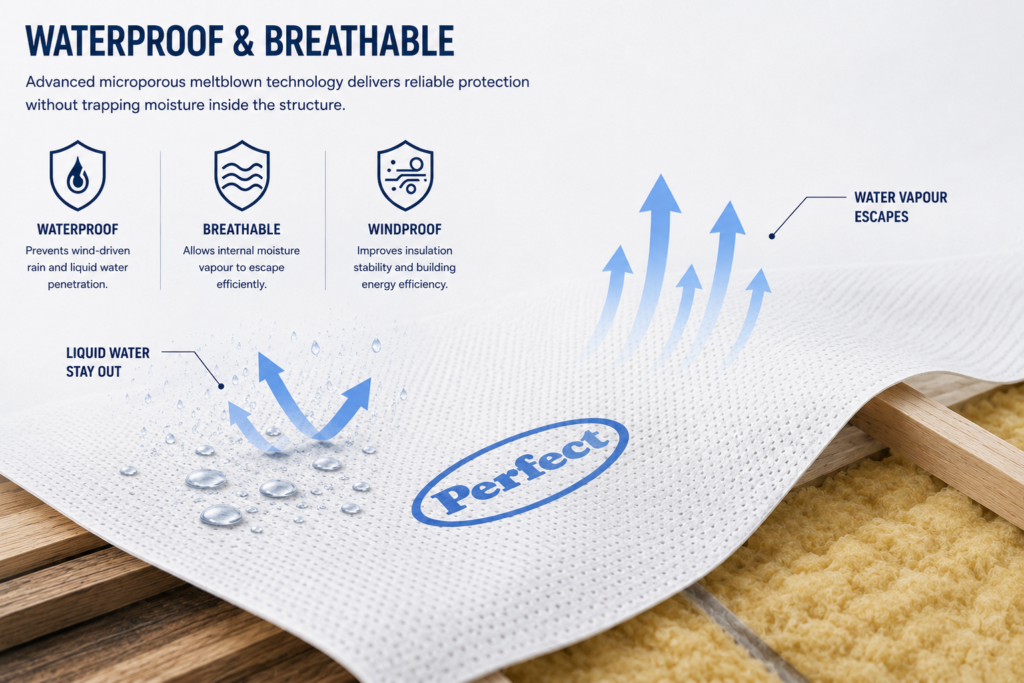
Building Envelope Performance Depends on Multiple Protection Layers
No single material can provide complete building protection alone.
Modern building envelope systems rely on integrated layers that work together to manage:
- Waterproofing
- Breathability
- Vapor control
- UV resistance
- Thermal performance
- Weather durability
This system-based approach is becoming the standard for modern construction.
The Future of High-Performance Membrane Technology
As construction standards continue to evolve globally, membrane technology is becoming more advanced.
Modern high-performance membranes increasingly combine:
- Waterproof protection
- Breathability
- Flame retardant performance
- UV resistance
- Tear strength
- Long-term durability
Different projects and climates may require different combinations of protective performance depending on local building conditions.
OPERFECT Building Envelope Solutions
At OPERFECT, we provide high-performance breathable membrane systems designed for modern roofing and wall protection applications worldwide.
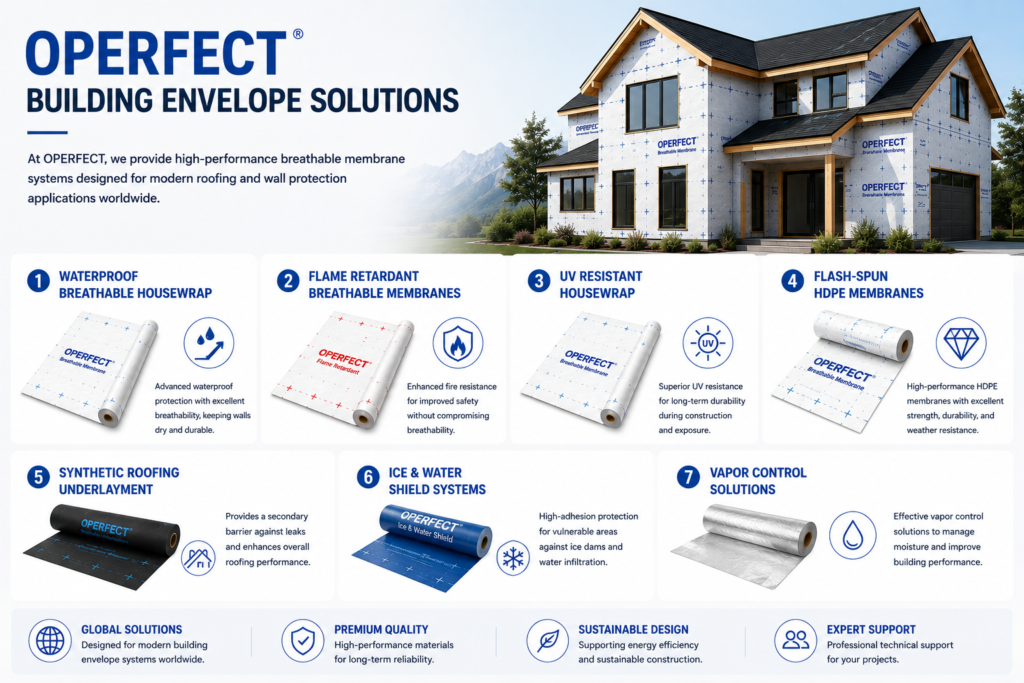
Our solutions include:
- UV Resistant Housewrap
- Waterproof Breathable Membranes
- Flame Retardant Breathable Membranes
- Flash-Spun HDPE Membranes
- Synthetic Roofing Underlayment
- Ice & Water Shield Systems
- Vapor Control Solutions
Designed for modern building envelope systems and long-term construction durability.
United Perfect Group “To Make Buildings Perfect, together.”
Global Business Director: Mr. Du
WhatsApp/WeChat: +86 134 2613 0536
Email: export@unitedperfect.com
Website: www.unitedperfect.com