Core Applications of Radiant Barriers
Radiant barriers are specialized materials designed to reflect radiant heat, making them widely used across sectors where temperature regulation and energy efficiency are critical. Their key applications include:
1. Building & Construction Industry
This is the most common application area, where radiant barriers target heat transfer in residential, commercial, and industrial structures:
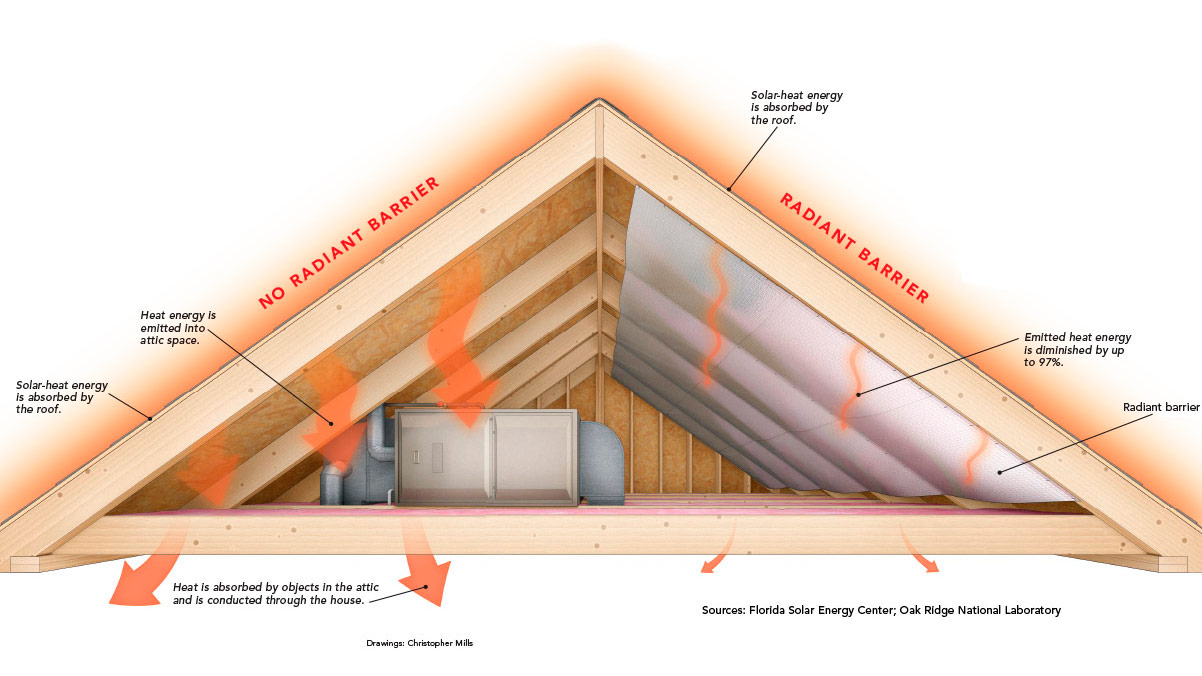
- Roofs & Attics: As the primary installation location, radiant barriers are mounted in attics (either under roof rafters or over attic insulation) to reflect solar radiant heat away from the roof deck. In hot climates, this prevents excessive heat from seeping into living spaces below, lowering indoor temperatures and reducing the workload of air conditioning systems. For example, in summer, radiant barriers can reduce attic temperatures by 20–30°F (11–17°C), significantly cutting cooling energy use.
- Walls: Installed within exterior or interior wall cavities, radiant barriers reflect radiant heat from outside (in warm weather) and retain indoor heat (in cold weather). This stabilizes indoor temperatures, enhances comfort, and complements traditional insulation by addressing radiant heat transfer—an aspect insulation alone struggles with.
- Floors: In cold regions, radiant barriers are sometimes placed beneath floorboards or concrete slabs. They block radiant heat loss to the ground, keeping floors warmer and reducing heating demands, especially in homes with crawl spaces or unheated basements.
2. Industrial Facilities
Radiant barriers are used in factories, warehouses, and manufacturing plants—spaces often with large, uninsulated surfaces exposed to sunlight. By reflecting solar radiant heat off roofs and exterior walls, they lower indoor temperatures, creating a more comfortable working environment for employees. Additionally, they reduce the energy required to cool equipment or temperature-sensitive production areas, lowering operational costs.
3. Aerospace & Aviation
The aerospace sector leverages high-performance radiant barriers, originally developed for space missions. For instance, NASA’s Apollo program used thin aluminum-based radiant barriers that reflect over 95% of radiant heat. These barriers protect spacecraft, onboard equipment, and astronauts from extreme temperature fluctuations in space (ranging from -250°F to 250°F/-157°C to 121°C) by reflecting solar radiation away from the craft or retaining heat when needed. Similar technology is now used in aircraft components to regulate temperatures in cargo holds or avionics bays.
Successful cases:
Case 1: LRadiant Barrier at Kerry Langley’s Home (Georgia)
In 2003, Kerry Langley, a homeowner in the Atlanta, Georgia area, researched energy-efficient solutions while building a new house. He discovered a radiant barrier designed to block up to 97% of radiant heat from roof panels before it enters the attic. Despite initial resistance from his builder (who was unfamiliar with the product), Langley insisted on its installation.
The results were immediate and long-lasting: The radiant barrier prevented excessive solar heat from accumulating in the attic, reducing heat transfer to the home’s living spaces. This not only kept indoor temperatures more comfortable during Georgia’s sweltering summers but also cut the family’s cooling bills by approximately 15–20% annually. Langley later noted that the investment in the radiant barrier paid for itself within 3–4 years through energy saving